How to Make a Home Feel Cozy: 9 Changes That Work in Any Room
Quick answer: To make a home feel cozy, swap the overhead light for two or three warm lamps at different heights, add at least three different textures to the room, pull the seating away from the walls so chairs face each other, and seal the drafts you can feel around doors and windows. Light and layout do most of the work, and neither one requires new furniture.
Most advice on how to make a home feel cozy turns into a shopping list. A chunky throw, a candle, a basket of firewood nobody burns. Those help a little. What actually changes a room is quieter than that.
Cozy is a set of conditions, not a style. Warm light. Surfaces that absorb sound instead of bouncing it. Steady warmth with no cold spots. Furniture arranged so people end up near each other. Get those four right and a room reads as comfortable whether the sofa is new or fifteen years old.
Disclosure: This post may contain affiliate links. This means I get a small commission if you decide to make a purchase through my links at no extra cost to you.

What makes a home feel cozy?
A home feels cozy when four things line up: low warm light, soft texture, steady temperature, and seating that faces inward. Everything else is decoration sitting on top of those four.
Searches for how to make a house homey and for how to make your house cozy land on the same four levers, so the wording does not change the answer.
They are worth separating because they fail separately. A beautifully decorated room still feels cold under a single ceiling fixture with a cool-white bulb in it. A warm room still feels unfinished when every surface is hard and voices bounce off the walls. What makes a home feel cozy is usually the thing nobody notices when it has been done right.
Start with light, because it changes the most for the least
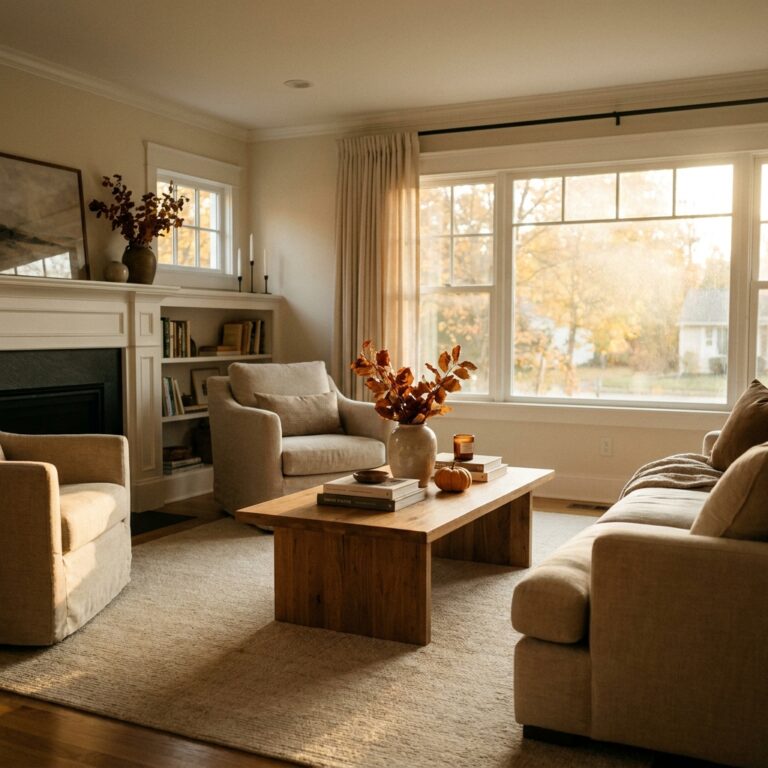
Light is the fastest fix in the house. Turn the ceiling fixture off, turn on two or three smaller lamps, and the same room changes character in under a minute.
- Check the color temperature on your bulbs. The number is printed on the box in Kelvin. 2700K is warm white and reads as candlelit and comfortable. 3000K is neutral. Anything at 4000K or above is daylight white and will make a living room feel like a waiting area no matter what else is in it. Swapping four bulbs costs less than a takeout dinner and is the single highest-return change on this list.
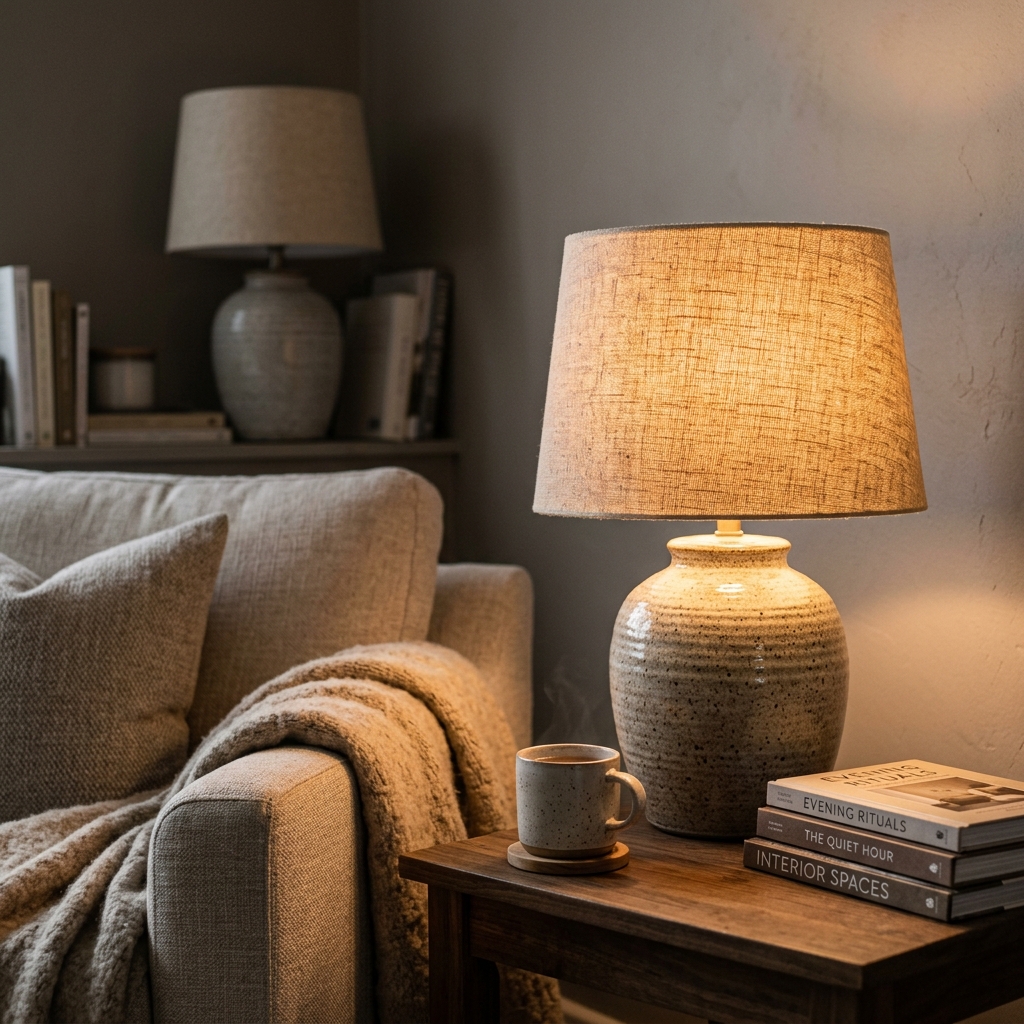
- Use three light sources at different heights. One overhead, one at table height, one low or high. A table lamp, a floor lamp behind a chair, and something small on a bookshelf will beat one bright fixture every time. The shade of a table lamp should sit roughly at eye level when you are seated, which usually means the bottom of the shade lands around 40 to 42 inches off the floor.
- Put the main room on a dimmer. A basic dimmer switch runs about $20 and takes fifteen minutes. Being able to drop a room to half brightness at 8 p.m. does more for the feel of a house than most furniture purchases.
- Keep the bulbs consistent. One cool-white bulb mixed in with three warm ones makes the whole room look slightly off, and the cause is hard to spot until the odd bulb is replaced.
Layer texture so the room is quiet as well as warm
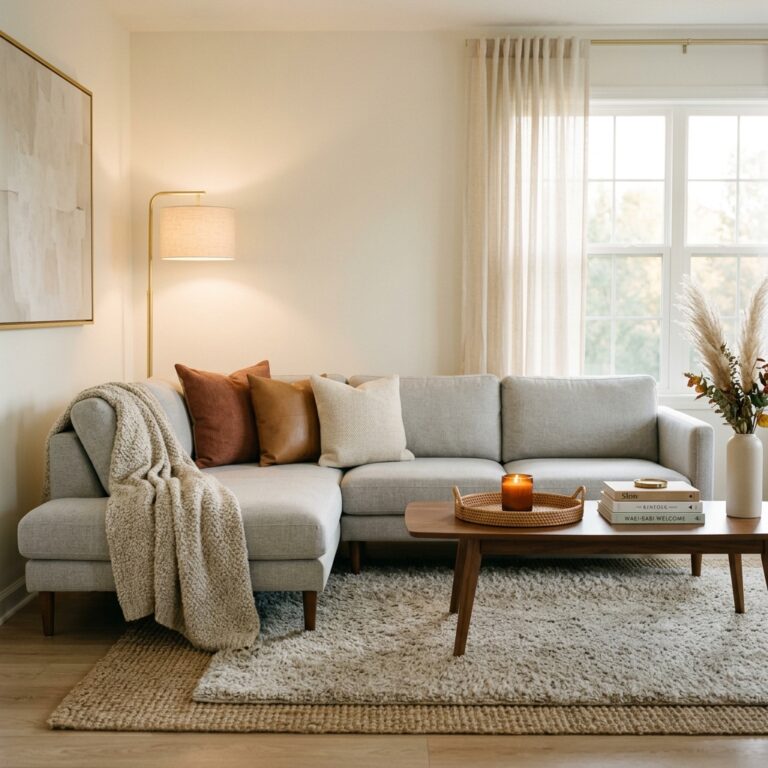
A room with wood floors, bare walls, and metal blinds echoes, and echo never feels cozy no matter how good the furniture is. Soft materials absorb sound, and that absorption is a large part of what people respond to when they call a room comfortable. Aim for at least three textures: something nubby, something smooth, something soft. A wool throw, a linen cushion cover, and a jute rug already covers it.
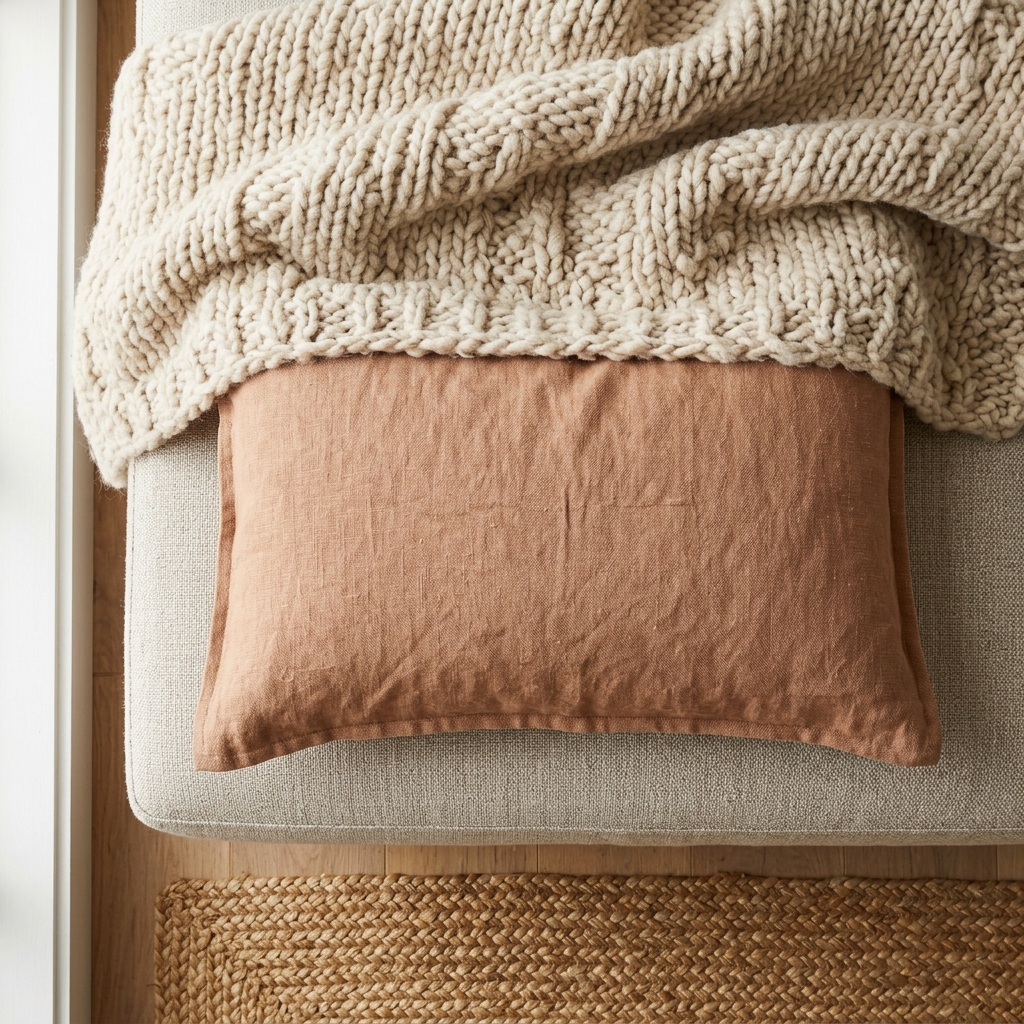
Get the rug size right. This is where most rooms go wrong. A rug that floats in the middle of the floor with no furniture on it makes the room look bigger and colder. At minimum, the front legs of the sofa and the chairs should sit on the rug. For most living rooms that means an 8 by 10, not the 5 by 7 that seemed reasonable in the store.
Hang curtains high and wide. Mount the rod 4 to 6 inches above the window frame and extend it 8 to 12 inches past each side so the open panels clear the glass. Panels should reach the floor. Curtains hung tight to the frame make the window look smaller and the room look unfinished, and it is one of the most common mistakes in rented homes.
One blanket per seat. If three people can sit down, three blankets should be within reach. A folded throw draped over a sofa arm is decoration. A blanket somebody can pull over their legs is comfort. A few houseplants that survive irregular watering add one more layer of texture with almost no upkeep.
Move the furniture before you buy anything
Pushing every piece of furniture flat against the walls is the fastest way to make a living room feel like a hotel lobby. The empty middle reads as distance.
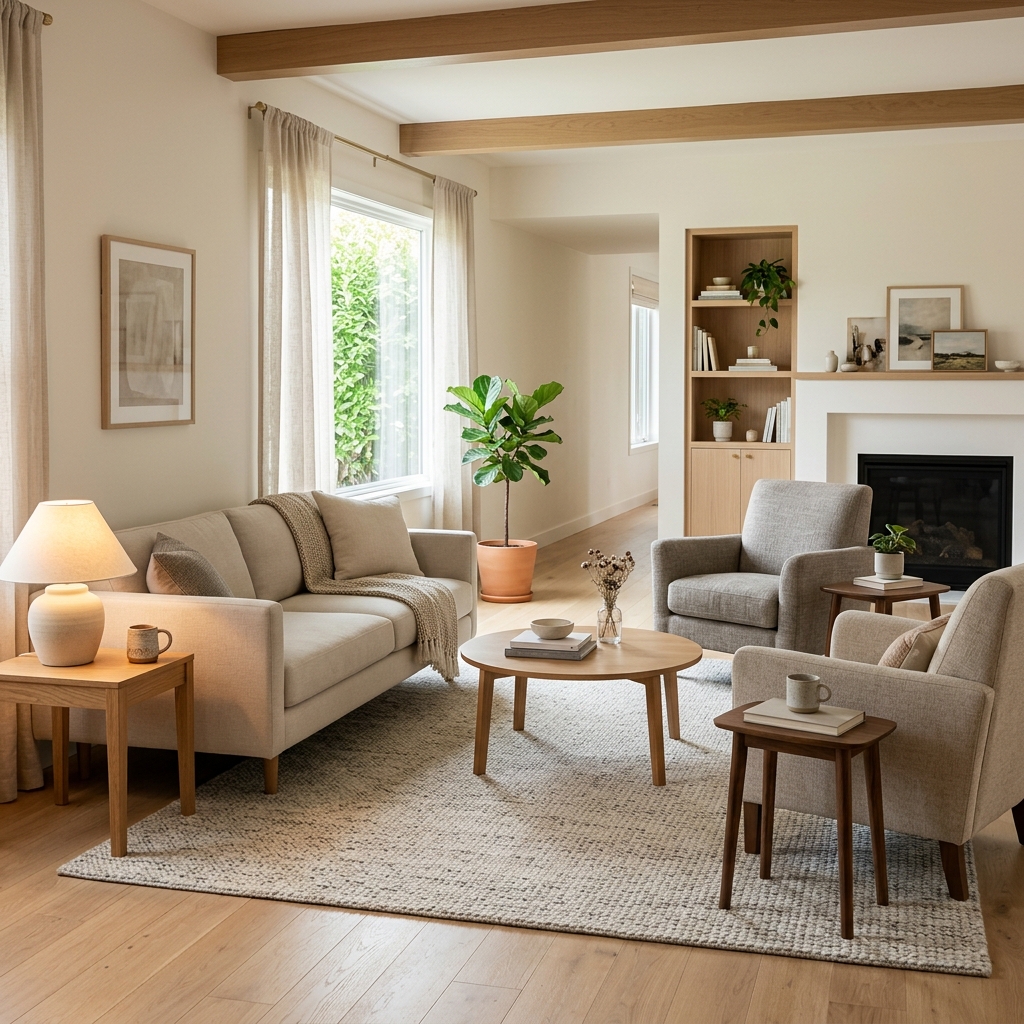
Pull the sofa 6 to 12 inches off the wall. Angle a chair toward it instead of squaring it to the room. Keep facing seats within about 8 feet of each other, because past that people raise their voices to talk and the room stops feeling intimate. Leave 14 to 18 inches between the sofa and the coffee table so legs fit but a cup is still in reach.
Give every seat a surface within arm’s reach. A side table, a stool, a stack of books. A guest with nowhere to put a mug never fully settles in, and that small friction is why some rooms stay tense. A round of living room organization that actually cuts clutter usually frees up the surfaces already there.
Fix the cold spots, not the thermostat
A house set to 72 degrees can still feel cold if there is a draft crossing the room at ankle height. Most people are more comfortable at 68 to 70 degrees in a sealed room than at 72 in a leaky one.
Run the back of your hand around the edge of exterior doors and along window sashes on a windy day. Where you feel moving air, add weatherstripping, which costs under $15 a roll. A draft stopper at the base of a door handles the rest.
Close the curtains at night. Glass loses heat faster than any wall in the house, and a lined panel slows that down. Rugs matter most on a ground floor over a slab or crawlspace, where the floor itself pulls warmth out of the room.
How to make a home feel cozy room by room
Every room needs the same four conditions, but the emphasis shifts.
Living room. Light and seating do the work. Three lamps, a rug large enough to anchor the furniture, blankets within reach, sofa off the wall.
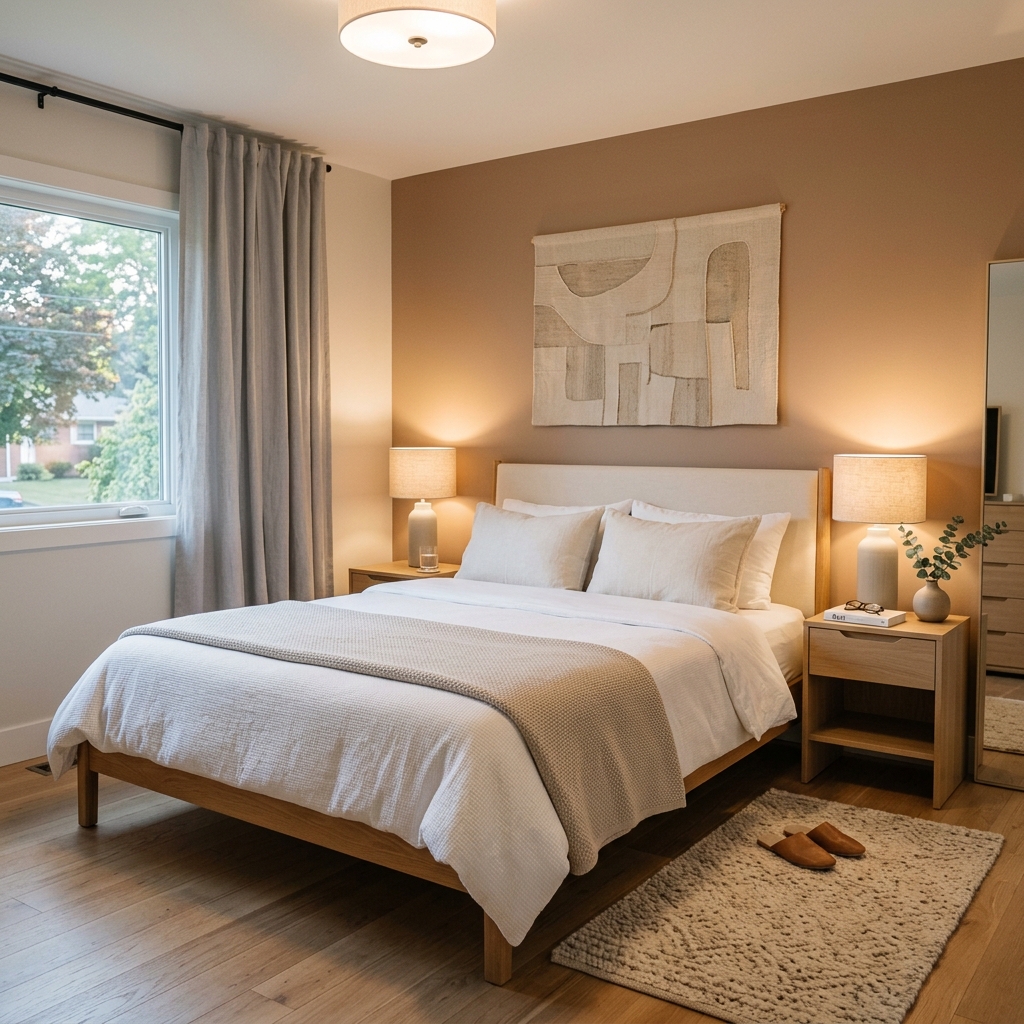
- Bedroom. Layers on the bed matter more than anything on the walls. A quilt or coverlet over the duvet adds weight and texture at once, and a lamp on each side means nobody crosses a dark room to reach a switch.
- Entryway. A place to set keys, somewhere to sit while taking off shoes, and one warm lamp on a timer. Entryway ideas built for small homes work in almost any square footage.
- Kitchen. Under-cabinet lighting on its own switch turns a bright working kitchen into a soft evening one, and a runner underfoot cuts the echo off hard cabinets and tile. A simple coffee bar in one corner gives the room a reason to feel welcoming at 6 a.m.
How to create a cozy home when you cannot buy anything
How to create a cozy home on no budget comes down to rearranging, subtracting, and borrowing from the other rooms. Almost everything worth knowing about how to make a home feel cozy costs nothing at this stage.
The free version of how to make a house homey is mostly subtraction. Move a lamp from a bedroom into the living room so there are two light sources instead of one. Clear the coffee table to one or two objects, because visual noise reads as busy rather than comfortable. Close the doors on rooms nobody is using so the space in use feels contained. Wash and layer the blankets already in the closet. Open a window for ten minutes and then shut it, because stale, still air is one reason a room feels flat.
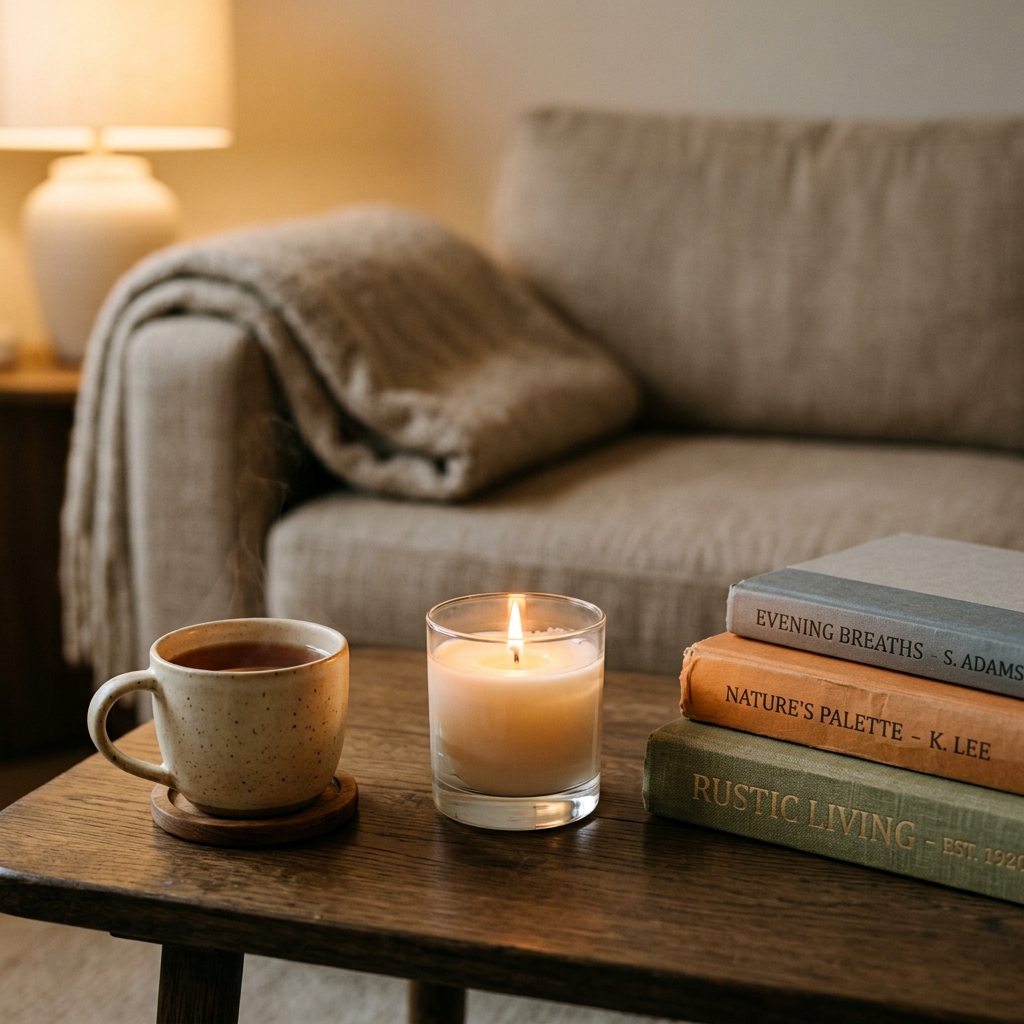
Scent is the last free lever, and it is stronger than it looks. Committing to one scent for the whole season makes a house feel deliberate in a way that a shelf of half-burned candles never does.
Mistakes that keep a room from feeling cozy
These are the errors that quietly undo everything else about how to make a home feel cozy.
- Lighting the room from the ceiling only. No number of throws fixes overhead light as the sole source.
- Buying the rug one size too small. It is the most expensive version of this mistake and the most common.
- Hanging curtains at the top of the window frame. Four to six inches higher costs nothing and changes the proportion of the whole wall.
- Buying a matching furniture set all at once. Matching reads as showroom. Rooms that feel lived in have pieces that arrived at different times.
- Confusing full with cozy. Clutter reads as stress. Layered is the goal, not crowded, and the difference is whether the surfaces still have room to set something down.
- Skipping smell and sound. A room can look right and still feel off because it echoes or smells like nothing at all.
How to make a home feel cozy: FAQs
Comfort you can use. A decorated room looks correct in a photograph. A cozy one has a blanket somebody has actually unfolded, a lamp at the right height, and a place to set a cup down. The test is whether you can sit in it for two hours without adjusting anything.
Keep the lines and change the materials. Warm 2700K bulbs, a wool or bouclé throw, a textured rug, and full-length curtains soften a minimal room without adding clutter. Contrast does the work here: the harder the architecture, the more the soft goods register.
How to make your house cozy in a rental comes down to what you can take with you when you leave. Bulbs, lamps, rugs, curtains, and blankets all move, and none of them need a landlord’s permission. A tension rod handles curtains where drilling is not allowed.
Light it in layers and keep the floor clear. Small rooms feel cramped because of clutter at ground level, not because of soft furnishings. Two lamps instead of one overhead, a rug that runs to the edges of the seating, and clear walkways read as intimate rather than tight.
Warm neutrals and muted, darker tones. Cream, oatmeal, clay, olive, and warm gray absorb light instead of bouncing it back, which is why a deep-toned room often feels more enveloping than a bright white one. Bulb temperature still matters more than paint color, and a cool bulb will undo a warm wall.
One evening for the changes that matter most. Bulbs, lamp placement, pulling the sofa off the wall, and putting blankets within reach take a couple of hours together. Rugs and curtains are the parts worth waiting to get right, and they are the parts where how to make a home feel cozy turns into a budget question rather than a weekend one.
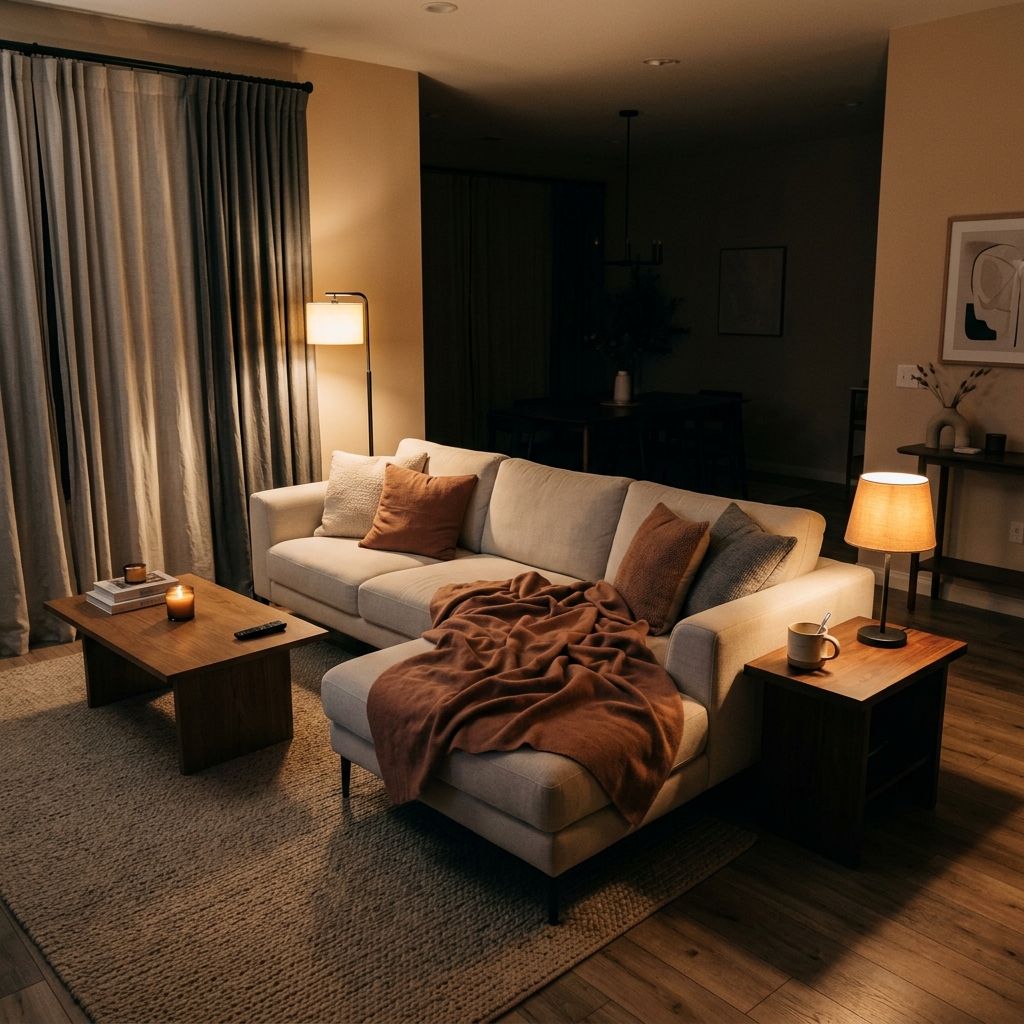
Start with the bulbs tonight and see what the room does. A cozy work-from-home day is a fair test of whether the changes landed.