
How I Manage Time When My Brain Refuses to Track It: Adult ADHD Time Management
If you’ve ever thought you had ten minutes and lost an hour, you’re not alone. Time can feel like steam off a tea kettle, you see it, and then it’s gone. For me, managing time with adult ADHD has meant letting go of “I’ll remember” and building days around clear anchors, fewer decisions, and reminders that actually get my attention.
Adult ADHD time management, at least in my experience, starts with one honest truth: my brain is not broken, it just does not track time the way planners expect. In this post, I am sharing the simple cues, small routines, and gentle systems I use to stay oriented and show up on time without living in constant panic.

Anchor Your Day with a Simple Morning Routine
I have learned that starting the day with a predictable rhythm makes everything else feel less scattered. When my mornings have some structure, my sense of time feels steadier and the day feels easier to step into.
- I stick to a few small actions every morning, like making the bed, brewing coffee, stretching, or writing down my top priorities for the day.
- I keep it short and flexible. For me, this routine is about building momentum, not doing everything perfectly.
- Doing the same things in the same order helps my brain anticipate what comes next instead of constantly recalibrating.
Use Visual Timers and Alerts
Time can feel surprisingly slippery for me, especially on busy days when I am juggling a lot at once. Having time visible outside my head makes a noticeable difference in how I move through the day.
- I rely on phone alarms, digital timers, or simple visual countdowns to stay oriented.
- I keep a simple desk clock in my workspace, so I can glance up and see time passing without having to check my phone (and getting distracted with notifications).
- I set reminders not just for appointments but also for transitions, such as when it is time to wrap up and move on.
- Seeing time pass visually helps my day keep moving without constant mental effort, which is a big part of how I approach adult ADHD time management in everyday life.
Break Tasks into Bite-Sized Chunks
When a task feels too big, I often notice myself avoiding it altogether. Breaking things into smaller pieces helps me get started without feeling overwhelmed.
- I break larger projects into short, manageable segments, typically 15 to 30 minutes.
- I focus on one segment at a time, then pause briefly before deciding what comes next.
- Checking off a small part of the task gives me a sense of progress and helps sustain momentum.
Layer Cues in Your Environment
I have learned that my surroundings quietly shape how my day unfolds. When my environment offers gentle cues, I spend less time searching for focus or direction.
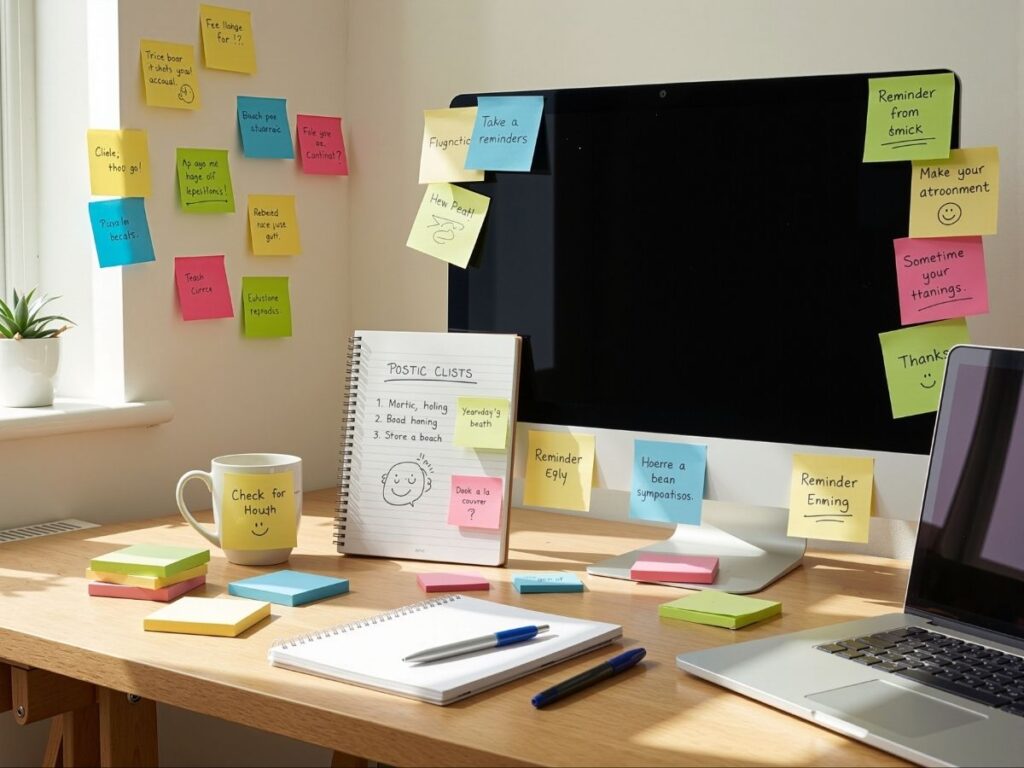
- I place sticky notes or visual reminders where I will naturally see them, like my desk, the fridge, or the bathroom mirror.
- I keep frequently used items visible and organized, so I am not losing time looking for things I use every day.
- I avoid background music and white noise because I find them distracting. Instead, I rely more on visual cues and simple timers to signal transitions.
Batch Similar Tasks Together
I have noticed that switching constantly between different kinds of tasks drains my energy fast. Grouping similar activities together helps me stay focused longer without feeling scattered.
- I set aside a specific window to respond to emails, instead of checking them throughout the day.
- I try to prep meals in one session, rather than doing it sporadically and losing momentum.
- I group errands by location or type, which saves both time and mental energy.
Build in Micro-Routines Throughout the Day
Tiny, repeated routines help anchor my day and make time feel less slippery. They give my brain clear pause points instead of letting the hours blur together.
- Mid-morning, I take a quick stretch or short walk to reset my focus.
- Around lunchtime, I jot down what I have already accomplished and adjust what still needs attention.
- In the evening, I spend a few minutes prepping for tomorrow, tidying my workspace, and mentally closing out the day.
Embrace the Power of Lists, the Right Way
Lists help me stay organized, but only when they are simple and realistic. Overloaded lists tend to do the opposite.
- I keep a short “must-do” list each day, usually three to five top priorities.
- I separate “nice-to-do” items onto a secondary list, so they do not crowd my focus.
- I use different colored sticky notes to visually separate tasks or priorities, which makes it easier for me to scan and decide what to focus on next.
- Crossing off even small items gives me a sense of progress and helps my day feel more complete.
Finding a Rhythm That Works for Me
Time still slips away sometimes, and I have made peace with that. What has changed is how I respond when it does. Instead of relying on memory or pushing myself harder, I lean on small systems that give my day more shape and clarity.
Adult ADHD time management, for me, is about working with how my brain actually operates. Clear anchors, visual cues, and simple routines help me stay present without constant stress. These habits do not make my days perfect, but they do make them feel calmer, more predictable, and easier to move through.
More To Explore
- Not every disability is visible, and not every need comes with an explanation. The Hidden Disabilities Sunflower offers a quiet, dignified way to signal that someone may need extra time, space, or patience without having to say a word. It is a small symbol with a powerful purpose, reminding us that kindness and understanding should always come first.
- Adult ADHD emotions can feel intense and unpredictable on certain days. In this aritcle, I write about how I steady myself during those emotional rollercoaster moments that help me feel grounded again. It’s a personal look at supporting emotional balance without forcing control or perfection.
- Adult ADHD overwhelm doesn’t usually arrive as chaos. It builds quietly through small slips, mental noise, and too many open loops. These are the simple, low-effort tactics that actually help me break the overwhelm spiral in real time, without fixing everything or forcing productivity.
- Adult ADHD home organization often starts with understanding why clutter feels louder than it looks. By reducing open loops and decision fatigue, small systems can help a space feel quieter and easier to live in, even when energy is low.
- Adult ADHD sensitivity is closely tied to emotional regulation, confidence, and energy levels. Small supports and predictable rhythms can help sensitivity feel more manageable and less overwhelming in everyday life.