Faux Floral Arrangements for Fall Home Decor That Actually Look Real
Faux floral arrangements are the fastest way to bring fall home decor into a room. You don't have to worry about watering, wilting stems, or a vase that tips over on the console table. The most convincing faux floral arrangements use mixed stem types and matte finishes. A container with real weight also helps the piece look gathered rather than mass produced.
Color does more work than flower type when you are choosing faux floral arrangements for fall. Rust, ochre, deep burgundy, and warm cream carry a room from across it. Anything bright orange or shiny can read as costume rather than decor. Skip a single, symmetrical bunch. Instead, set stems at slightly different heights and angle them loosely rather than fanning them out evenly.
Disclosure: This post may contain affiliate links. This means I get a small commission if you decide to make a purchase through my links at no extra cost to you.
This guide covers what separates a realistic faux floral arrangement from a flat one. It also explains where each style works best and how to keep faux floral arrangements from looking stiff. You'll also learn which mistakes can give them away.
Why Choose Faux Over Fresh This Fall
Real flowers in fall have a short window. Dahlias and mums drop petals within days indoors, and anything foraged from outside dries out and sheds within a week. Faux floral arrangements solve that timing problem entirely. A well-made one can come back out every autumn instead of needing replacement every few days.
There is also a cost argument that holds up over a full season of fall home decor. A single fresh arrangement for a mantel or entry table runs through several bouquets between September and Thanksgiving. One good faux floral arrangement covers the same stretch and comes back out again the following year. The upfront cost can quickly even out compared to buying fresh flowers on repeat. Most households that switch to faux floral arrangements for the entry and dining table stop rebuying decor flowers altogether by the second fall season.
What to Look For in Faux Floral Arrangements
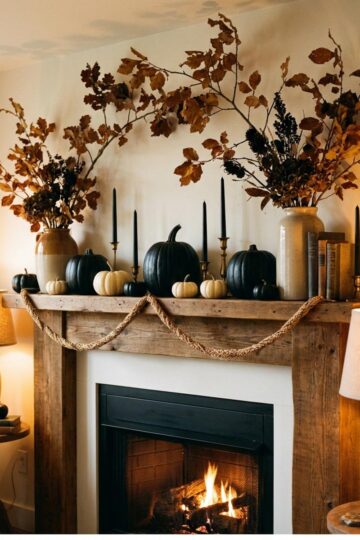
The stem matters more than the bloom in a good faux floral arrangement. Look for a wire core wrapped in floral tape rather than a single molded plastic piece. Wire lets you bend the stem into a natural curve instead of a straight, obviously fake line. Run a finger across the petal edge, too. Real-feel latex or silk-blend petals have slight texture and thin edges. Cheap polyester petals feel stiff and uniformly smooth. The difference shows up fast under regular room light. A faux arrangement with dark plum blooms and black-painted branches also makes an easy centerpiece in a grown-up Halloween home decor indoor setup.
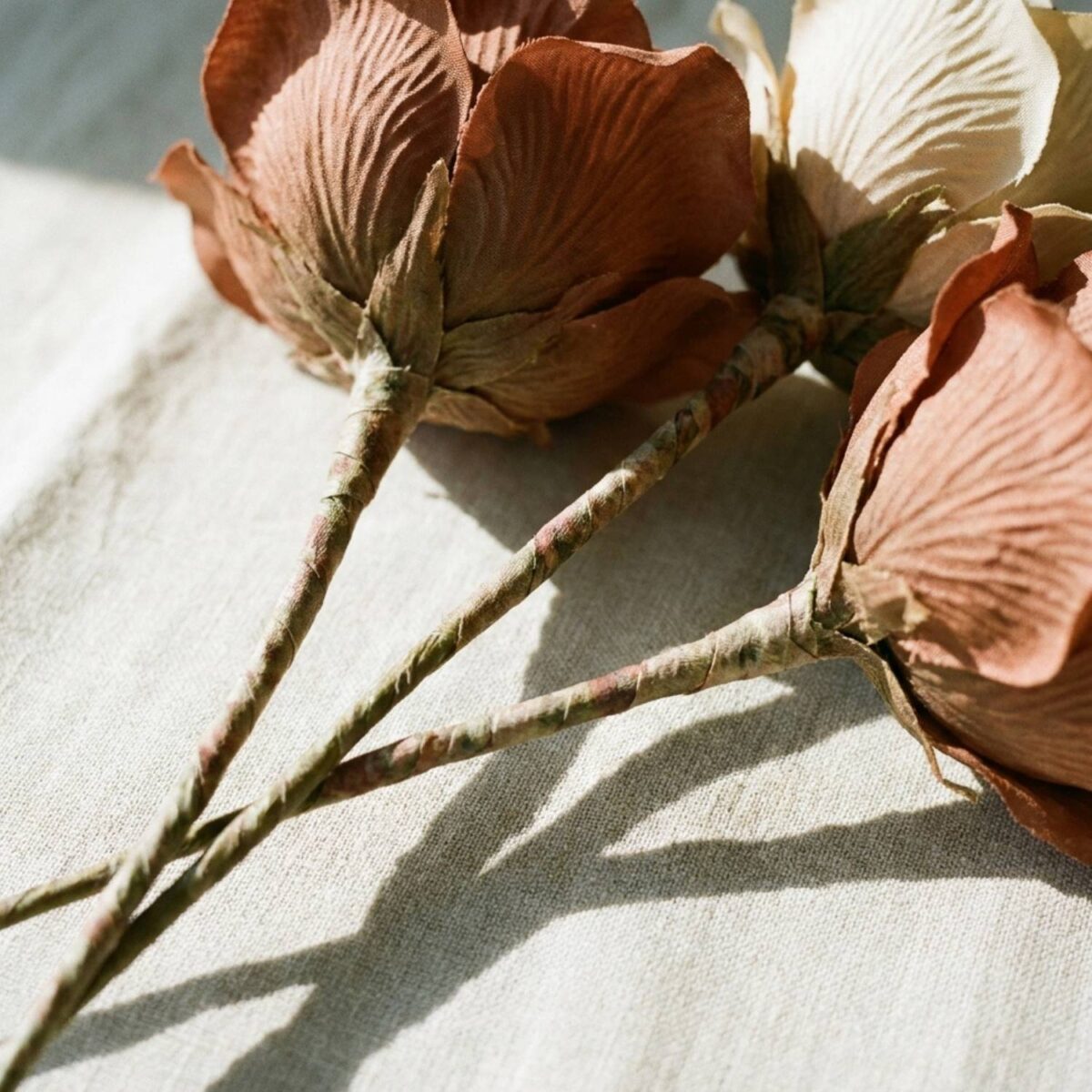
Mixed texture sells faux floral arrangements more than any single flower choice. Combine a few larger focal blooms with smaller filler stems, some dried-look grasses, and one or two seed pods or berry sprigs. Faux floral arrangements built from one flower type in one size read as artificial no matter how good the individual stems are.
Check the base of the stem before buying. This is especially important for a faux floral arrangement going into a shallow bowl or low centerpiece.
A flat-cut stem end can poke through thin faux “water” or moss filler. A rounded or weighted end sits flush and disappears into the container. Buy a couple of extra loose stems alongside the main faux floral arrangements you pick out. You can use them as filler to patch any thin spots.
How to Style Them Around a Fall Home
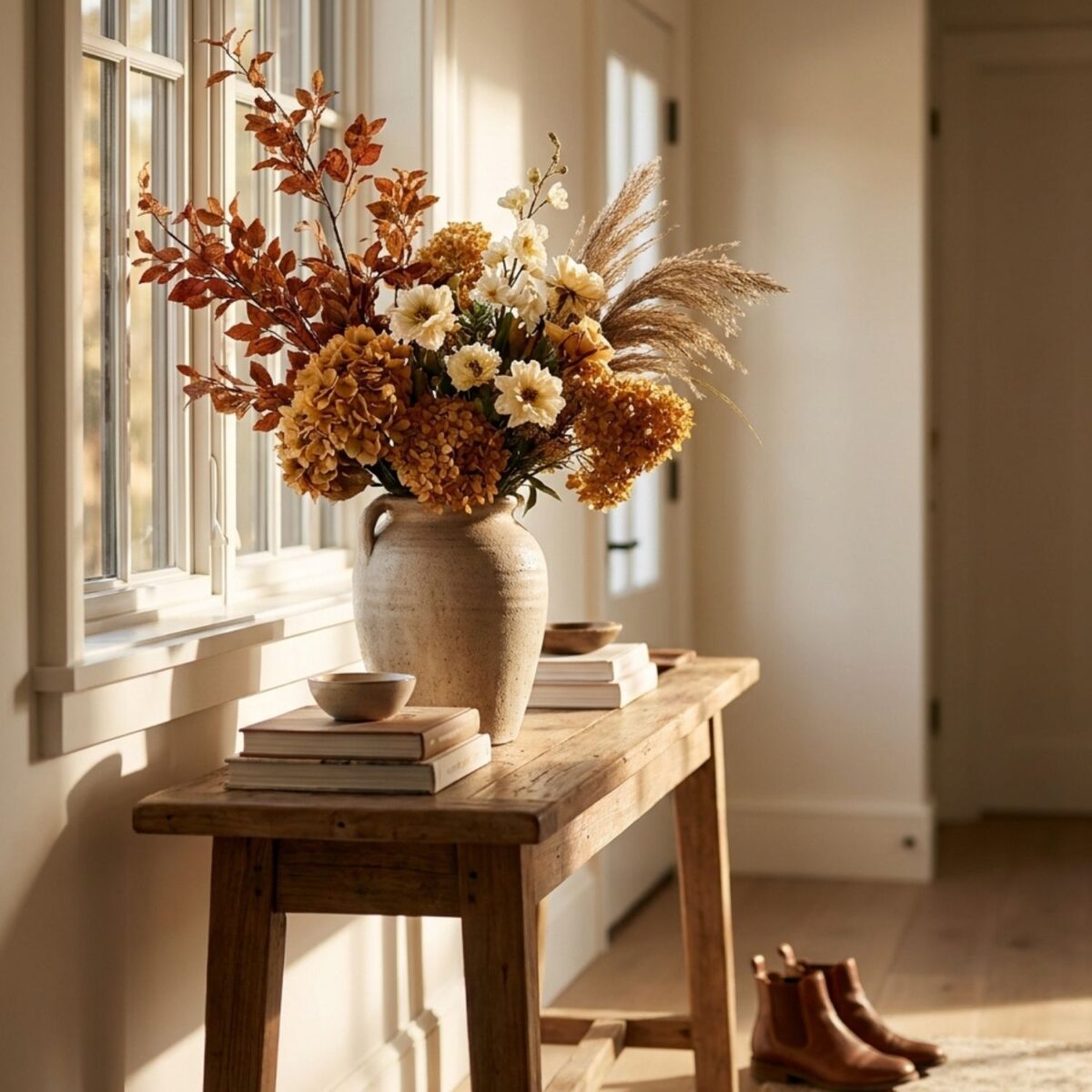
An entry table or console holds a taller faux floral arrangement well. There is usually room to let stems rise 12 to 16 inches above the container without crowding anything nearby. Use an urn or a pitcher with some heft so a tall faux floral arrangement does not tip when the front door closes.
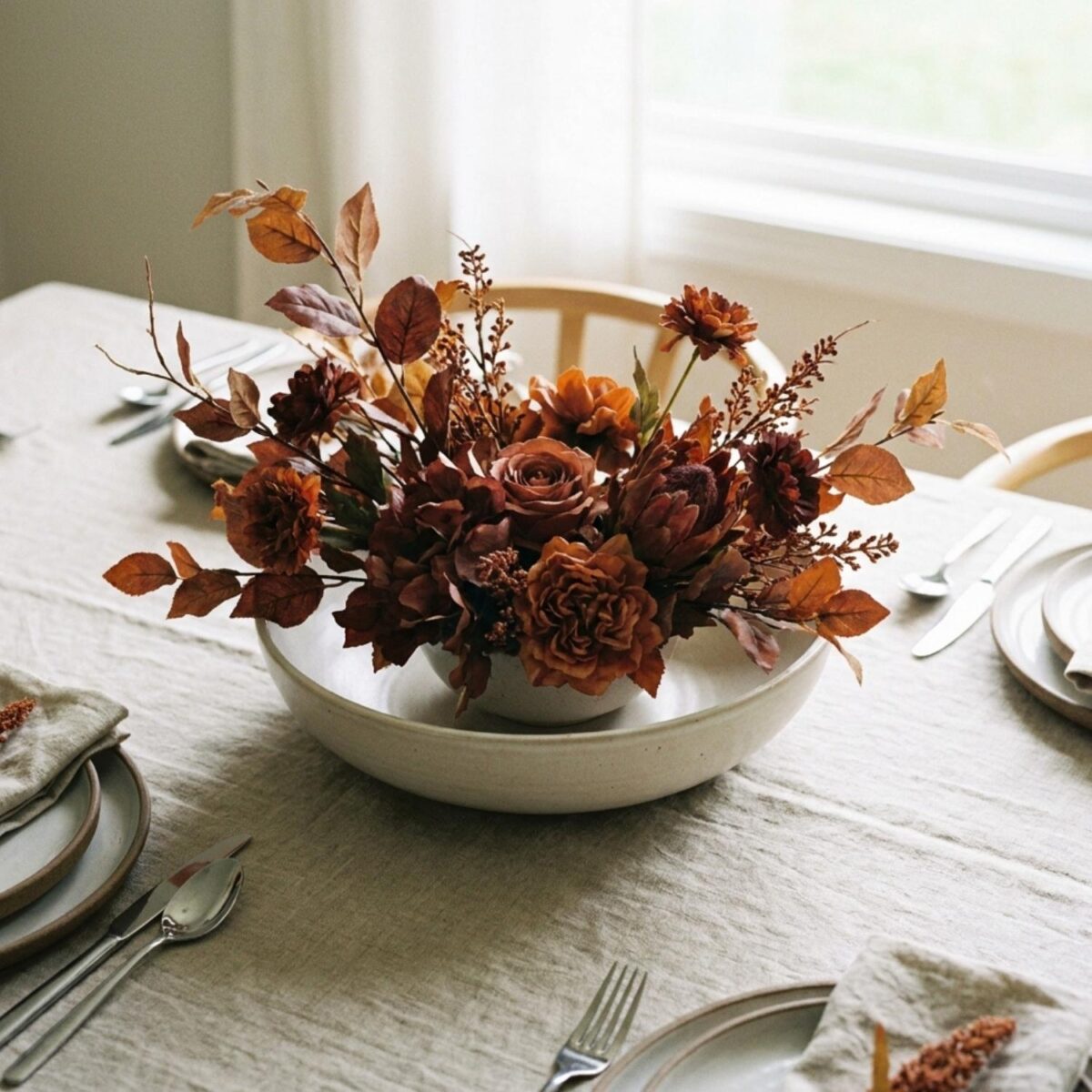
A dining or coffee table needs a lower profile faux floral arrangement. This keeps it from blocking sightlines across the table.
A wide, shallow bowl with stems trimmed to 6 to 8 inches above the rim keeps a faux floral arrangement functional at eye level while seated.
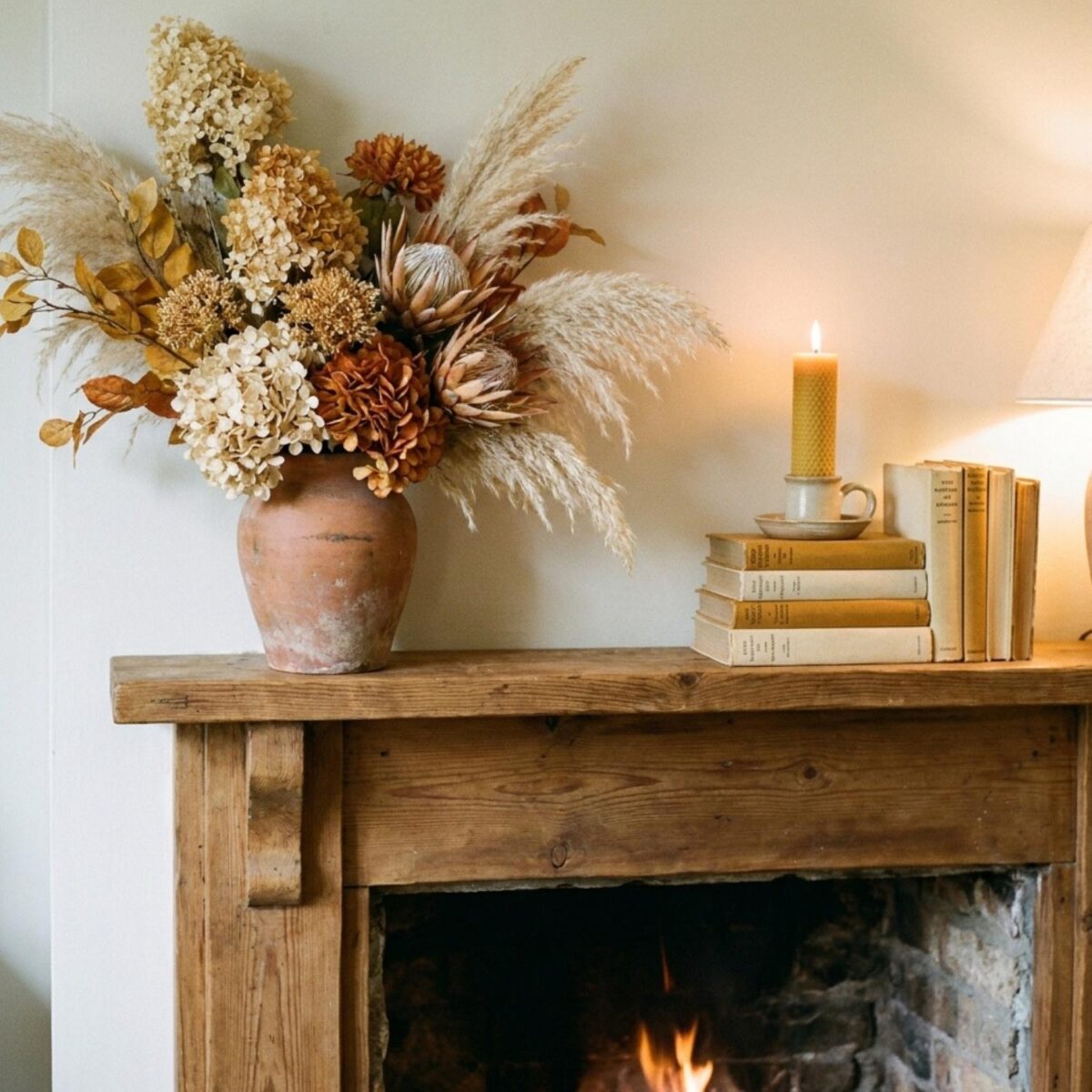
Open shelving and mantels do best with an asymmetrical faux floral arrangement pushed slightly off center. Pair it with one or two other objects, like a candle or a stack of books.
Perfectly centered, perfectly round faux floral arrangements read as a display piece rather than something that belongs in a lived-in fall home.
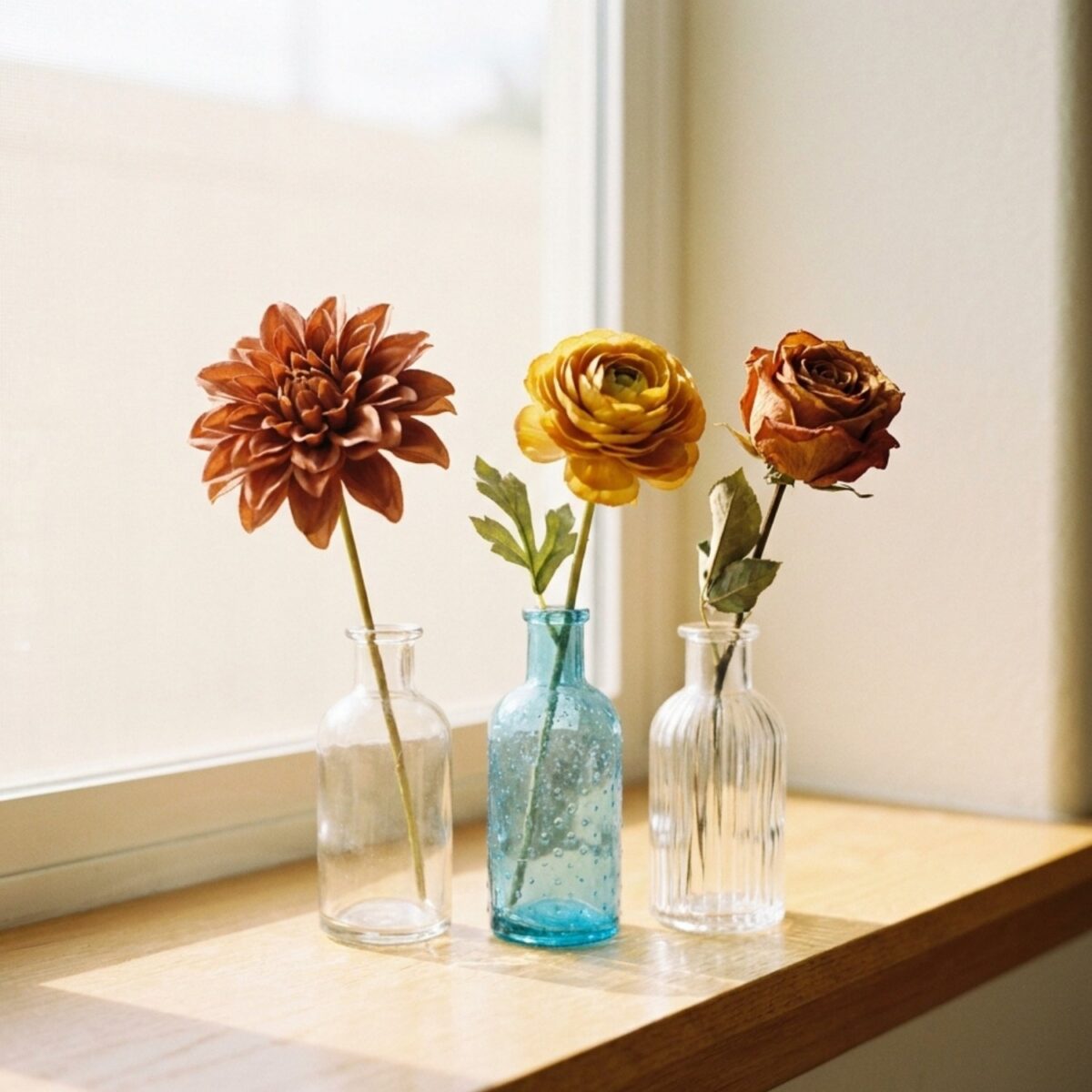
Group small bud vases with single faux floral stems along a windowsill or bathroom counter. This works better than adding another large arrangement to a space that does not need it. Three single stems in mismatched glass bottles often look more intentional as fall home decor than one crowded set of faux floral arrangements crammed into a small spot. A linen closet organized well makes room for small styling touches like this on open shelving, rather than every surface getting crowded with storage.
If you're building out the rest of a room around the arrangement, a foraged fall decor approach pairs naturally with faux pieces for texture that doesn't wilt, and a full fall decor idea list for every room is a good next stop for anything beyond the floral arrangement itself. For the entry specifically, this pairs well with ideas from fall home decor for the front porch so the outside and inside of the door feel consistent.
Common Mistakes That Make Arrangements Look Fake
Uniform height is the biggest tell in a faux floral arrangement. When every stem stops at the same level, the arrangement looks manufactured. A naturally uneven grouping avoids that effect. Pull two or three stems shorter and let one or two rise above the rest before calling a faux floral arrangement finished.
Overcrowding the container is a close second. Stems packed in tight so the vase disappears look dense rather than full. Leave some visible gaps between groupings. This lets light and space move through faux floral arrangements more naturally.
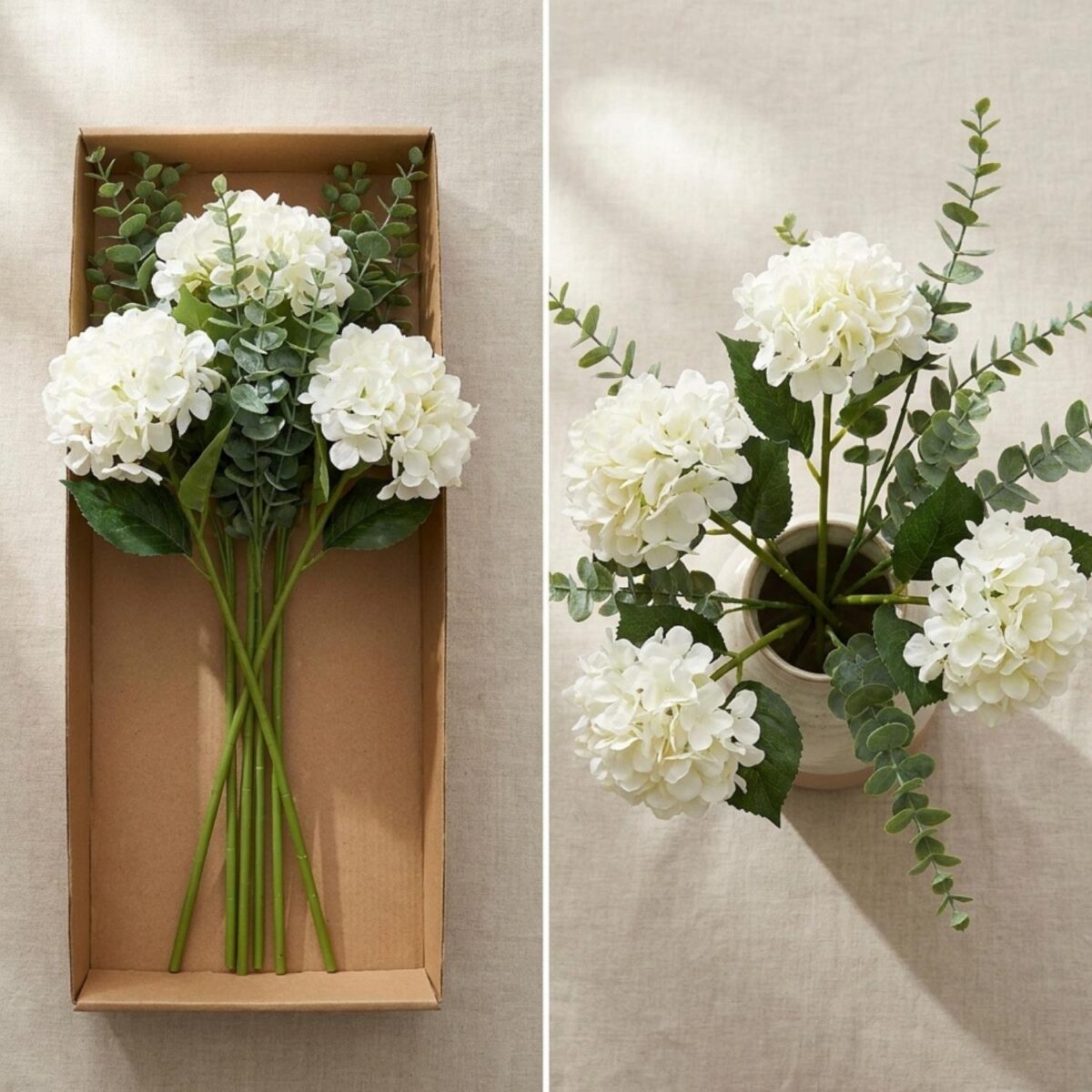
Skipping the fluffing step after unboxing also shows. Stems arrive compressed from shipping and packaging, and petals need to be bent, twisted, and separated by hand before placement. A faux floral arrangement styled straight out of the box keeps a flattened, folded look. Reshape the stems and petals first to make the arrangement look more natural.
Fall Floral Arrangement FAQs
Most stems used in faux floral arrangements use silk, polyester, or a latex blend for the petals over a wire stem wrapped in floral tape. Higher-end stems use real touch latex, which has a soft, slightly waxy feel closer to an actual petal than polyester.
Bend the stems by hand before placing them, since factory-straight stems are the biggest giveaway in a faux floral arrangement. Vary the height of each stem, angle a few outward instead of straight up, and tuck one or two stems lower and closer to the container edge so the faux floral arrangements have depth instead of a flat, fan shape.
Yes, and it is a common way to stretch a small amount of fresh greenery further inside a faux floral arrangement. Pair fresh eucalyptus or a few real stems with faux focal blooms, keep the fresh portion in a small water tube hidden inside the arrangement, and expect to swap the fresh stems out every several days while the faux portion stays in place.
Prioritize one or two spots that get seen daily, like an entry table or a kitchen counter, rather than spreading a faux floral arrangement across every surface. A single well-styled arrangement reads as intentional fall home decor, while several small, half-empty ones scattered around a room read as clutter.
With no sun exposure and an occasional dusting, faux floral arrangements hold their color and shape for several years. Direct sunlight is the main thing that shortens their life, since UV exposure fades petal color and can make cheaper plastic stems brittle over time. Rotating faux floral arrangements out of direct light between seasons is the simplest way to stretch that lifespan even further.
More 🍂 Fall
- Thanksgiving Table Decor Ideas: 10 Simple, Elegant Tables for a Relaxed Holiday Dinner
- Halloween Party Outfits for Women Over 50: Dressy Ideas for Dancing, Dinner, and Photos
- Halloween Home Decor Indoor Ideas: A Room-by-Room Guide to a Cozy, Grown-Up Look
- Halloween Outfits for Women Over 50: 8 Easy Looks That Feel Like You, Not a Costume