30 Home Organization Habits Explained (And Why They Actually Make Sense)
Many home habits seem random until you learn the reason behind them. We store items in certain places, organize shelves a specific way, and design rooms around patterns we rarely notice. These little choices usually come from convenience, comfort, safety, or smart design, and getting your home organization habits explained is one of those small shifts that makes everyday life feel much more intentional. Here are 30 small home habits that actually have a reason.
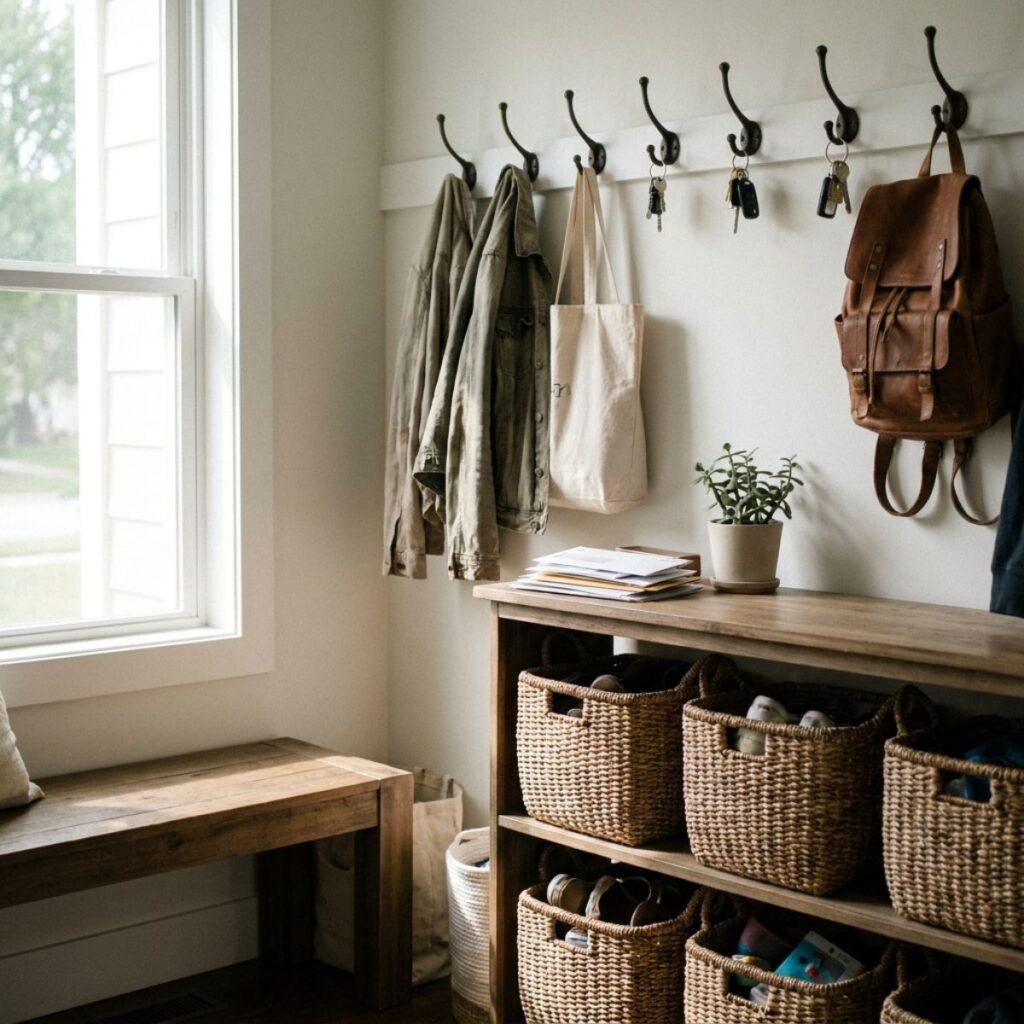

Entryway and Everyday Storage Habits
Some of the smartest home organization habits begin right at the front door, where daily routines start and end.
1. Why do we keep shoes near the door?
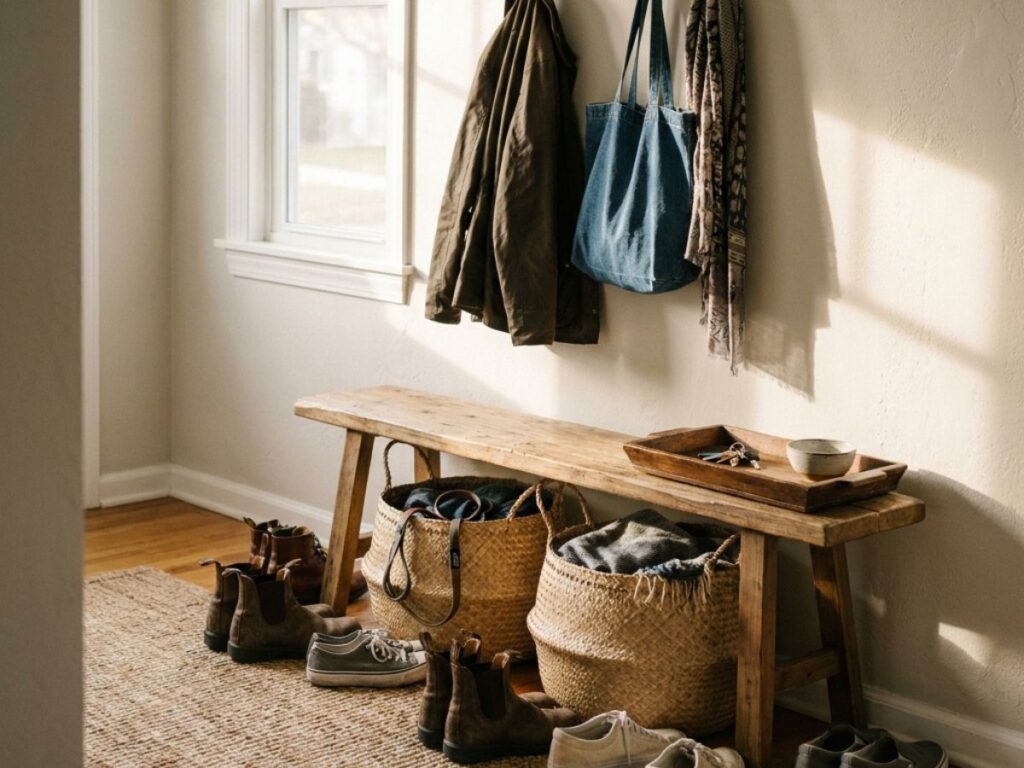
Shoes carry in more bacteria and outdoor debris than most people realize, so removing them at the door keeps floors significantly cleaner. It’s one of those habits that started as a practical rule and quietly became second nature in most households.
2. Why do many homes have hooks by the entrance?
Hooks use vertical wall space that would otherwise go to waste, keeping bags, coats, and keys off the floor and out of the way. Having them right at the entrance means you can grab what you need on the way out without searching every room.
3. Why do keys always belong in one spot?
The brain relies on habit loops for small daily tasks, so assigning a fixed spot for keys removes the mental effort of remembering where you left them. Over time, placing them there becomes completely automatic, which is why breaking the habit feels so disorienting.
4. Why do entry tables collect clutter fast?
Any flat surface near a door naturally becomes a drop zone because we want to put things down the moment we walk in. Entry tables are designed to catch that overflow, but without a simple system, they become a catch-all for everything from mail to groceries.
5. Why do people use baskets near the door?
Baskets contain items that would otherwise scatter, like shoes, scarves, and reusable bags, without requiring you to open a cabinet or drawer. Open-top baskets are especially popular because you can toss things in quickly and they still look tidy from across the room.
Kitchen Habits With Smart Logic
Kitchens often hide the most practical design decisions in the house, and most of them come down to saving you steps.
6. Why do kitchens use the “work triangle”?
Kitchen designers position the sink, stove, and refrigerator in a triangle to make moving between them as efficient as possible. Reducing the distance between these three points cuts down on unnecessary back-and-forth, which matters a lot when you’re cooking a full meal.
7. Why are plates stored near the dishwasher?
Storing plates within arm’s reach of the dishwasher turns unloading into a one-step task instead of a trip across the kitchen. It’s a small placement decision that saves real time every single day.
8. Why are utensils kept beside the stove?
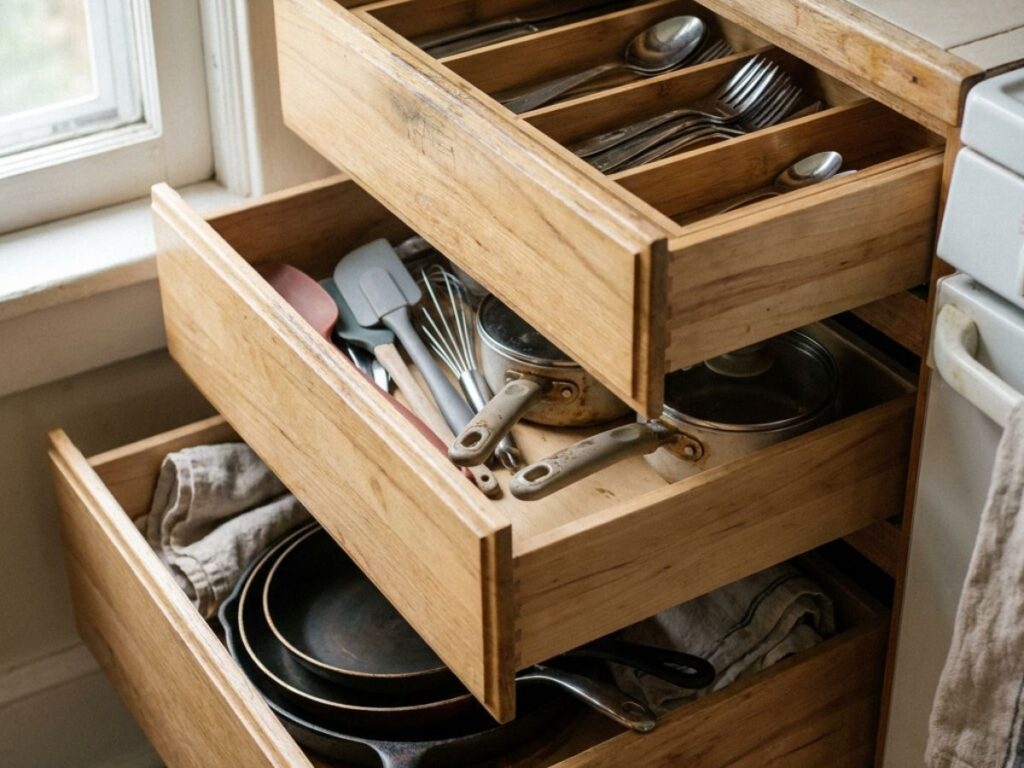
When something is on the heat, you don’t have time to cross the kitchen for a spatula. Keeping utensils right next to the stove means you can reach them without stepping away or losing focus on what you’re cooking.
9. Why do spices live near the cooking area?
Reaching for spices mid-recipe is one of the most common kitchen interruptions, so storing them close to where you cook keeps the process moving. Most cooks find a dedicated rack or drawer near the stove cuts down on the scattered searching that slows down meal prep.
10. Why are heavy pots stored low?
Heavy pots and Dutch ovens can cause injury if lifted down from overhead storage, especially when they’re full or made of cast iron. Lower cabinets keep them accessible without the risk of dropping something heavy while reaching above your head.
11. Why do many kitchens keep trash under the sink?
The sink area is where most food prep happens, so a bin underneath means scraps go directly in without extra steps. Under-sink placement also keeps the bin out of sight, which helps the kitchen feel tidier even when it’s in use.
Living Room Habits That Make Sense
Even relaxed spaces are shaped by practical choices, and most living room layouts follow the same quiet logic.
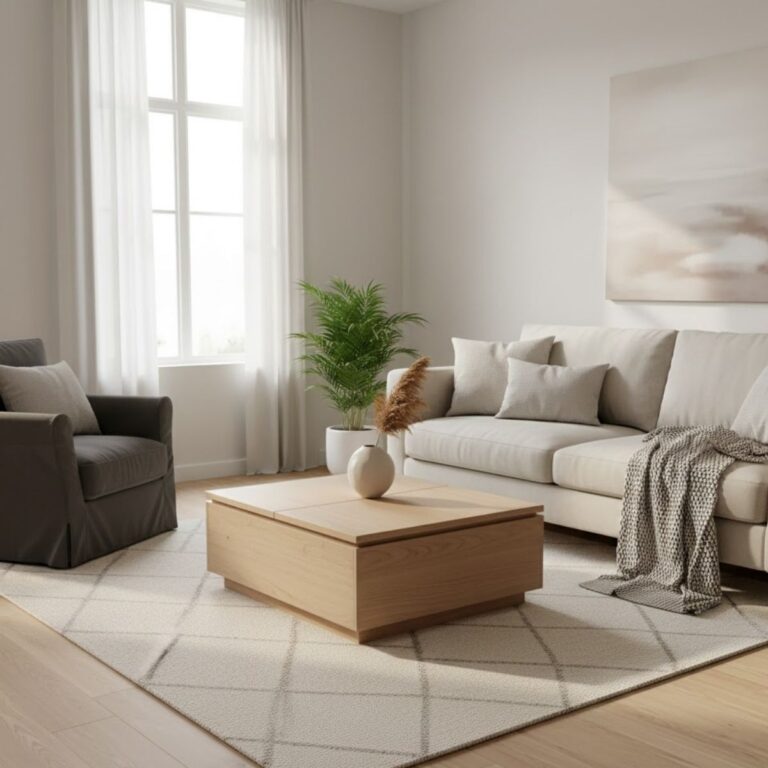
12. Why is the couch usually facing one direction?
Living rooms are designed around a focal point, whether that’s a fireplace, a TV, or a large window, and furniture instinctively orients toward it. A couch placed any other way tends to feel disconnected from the rest of the room.
13. Why do side tables sit beside chairs?
When you’re seated and relaxed, getting up to put down a drink or a book breaks the moment entirely. Side tables exist to keep everyday items within reach without disrupting comfort.
14. Why are blankets stored in baskets?
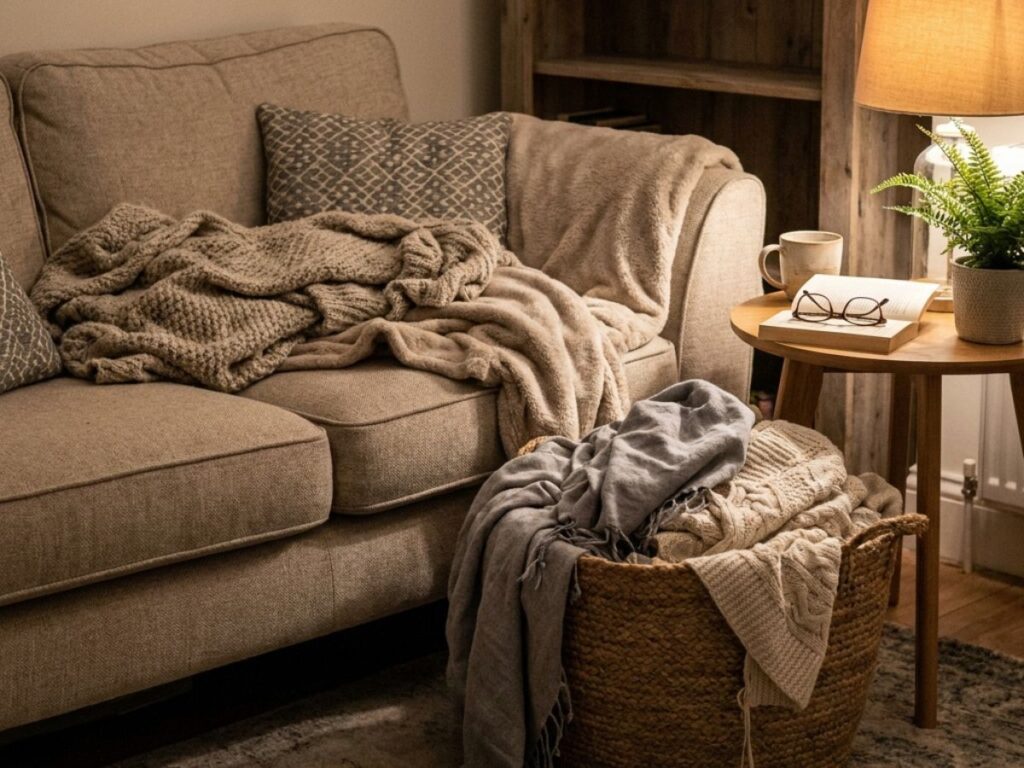
Folded blankets in a basket are easy to grab and just as easy to return, which means they actually get put away instead of piling on the couch. Baskets also add warmth and texture to a living room, making the storage itself part of the decor.
15. Why do remote controls gather in one place?
Remotes get used daily, which means they’re constantly being picked up and set down in random spots. Giving them a dedicated tray or basket on the coffee table trains everyone in the house to return them to the same place.
16. Why do lamps sit in corners?
Corners are the darkest parts of a room because they’re furthest from windows and ceiling lights. A lamp in the corner spreads light outward into the room rather than competing with overhead sources, which creates a warmer, layered effect.
Closet and Bedroom Habits Explained
Bedrooms often depend on storage habits that quietly make the daily routine smoother, even when you don’t notice them doing it.
17. Why do closets have rods at a set height?
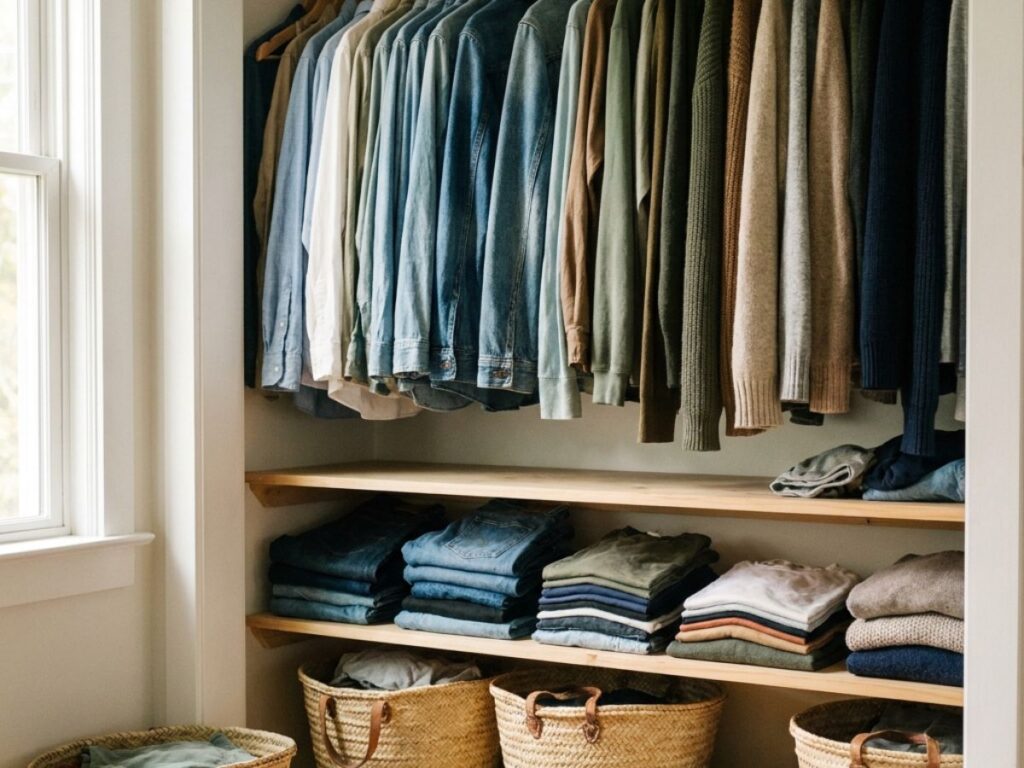
Standard closet rods are positioned to give hanging clothes enough clearance from the floor while still being easy to reach for most adults. Too high and the space above goes to waste; too low and long items drag.
18. Why are shelves above closet rods?
The area above the rod is harder to reach, which makes it ideal for items you don’t need every day, like seasonal sweaters, spare bedding, or luggage. Using that upper shelf prevents wasted vertical space in what is usually an already-small room.
19. Why do we fold sweaters instead of hanging them?
Heavy knit fabrics pull downward under their own weight when hung, which causes the shoulders to stretch out of shape over time. Folding keeps the structure intact and actually extends the life of the sweater.
20. Why are drawers used for socks and underwear?
Small items like socks and underwear get lost in open shelving and create visual noise in a closet. Drawers contain them in one place, making the daily routine of getting dressed faster and less chaotic.
21. Why do many people keep laundry hampers in bedrooms?
Most people undress in the bedroom, so having the hamper there means dirty clothes go directly in rather than landing on the floor. It removes one step from the routine, which makes all the difference in keeping the room tidy.
22. Why does making the bed change the room instantly?
The bed takes up more visual real estate than any other piece of furniture in the room, so when it’s made, the whole space looks pulled together. It’s often cited by home organizers as the single highest-impact daily habit for bedroom tidiness.
Bathroom and Utility Habits
Small rooms often require the most thoughtful organization, and bathrooms are no exception.
23. Why are towels stored near the shower?
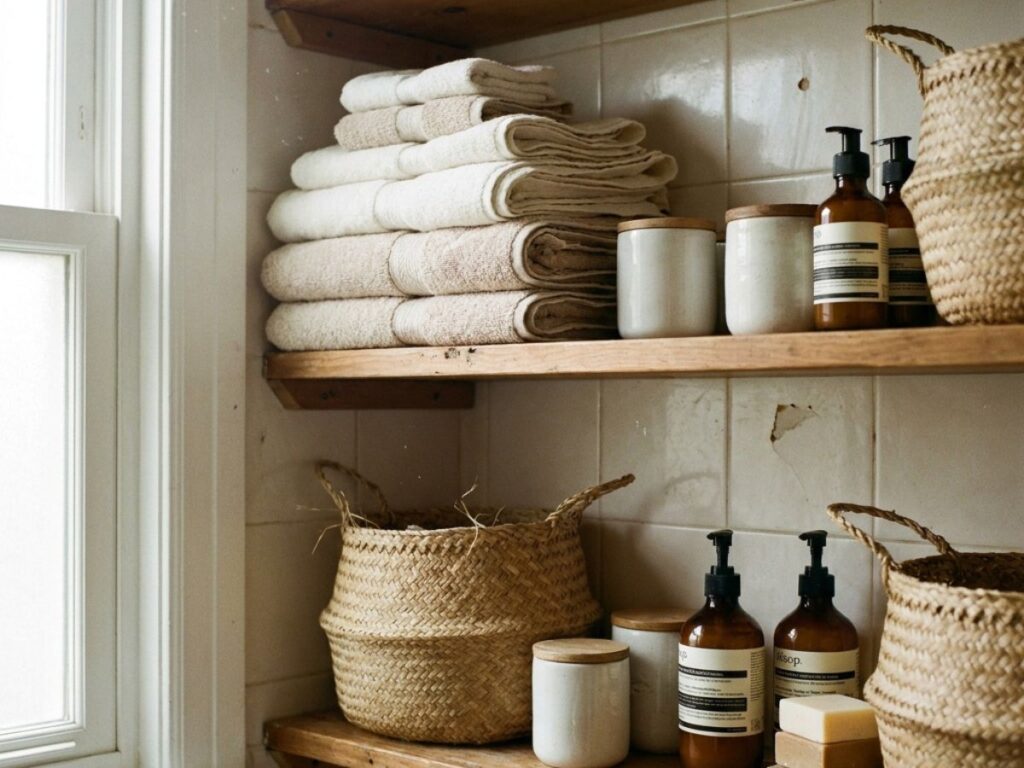
Having a towel within arm’s reach when you step out of the shower is both practical and one of those small comforts that genuinely improve the start of a day. Storing them further away means a cold, wet trip across the bathroom that nobody enjoys.
24. Why do bathroom cabinets use small shelves?
Most bathroom products are small bottles and boxes that get lost on deep shelves. Shallow shelving keeps everything visible and reachable, which means you actually know what you have and use it before it expires.
25. Why is toilet paper stored in bulk nearby?
Running out of toilet paper at the wrong moment is one of the most preventable household inconveniences, which is why most people keep a backup supply within reach. Having extras stored in or near the bathroom means the problem is solved before it starts.
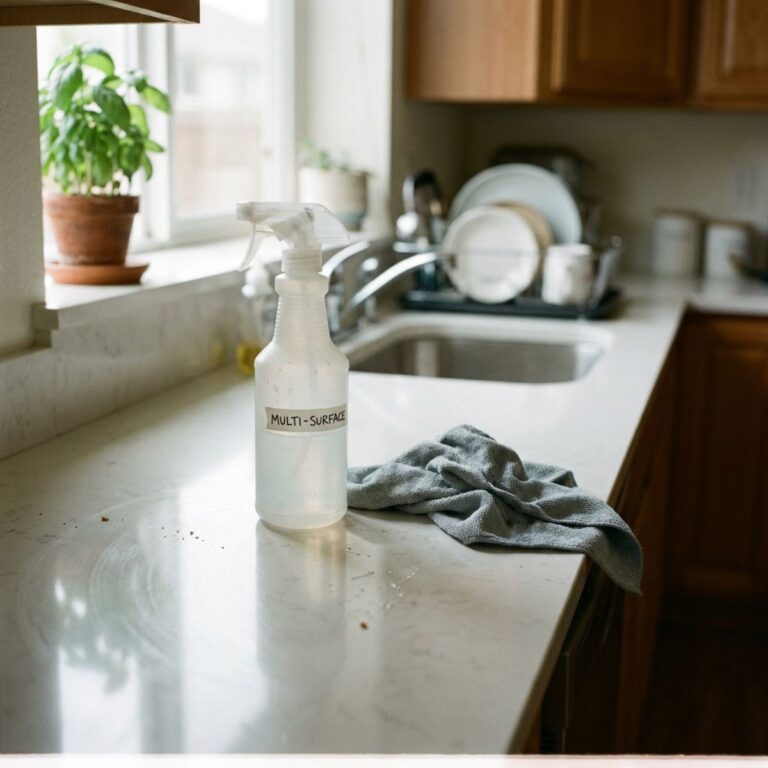
26. Why are cleaning products kept together?
Keeping all cleaning products in one place, usually under the sink or in a caddy, means you can grab everything at once and move through the house efficiently. Scattered products lead to half-finished cleaning sessions and a lot of unnecessary backtracking.
Habits That Help the Whole House
Some of the most useful home organization habits explained here apply to every room because they reduce friction no matter where you use them.
27. Why do labels make storage easier?
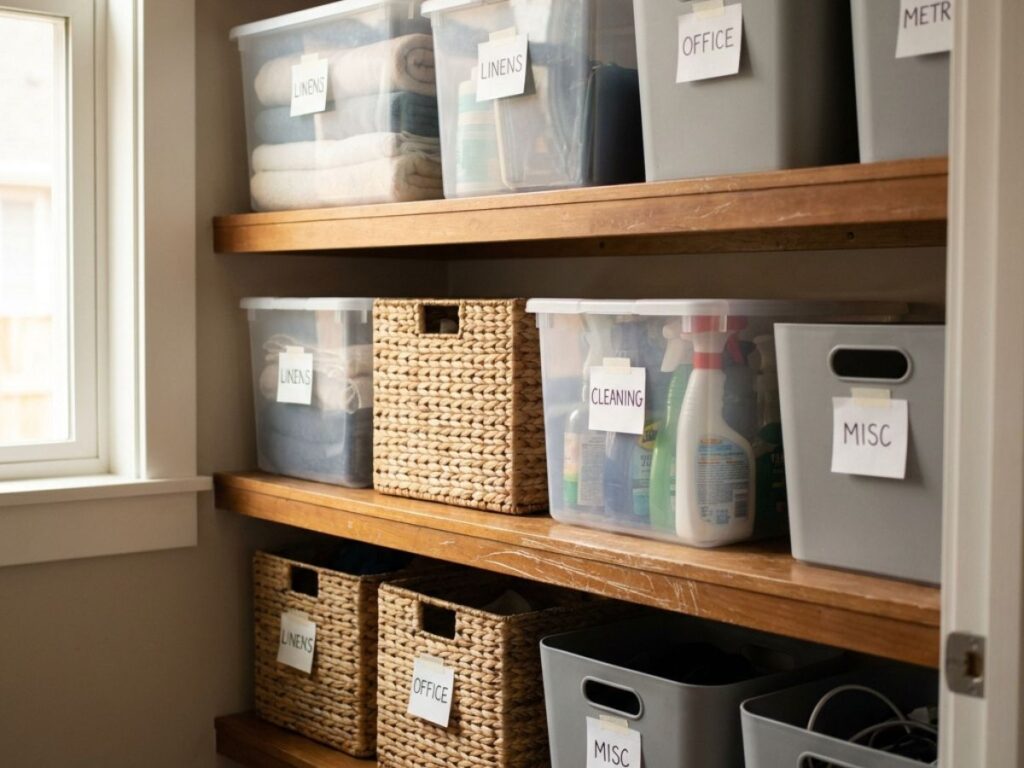
Labels eliminate the need to open every container to find what you’re looking for, which is especially useful in pantries, closets, and storage rooms. They also help other people in the household put things back correctly, which is how systems actually stay organized long-term.
28. Why do people donate items regularly?
Storage systems work best when there’s breathing room. When every shelf and drawer is packed to capacity, things become harder to find, put away, and maintain. So regular decluttering keeps the whole system running.
29. Why do duplicate chargers appear everywhere?
Chargers multiply because people move them to wherever they need power, whether that’s the bedroom, kitchen counter, or living room. Rather than carrying one charger through the house, people eventually settle into keeping one in each room they use most.
30. Why do most homes have a junk drawer?
Every home accumulates items that don’t belong in any defined category. A junk drawer contains that overflow, so it doesn’t spread through the house. Having one designated spot for odds and ends actually keeps the rest of the home more organized.
Most home organization habits are not random at all. They developed because they save time, reduce friction, and make spaces easier to live in. Once you understand the home organization habits explained throughout this post, organization starts to feel less like work and more like quiet intelligence built into everyday life.
More To Explore
- Ever wondered why your cleaning routine actually works? This guide to cleaning habits explained breaks down 20 everyday habits in a simple Q&A style, so the logic finally makes sense.
- If you’ve ever wondered why onions make you cry or why bread goes stale overnight, these food trivia questions and answers finally explain what’s actually happening in your kitchen. Simple, satisfying answers to 25 everyday cooking moments you’ve probably never stopped to question.