25 Food Trivia Questions and Answers About Everyday Cooking
These everyday food trivia questions and answers come up in the kitchen more often than you’d think. From wondering why onions make you cry to why your bread goes cardboard-hard overnight, so many small cooking moments leave you curious without ever getting an answer. Understanding what’s actually happening in your kitchen makes everything a little easier, a little more satisfying, and honestly a lot more fun. Here are 25 everyday food questions answered simply and clearly.

Everyday Food Questions About Cooking Basics
These are the questions that pop up during the most ordinary cooking moments, the ones you’ve probably wondered about a dozen times without ever stopping to look up. Whether you’re slicing onions and tearing up for no obvious reason or watching your pasta water get increasingly foamy, there’s always a simple answer hiding behind the mystery. When the kitchen questions run out, these fall trivia questions and answers cover pumpkin spice, apple cider, and other autumn pantry favorites.
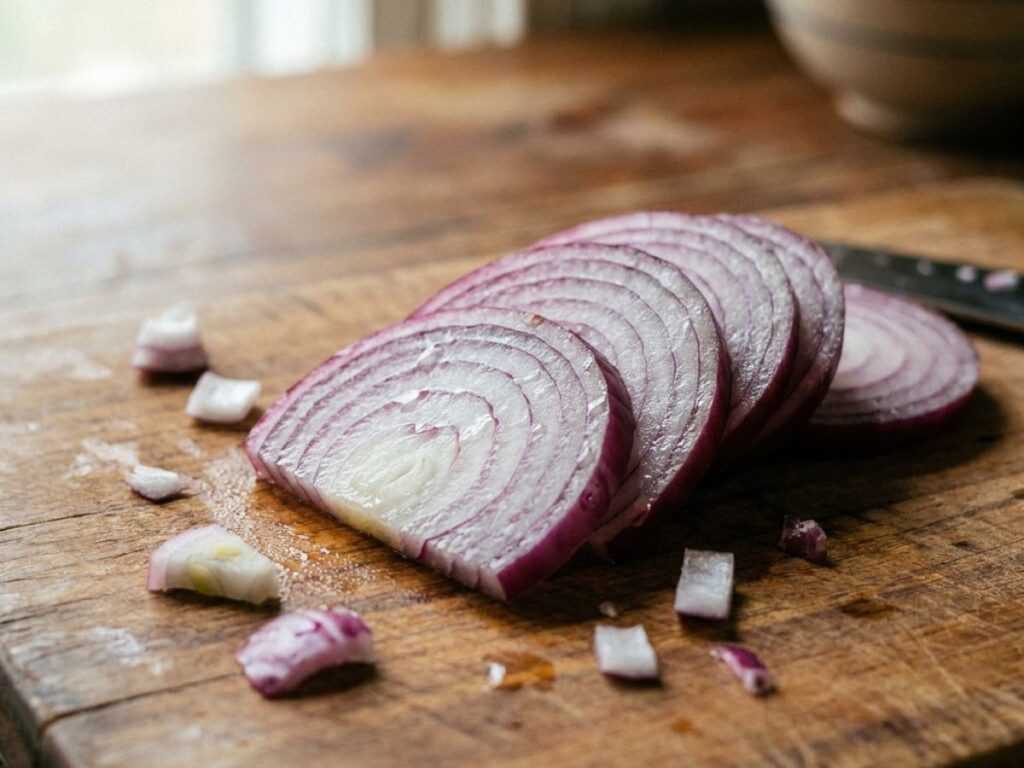
1. Why do onions make you cry?
When you cut an onion, it releases sulfur compounds that react with the moisture in your eyes, forming a mild irritant that triggers your tear response. Your eyes produce tears as a natural defense. Chilling the onion beforehand or using a sharp knife can reduce how much of the compound gets released.
2. Why does garlic smell stronger when chopped?
Whole garlic cloves have very little scent on their own. Chopping or crushing breaks open the cells and triggers a chemical reaction that produces allicin, the compound responsible for that sharp, pungent aroma. The finer you chop it, the more intense the smell.
3. Why does water boil faster with a lid on?
A lid traps heat and steam inside the pot, raising the temperature more quickly and preventing heat from escaping into the air. It doesn’t dramatically speed things up, but it makes a noticeable difference, especially when starting from cold.
4. Why does oil float on water?
Oil is less dense than water, so it naturally rises to the surface rather than mixing in. The two liquids are also chemically incompatible: oil is non-polar and water is polar, which is why they resist combining no matter how much you stir.
5. Why does pasta water foam?
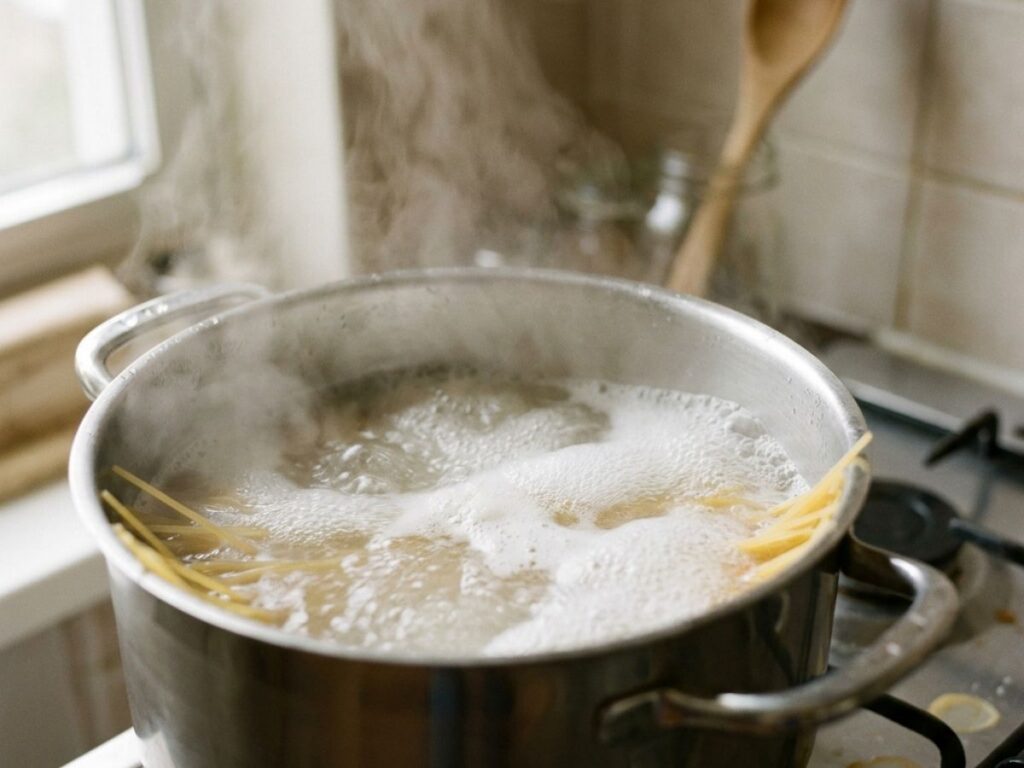
When pasta cooks, it releases starch into the water. That starch creates a thin film on the surface that traps air bubbles, building into foam. Adding a pinch of salt or a small drizzle of oil can help keep it under control.
Everyday Food Questions About Bread and Dairy
Bread and dairy are two of the most comforting staples in any kitchen, and also two of the most reliably puzzling. Why does a fresh loaf go from soft to cardboard overnight? Why does cheese behave so differently depending on the variety? These everyday food facts finally give those pantry staples the explanation they deserve.
6. Why does bread go stale?
Bread goes stale when the starch molecules inside the loaf gradually recrystallize and firm up over time, a process called retrogradation. This is actually separate from drying out, and it happens even in sealed packaging. Storing bread at room temperature slows it down better than the fridge, which actually speeds staling up.
7. Why does toast smell better than bread?
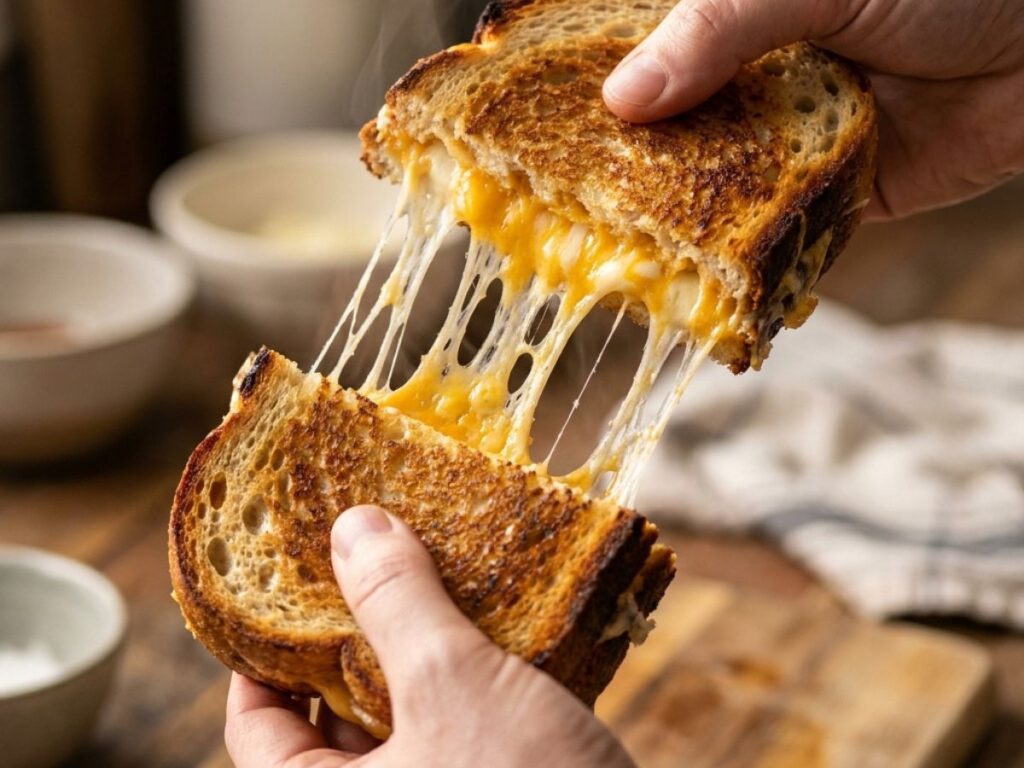
Toasting triggers the Maillard reaction, a chemical process between amino acids and sugars that produces hundreds of new flavor and aroma compounds. That golden-brown crust and the warm smell that fills the kitchen are both products of the same reaction, and it only happens above a certain temperature.
8. Why do some cheeses melt better than others?
Soft, younger cheeses like mozzarella and brie have higher moisture content and more flexible protein structures, which allow them to melt smoothly. Aged cheeses like parmesan have tightly bound proteins and low moisture, so they tend to separate or turn grainy when heated rather than melting into a pool.
9. Why does milk spoil?
Bacteria naturally present in milk break down the sugars and proteins over time, producing acids and other compounds that sour the smell and flavor. Refrigeration slows this process significantly, but it doesn’t stop it entirely.
10. Why is butter better at room temperature?
Cold butter is firm because its fat crystals are tightly packed. At room temperature, those crystals loosen and the butter becomes soft and creamy, much easier to spread and richer in flavor. It also releases aroma compounds more readily when it isn’t cold, which is why room-temperature butter tastes noticeably better.
Everyday Food Questions About Cooking Reactions
Some of the most satisfying cooking moments come down to chemistry, even if you’d never describe it that way. The sizzle of meat in a hot pan, the golden color of caramelized onions, the way a pinch of salt wakes everything up: these are all cooking reactions doing exactly what they’re meant to do. Here’s what’s actually happening when heat meets food.
11. Why do eggs turn solid when cooked?
Eggs contain proteins that are loosely coiled in their raw state. When heat is applied, those proteins unfold and then bond together, forming a solid network. It’s the same reason you can’t un-cook a hard-boiled egg: the protein structure has permanently changed.
12. Why does meat brown?
The browning of meat in a hot pan is caused by the Maillard reaction, the same process that browns toast. High heat triggers a reaction between amino acids and sugars on the meat’s surface, creating hundreds of new flavor compounds and that characteristic dark, savory crust.
13. Why does sugar caramelize?
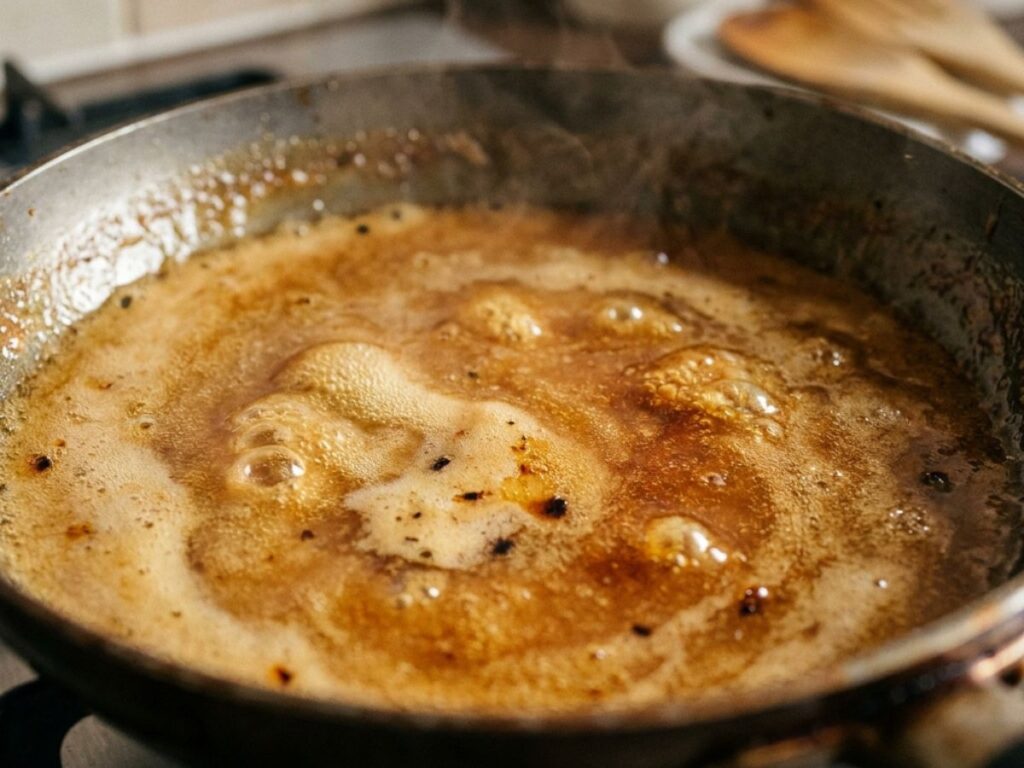
When sugar is heated past a certain temperature, the sucrose molecules break down and form new compounds with complex flavors and a deep amber color. This is purely a heat reaction with no proteins involved, which is what separates caramelization from the Maillard reaction.
14. Why does salt enhance flavor?
Salt suppresses bitterness and amplifies the natural flavors already present in food. It also increases the volatility of aromatic compounds, meaning food smells stronger and more flavorful when seasoned. That’s why even a small pinch can make an entire dish taste more vibrant.
15. Why does lemon stop browning?
The acid in lemon juice slows the oxidation that causes cut fruit and vegetables to turn brown. Oxidation happens when the surface is exposed to air, and acid interferes with the enzymes responsible for that reaction. A light squeeze over cut apples or avocado buys you noticeably more time.
Everyday Food Questions About Storage and Freshness
Knowing how to store food properly isn’t just about saving money, it’s about understanding what’s actually happening to your groceries from the moment they come home. These everyday cooking trivia questions cover the small storage habits that make a real difference to flavor, texture, and how long things last.
16. Why do apples turn brown?
When an apple is cut, the exposed flesh reacts with oxygen through a process called oxidation. Enzymes in the apple speed this along, producing the brown color. Keeping cut apple submerged in water or adding a squeeze of lemon juice slows it down considerably.
17. Why do bananas ripen faster together?
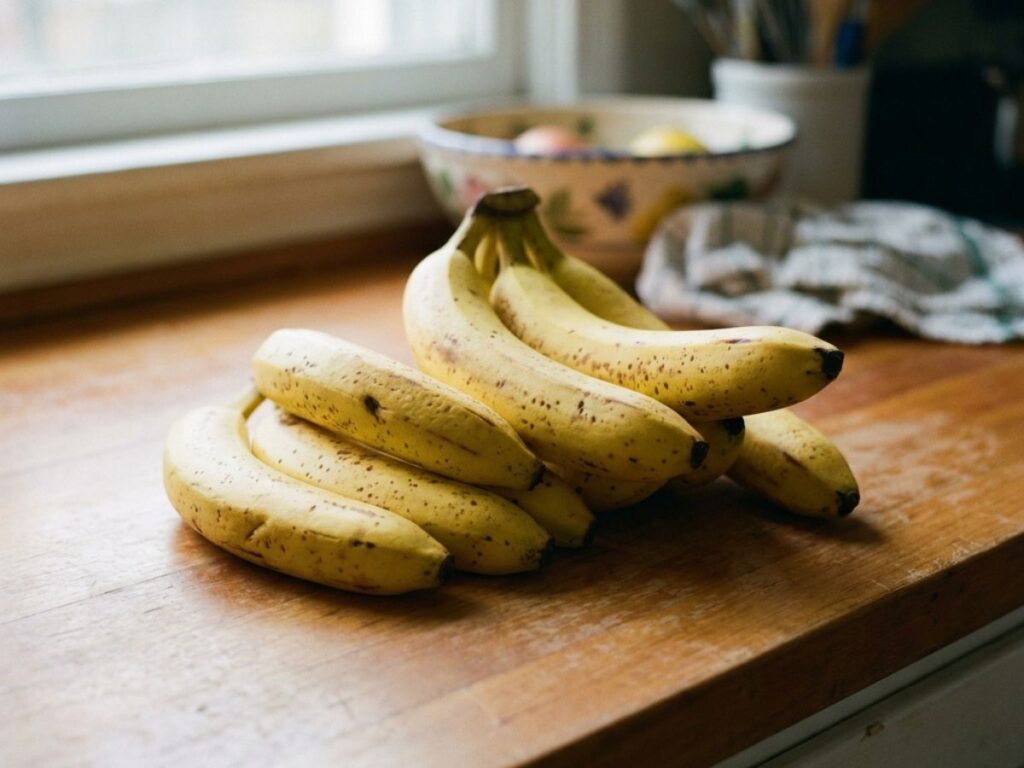
Bananas release ethylene gas as they ripen, and when grouped together, that gas concentrates and speeds up the ripening of every banana nearby. Separating them or keeping them away from other fruit slows the process down.
18. Why do greens wilt?
Leafy greens wilt when they lose moisture, either from sitting in warm air or being stored somewhere too dry. The cells inside the leaves deflate when dehydrated, which is why greens perk back up when soaked in cold water. A damp paper towel in the storage bag helps keep them crisp for longer.
19. Why does refrigeration slow spoilage?
Cold temperatures slow down both bacterial growth and the chemical reactions that break down food. Most bacteria that cause spoilage thrive at room temperature and become much less active below 40°F. That’s why the fridge is effective, though not indefinite.
20. Why do ripe fruits taste sweeter?
As fruit ripens, enzymes break down the starches stored inside and convert them into sugars. An unripe banana is starchy and firm; a ripe one is soft and sweet because that conversion has already happened. The same process is why overripe fruit can taste almost syrupy.
Everyday Food Questions That Surprise You
Not all food trivia questions and answers come from the stove or the refrigerator. Some of the most interesting everyday food facts are hiding in your snack drawer or your glass of soda. These are the ones that make you pause mid-bite and think, wait, really?
21. Why does chocolate melt so easily?
Chocolate contains cocoa butter, a fat that melts at just below body temperature, around 93°F. This is actually a deliberate quality of well-made chocolate: it’s designed to melt smoothly on your tongue rather than feeling waxy or heavy. That silky texture is one of the things that makes a good piece of chocolate so satisfying.
22. Why does coffee smell stronger than it tastes?
Our sense of smell is far more sensitive than our sense of taste, and coffee contains over 800 aroma compounds that reach us through the air before we ever take a sip. By the time coffee hits your tongue, you’re only tasting a fraction of what your nose has already picked up, which is part of why the first smell of a fresh brew feels so good.
23. Why do chips go stale?
Chips go stale when they absorb moisture from the surrounding air, which softens the crisp structure and removes the satisfying crunch. This is why resealable packaging matters, and why a bag left open overnight loses its appeal so quickly.
24. Why does soda fizz?
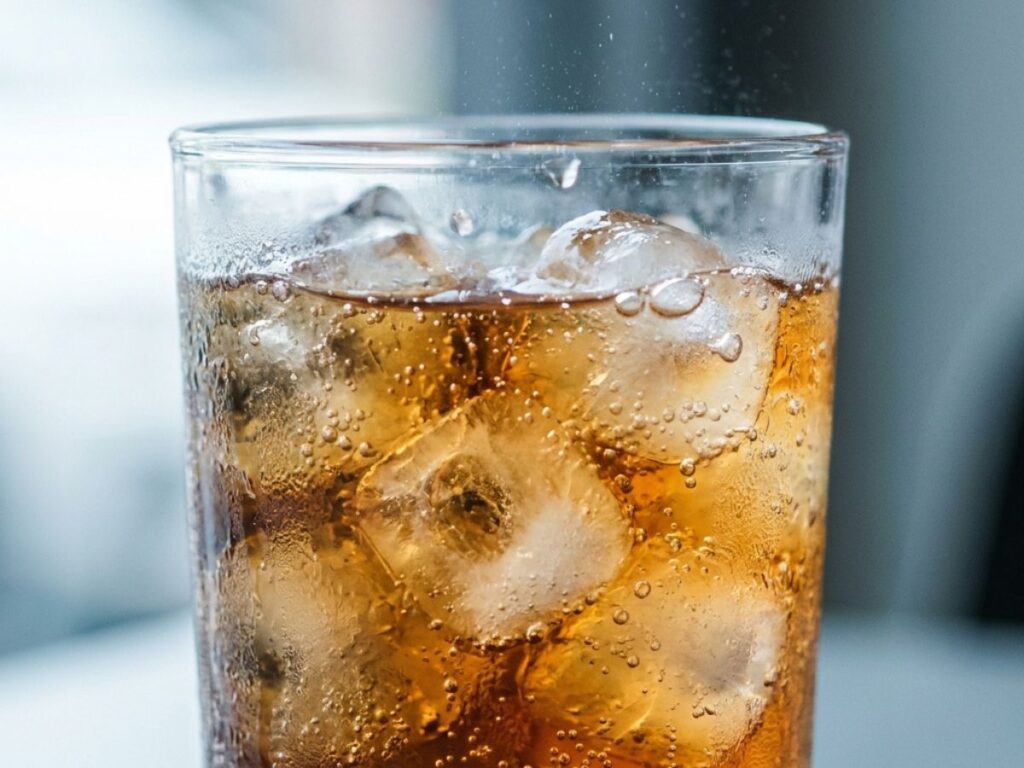
Carbonated drinks are pressurized with carbon dioxide gas that dissolves into the liquid under pressure. When you open the bottle or can, the pressure drops and the gas escapes as bubbles. Pouring over ice or tilting the glass as you pour encourages more of those bubbles to release at once.
25. Why does ice float?
Water is unusual in that its solid form is actually less dense than its liquid form. Most substances are denser as solids, but water molecules arrange into a lattice structure when frozen that takes up more space. That’s why your ice sits on top of your drink rather than sinking to the bottom.
Why Everyday Food Questions Matter
These food trivia questions and answers are small, but understanding them changes how you feel in your kitchen. When you know why the onions are making your eyes water, or why your bread went firm overnight, you stop feeling like things are just happening around you and start feeling like you actually understand the space you cook in every single day. Food becomes a little less mysterious, and a lot more enjoyable. And a kitchen that makes sense is a kitchen you actually want to spend time in.
More To Explore
- Ever wondered why your cleaning routine actually works? This guide to cleaning habits explained breaks down 20 everyday habits in a simple Q&A style, so the logic finally makes sense.
- Ever wonder why your home is set up the way it is? These home organization habits explained will finally make sense of the small everyday choices you make without thinking, from where you store your shoes to why you keep a junk drawer.