30 Practical Ways to Rotate Wardrobes and Store Winter Clothes Without the Mess
That awkward in-between season has arrived. Heavy sweaters are still hanging, sandals are waiting in boxes, and your closet feels full but somehow unhelpful. Before summer settles in, this is the perfect time to rotate wardrobes and store winter clothes without the mess, so the transition feels calm instead of chaotic. No dumping everything onto the bed. No all-day overhaul. Just simple, practical swaps that clear space, reset your closet, and make getting dressed feel easy again.


Start with a Smart Reset
Before you touch a storage bin, start with a quick reset that makes the rest of the process easier. The smartest wardrobe rotations happen when you make a few calm decisions upfront instead of rushing into full closet chaos. This is the stage where you prevent mistakes like packing away something you still need, keeping pieces you never wear, or turning your bedroom into a week-long clothing disaster. A small, structured reset keeps the project contained, faster, and far less annoying.
1. Check the Weather Forecast First
Don’t rotate your wardrobe based on one warm afternoon. Look at the extended forecast and pay attention to patterns. If cool mornings are still showing up consistently, keep a small section of winter basics accessible. You can begin prepping for storage by sorting and cleaning, but avoid fully packing away coats and heavier layers too early. A staggered approach prevents the frustration of digging everything back out two weeks later.
2. Clear One Section at a Time
Emptying the entire closet sounds productive, but it usually leads to overwhelm. Instead, work in clean sections. Start with tops, finish that fully, then move to bottoms, and finally outerwear. Completing one category at a time keeps the space functional while you work. It also makes decision-making clearer because you are comparing similar pieces side by side instead of bouncing between sweaters and boots. Rotating wardrobes and storing winter clothes does not have to be a full weekend project. A few focused swaps can reset your closet quickly.

3. Try On Questionable Items
If you didn’t wear something all winter, pause and figure out why before automatically storing it. Try it on and move around in it. Does it itch? Does it fit differently than you remember? Does it require layering that feels impractical? Winter clothes often stay in closets for years because they are “fine.” Storage space is valuable. Only pack away what you realistically see yourself reaching for next season.
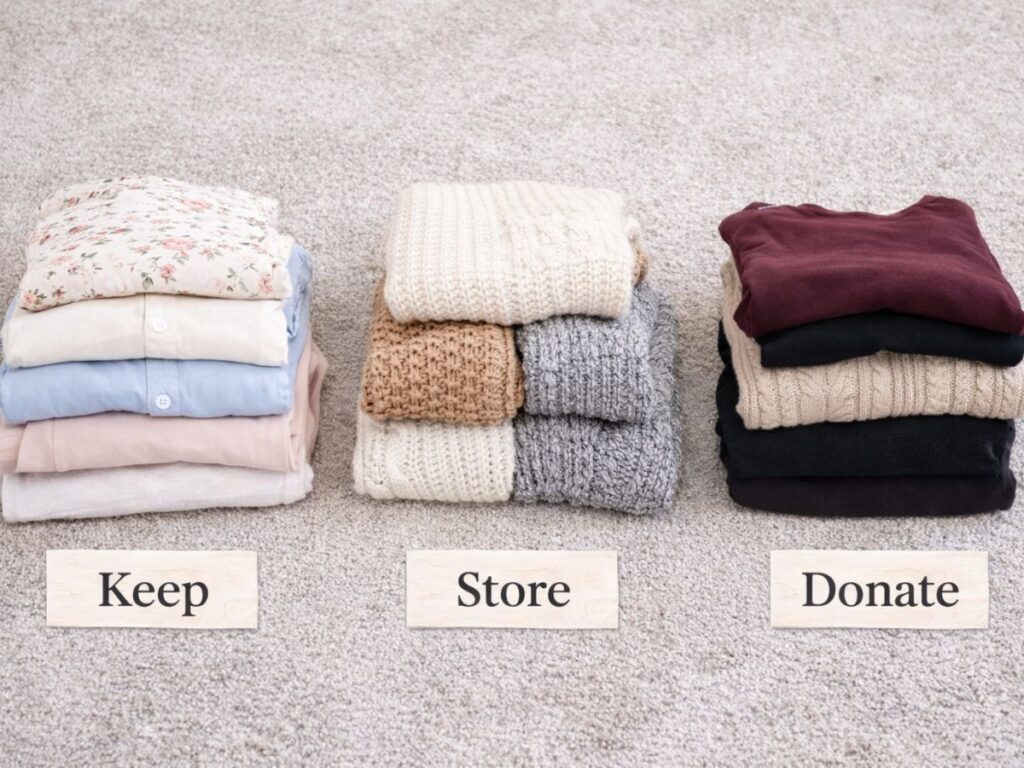
4. Create 3 Simple Piles
Keep | Store | Donate. Keep means it stays in your current rotation. Store means it fits, you love it, and you will wear it next winter. Donate means it leaves your home. Avoid adding a fourth “maybe” pile because that usually becomes permanent clutter. Clear categories speed up the process and prevent the emotional back-and-forth that makes wardrobe rotation exhausting. For the clothing side of the swap specifically, this three-box method for transitioning summer clothes to fall makes a good first pass before winter pieces come forward.
5. Let Go of Worn-Out Winter Pieces
Pilled sweaters, stretched leggings, thinning thermals, and coats with broken zippers do not need another season in storage. Winter clothing takes up more physical space than summer pieces, so every item you keep should earn that space. If something looks tired now, it will not improve in a bin for six months. Replace thoughtfully later instead of storing regret.
Smart Winter Storage Tips
Storing winter clothes is not just about getting them out of sight. It’s about making sure they come back out in good shape, smelling fresh, and ready to wear. The small details matter here because winter fabrics are bulkier, more delicate, and more expensive to replace. A few smart habits now prevent musty odors, warped sweaters, mystery stains that set over time, and bins packed so tight you dread opening them again. Do it right once, and next season’s rotation becomes a simple swap instead of a full redo.
6. Wash Everything Before Storing
Clothing that looks clean is not always clean. Body oils, deodorant residue, and tiny spills can darken or yellow over time if stored untreated. Washing or dry cleaning before storage protects fabric fibers and prevents odors from setting in. Starting next winter with fresh, ready-to-wear pieces feels organized and intentional rather than chaotic.
7. Use Breathable Storage Bins
Fabric bins, canvas containers, or ventilated plastic storage allow airflow while still protecting against dust. Completely sealed containers can trap moisture if clothing is not fully dry, which can lead to musty smells. The goal is protection, not compression. Choose containers that hold structure but do not suffocate the fabric inside.

8. Avoid Overstuffing Containers
It is tempting to maximize every inch of storage space, but tightly packed bins crush fibers and create deep wrinkles. Overstuffing also makes unpacking frustrating because everything comes out compressed and misshapen. Leave a little breathing room inside each container. It protects your clothing and keeps the system sustainable long term.
9. Store Heavy Sweaters Folded, Not Hanging
Bulky knits stretch under their own weight. Hanging heavy sweaters for months can distort shoulders and necklines, especially with thinner hangers. Fold sweaters neatly and stack them by thickness. If possible, place tissue paper between delicate pieces to reduce friction. Shape retention now saves you from reshaping frustration later.
10. Add Cedar Blocks or Sachets
Cedar helps deter pests and keeps stored clothing smelling clean without overwhelming fragrance. Place cedar blocks or sachets directly in bins or on shelves near folded stacks. Refresh them lightly with sandpaper if the scent fades. A simple, low-maintenance solution is always better than strong artificial scents that linger longer than you want.

Make Spring Closet Feel Fresh
Once winter pieces are packed away, this is your opportunity to reset the tone of your closet. A seasonal switch should not just create space; it should create relief. Lighter fabrics, easier layering, and clearer visibility make getting dressed simpler and faster. Small adjustments here change how the space feels every morning. This is where your closet shifts from crowded and heavy to calm and functional.
11. Wipe Down Closet Shelves
Dust, lint, and fabric fibers quietly collect over winter. Before placing spring pieces back on shelves, wipe everything down with a damp cloth and allow it to dry fully. This prevents dust transfer onto clean clothing and gives the space a visual reset. A freshly cleaned shelf makes the whole closet feel intentional instead of transitional. The key to rotating wardrobes and storing winter clothes without the mess is working in small sections, not emptying everything at once.
12. Switch to Lighter Hangers
Heavy wooden hangers take up more room than necessary once bulky winter coats are gone. Swapping to slim or velvet hangers instantly creates visual breathing room. They also help clothing hang evenly and prevent slipping. Even small space gains add up, especially in tighter closets.

13. Bring Forward What You Actually Wear
Move your most worn spring staples to eye level and within easy reach. Daily basics should never be hidden behind occasional pieces. If something is constantly pushed aside to grab what you prefer, that is information. Let your closet reflect your real habits, not ideal versions of them.
14. Create a “Maybe” Section
Instead of forcing immediate decisions on everything, designate a small section for items you are unsure about. If you do not wear them within a month, that gives you clarity without emotional debate. A contained “maybe” area keeps uncertainty from spreading across the entire closet.
15. Rotate Shoes Too
Wardrobe rotation is incomplete without footwear. Move boots, insulated shoes, and heavy styles into storage once temperatures stabilize. Bring sandals, flats, and lighter sneakers forward. Keeping only seasonally appropriate shoes visible reduces floor clutter and speeds up daily routines.

Maximize Storage Space
Seasonal rotation is not just about removing items. It is about storing them in ways that protect your space long-term. When storage is efficient and clearly labeled, you avoid digging through bins, stacking unstable boxes, or forgetting what you own. Smart storage makes small closets feel manageable, and larger ones feel controlled. A calm approach to rotating wardrobes and storing winter clothes keeps your space functional year-round, not just during seasonal transitions.
16. Use Under-Bed Storage for Winter Items
Under-bed storage is ideal for off-season clothing because it stays accessible without taking up prime closet space. Choose structured containers that slide easily and protect against dust. This keeps winter pieces out of sight while still being easy to retrieve if needed. Rotate wardrobes and store winter clothes with simple systems so the next seasonal switch feels smooth instead of stressful.
17. Try Vacuum Storage Bags for Bulky Coats
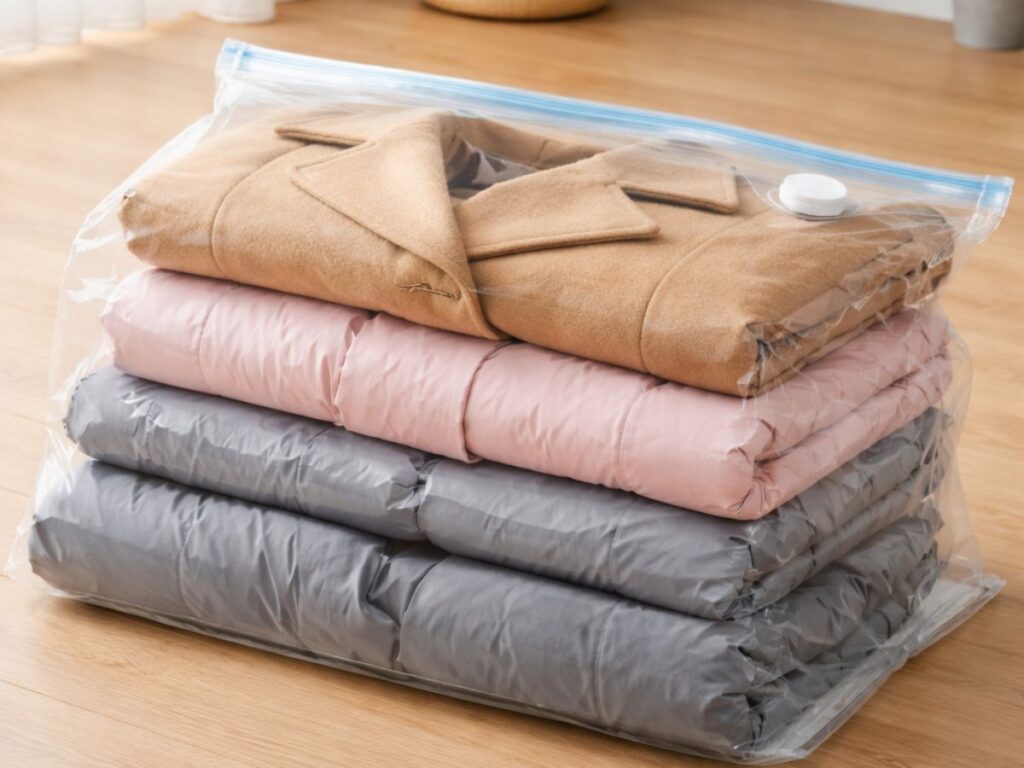
Vacuum bags can dramatically reduce the size of heavy coats and puffer jackets. They are especially useful in small apartments or shared closets. Avoid compressing delicate knits or structured wool coats for long periods, as it can distort shape. Use them selectively for the bulkiest items.
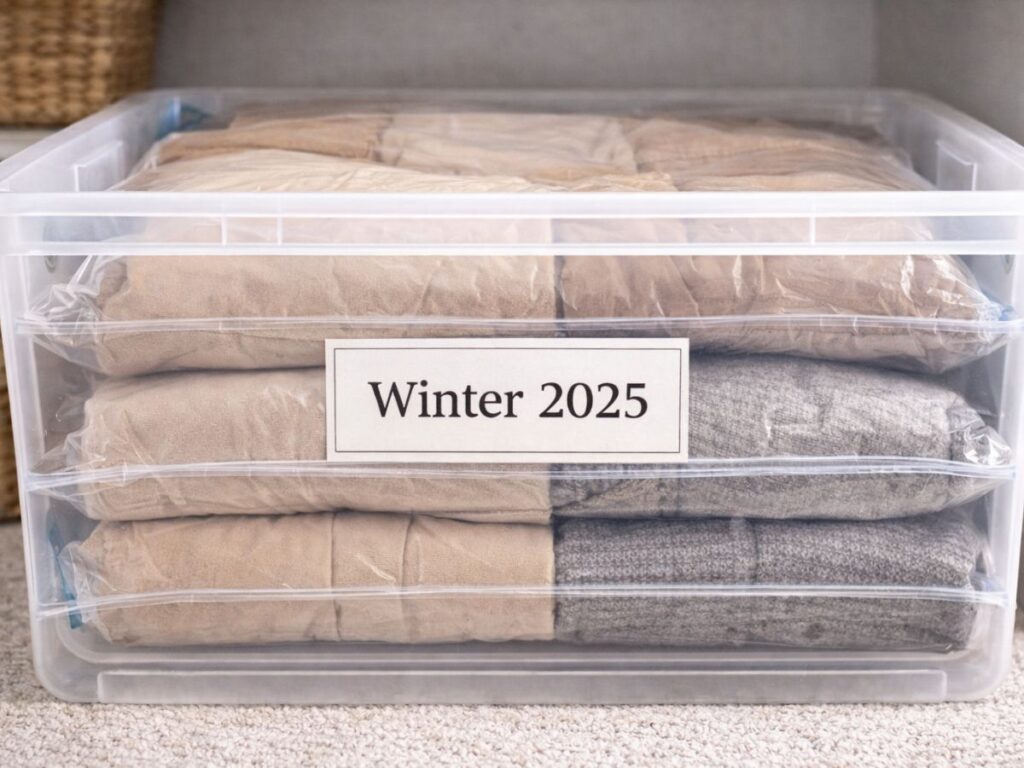
18. Label Every Storage Bin Clearly
Clear labels save time later. Instead of writing vague descriptions like “winter clothes,” be specific. “Wool sweaters,” “Thermals,” or “Scarves and gloves” make retrieval quick and frustration-free. Future you should not have to open three bins to find one scarf.
19. Store Accessories Separately
Hats, gloves, scarves, and earmuffs tangle easily when mixed with clothing. Keep them in a designated container or divided storage box. This protects delicate knits and prevents small items from disappearing into larger stacks of fabric.
20. Keep One Light Jacket Accessible
Spring weather shifts quickly. Store heavy coats, but keep one versatile light jacket within reach. This prevents unnecessary bin reopening and keeps you prepared for cool mornings or unexpected rain.
Prevent Future Closet Chaos
Rotation works best when it becomes part of a system rather than a once-a-year event. The goal is not perfection. It is preventing the buildup that makes the next switch overwhelming. Small guardrails now stop clutter from quietly returning.
21. Follow the “One In, One Out” Rule
For every new seasonal item you purchase, consider letting one go. This keeps volume stable and forces thoughtful decisions. Without limits, seasonal shopping slowly expands closet pressure year after year.
22. Limit Seasonal Purchases
Buy to fill real gaps, not emotional impulses. If you already own three black sweaters that serve the same purpose, a fourth rarely changes your wardrobe. Focus on function and fit instead of trend-based additions that may not last beyond one season. Taking time now to rotate wardrobes and store winter clothes properly saves you from reshaping, rewashing, or reorganizing later.
23. Review Your Wardrobe Mid-Season
Do not wait until the end of winter to notice what you are not wearing. A quick mid-season review helps you course-correct sooner. You may identify items ready to donate or realize you need a practical replacement before next year.
24. Create a Mini Capsule Wardrobe
Reducing your daily rotation to fewer, versatile pieces simplifies dressing. A smaller working selection keeps decision-making easier and reduces visual clutter. You can still own more, but keeping your active section tight prevents overwhelm.

25. Keep an Ongoing Donation Bag
Designate a bag or bin for items you decide to release throughout the year. When it fills up, drop it off. This habit prevents clothing from quietly migrating back into drawers and shelves.
Maintenance Habits That Help
Organization stays manageable when small maintenance habits support it. These are not major overhauls. They are simple actions that protect your effort and prevent next season’s stress. Think of this as quiet upkeep rather than another big project. Rotate wardrobes and store winter clothes in a way that protects your fabrics and protects your space at the same time.
26. Refold Stored Items Once a Year
Long-term folds can create permanent creases in certain fabrics. A quick refold halfway through storage keeps fibers from settling into deep lines. It also gives you a chance to check for moisture or pest issues.
27. Air Out Stored Clothes Mid-Summer
Choose a dry, low-humidity day to briefly air out stored winter items. This refreshes fabrics and prevents musty buildup. You do not need a full rotation, just a short exposure to fresh air before returning them to storage.
28. Photograph What You Store
A simple photo of each bin’s contents gives you a quick reference later. It reduces unnecessary unpacking and helps you remember exactly what you own. Digital reminders can prevent duplicate purchases.

29. Keep a Seasonal Checklist
A short checklist of your rotation steps makes the process repeatable. Include cleaning, sorting, labeling, and maintenance reminders. When the system is written down, it requires less mental energy next time.
30. Schedule Next Rotation on Your Calendar
Add a calendar reminder before the next seasonal shift. Treat it like routine maintenance instead of a spontaneous project. Planning ahead reduces decision fatigue and keeps wardrobe changes calm instead of chaotic. When you rotate wardrobes and store winter clothes with a plan, next season feels organized instead of overwhelming.
A Simple Reset Now Makes Next Season Easier
Rotating your wardrobe and storing winter clothes without the mess is not about owning less or having a bigger closet. It is about creating breathing room so your space works with you instead of against you. When your closet feels lighter, getting dressed feels simpler. When your winter storage is organized and labeled, next season starts without stress or scrambling.
Start small. One shelf. One drawer. One simple swap. Spring is the perfect time to reset your closet in a way that feels calm, practical, and easy to maintain.
More To Explore
- If your home keeps slipping back into clutter, the problem may not be effort. It may be the system. Here are 12 reasons staying organized feels harder than it should and exactly how to fix each one in a way you can maintain long term.
- These 30 garage organization ideas are practical, realistic, and designed to work in real life. No renovation. No expensive overhaul. Just smarter zones, better storage, and small habits that keep clutter from creeping back.
- If your bins are multiplying and mystery boxes keep showing up, it’s time for a reset. These practical ways to organize seasonal decor storage will help you contain clutter, protect fragile items, and make decorating easier next time around. No perfection required, just simple systems that actually work in real life.
- Spring hosting season arrives faster than expected. A quick reset can make your outdoor space feel clean, organized, and ready for guests. These 25 spring patio and balcony organization ideas before hosting starts will help refresh your patio or balcony and make even a small outdoor space feel welcoming for spring gatherings.
- Spring is the perfect time to reset cluttered shelves and refresh your storage. These spring linen closet organization ideas help you declutter towels, organize sheet sets, and create breathable space before allergy season peaks. Simple changes can make your linen closet easier to maintain all year.