25 Alpaca Fun Facts That Will Genuinely Surprise You (Trivia Q&A)
If you’ve ever stood next to an alpaca and felt like they were quietly sizing you up, you’re not imagining it. These animals are gentle, deeply social, and full of surprises. Whether you’ve just discovered the world of alpacas or you’ve been sharing your pasture with a whole crew of them (hi, Pickles), there’s always something new to learn. Here are 25 alpaca fun facts in Q&A style that will make you look at these fluffy creatures a little differently.
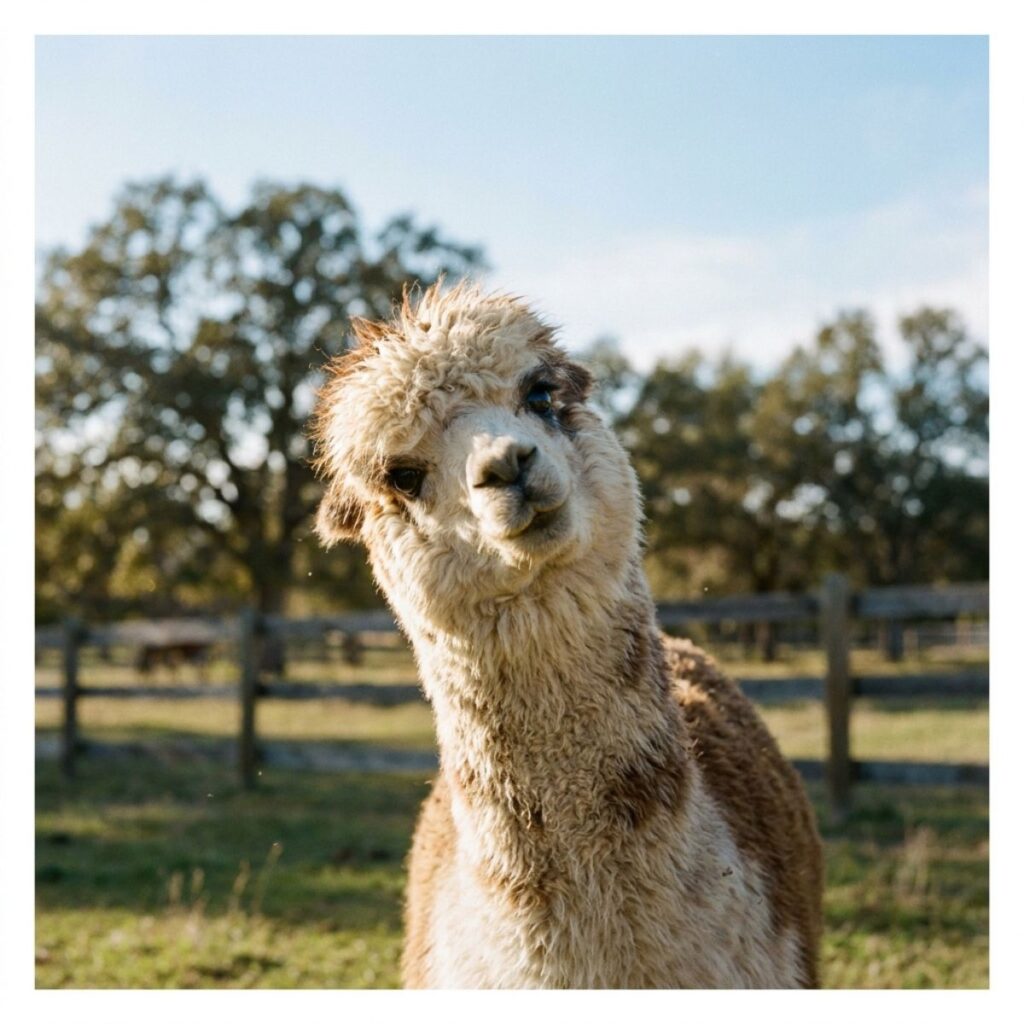

What They Actually Are
Some of the most interesting alpaca facts start right at the beginning. Where they come from, how long they’ve been around, and what makes them different from every other animal you’ve likely encountered. These five questions lay the foundation for everything else.
1. Are alpacas related to camels?
Yes, actually! Alpacas belong to the camelid family, which makes them distant cousins of camels, llamas, and vicunas. They just got the cute genes and skipped the humps.
2. How long have alpacas been domesticated?
Over 6,000 years. The Andean peoples of South America bred alpacas for their fiber so prized it was once known as “the fiber of the gods.” Not bad for an animal that also hums at you from across the pasture.
3. What is the difference between a huacaya and a suri alpaca?
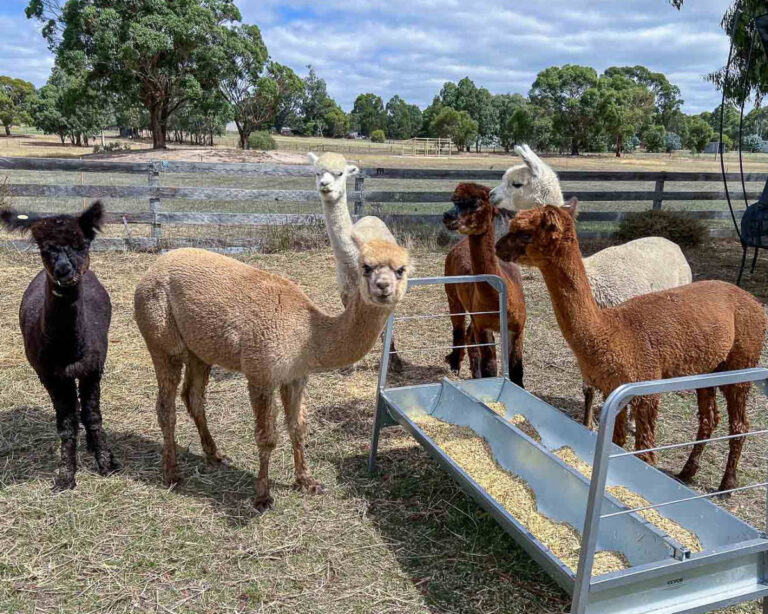
Huacaya alpacas have fluffy, crimped fleece that puffs out from the body, giving them that classic teddy-bear look. Suri alpacas have long, silky fiber that hangs in elegant pencil locks. Our boys, Biscuit, Noodle, Pickles, Custard, Muffin, and Mocha, are all huacayas, which means maximum fluffiness at all times.
4. How much does a full-grown alpaca actually weigh?
Somewhere between 100 and 185 pounds for most adults. Given how big they look, that surprises a lot of people. The fleece is doing a serious amount of visual work.
5. Are alpacas and llamas the same animal?
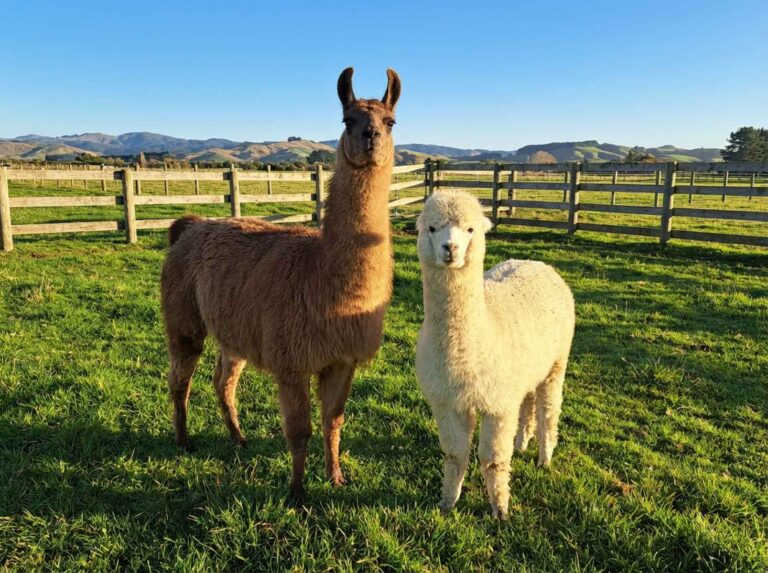
Not at all. Alpacas are smaller, have shorter faces, softer fiber, and a noticeably friendlier expression. Llamas are larger and were traditionally bred to carry loads. The easiest shorthand: alpacas look like they’re having a great day. Llamas look like they’re managing a situation.
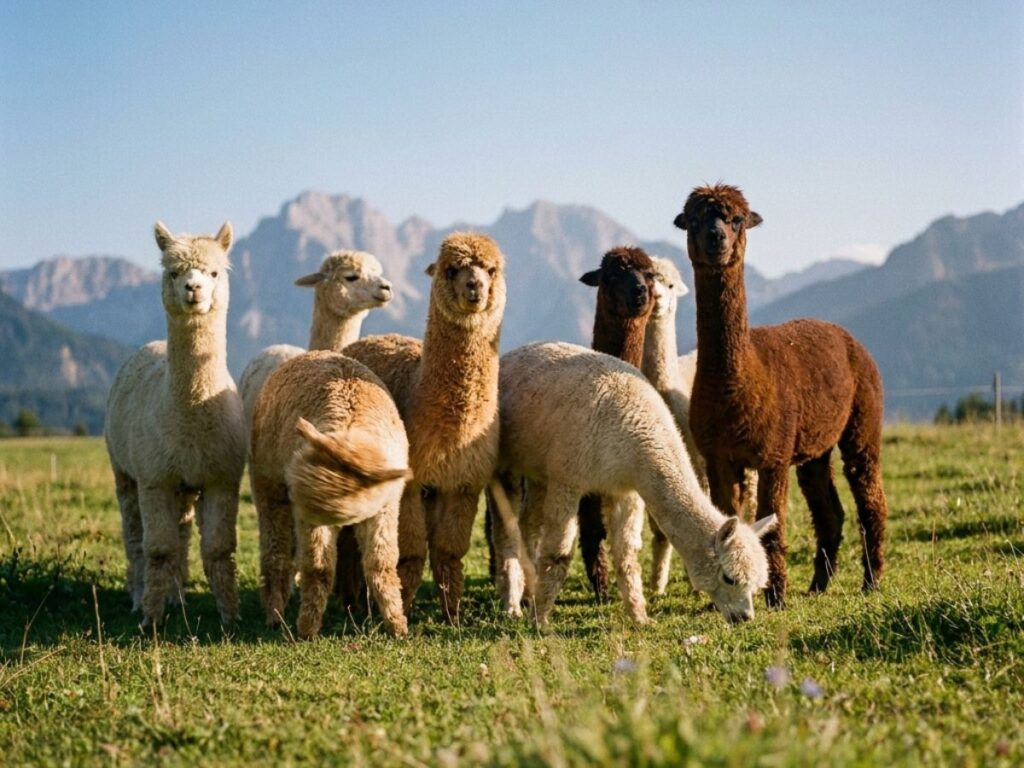
How They Communicate
This is where alpaca behavior facts get really good. Alpacas have a whole vocabulary of sounds, body language, and gestures that most people have never heard about. Once you know what to look for, spending time with a herd becomes a completely different experience.
6. Why do alpacas hum?
Humming is their default mode of communication, and it covers a lot of ground. They hum when they’re curious, content, a little anxious, or just keeping tabs on the herd. Pickles hums steadily through most of feeding time, and honestly, it’s one of the most calming sounds on the farm.
7. Why do alpacas spit?
Spitting is mostly directed at other alpacas, not people, and it almost always comes down to food or personal space. If an alpaca does spit at you, it usually means you stepped between them and something they really wanted. Consider it honest communication.
8. Why do alpacas smell each other’s butts?
The same reason dogs do! It’s a greeting ritual that carries a surprising amount of information. A quick sniff tells an alpaca about the other animal’s health, stress levels, and social standing within the herd. Muffin does this to every new arrival with great thoroughness. He takes the job seriously.
9. Why do alpacas climb on each other?
This one always catches new alpaca owners off guard. In male herds, especially, climbing behavior is about establishing dominance and working out the social order. It looks chaotic, but it’s completely normal herd communication. Mocha is almost always somehow involved when it happens with ours.
10. What does it mean when an alpaca’s ears go flat?
That is a warning. Flattened ears signal that the alpaca is irritated, feeling threatened, or very close to spitting. When you see the ears go back, give them some room and don’t push it.
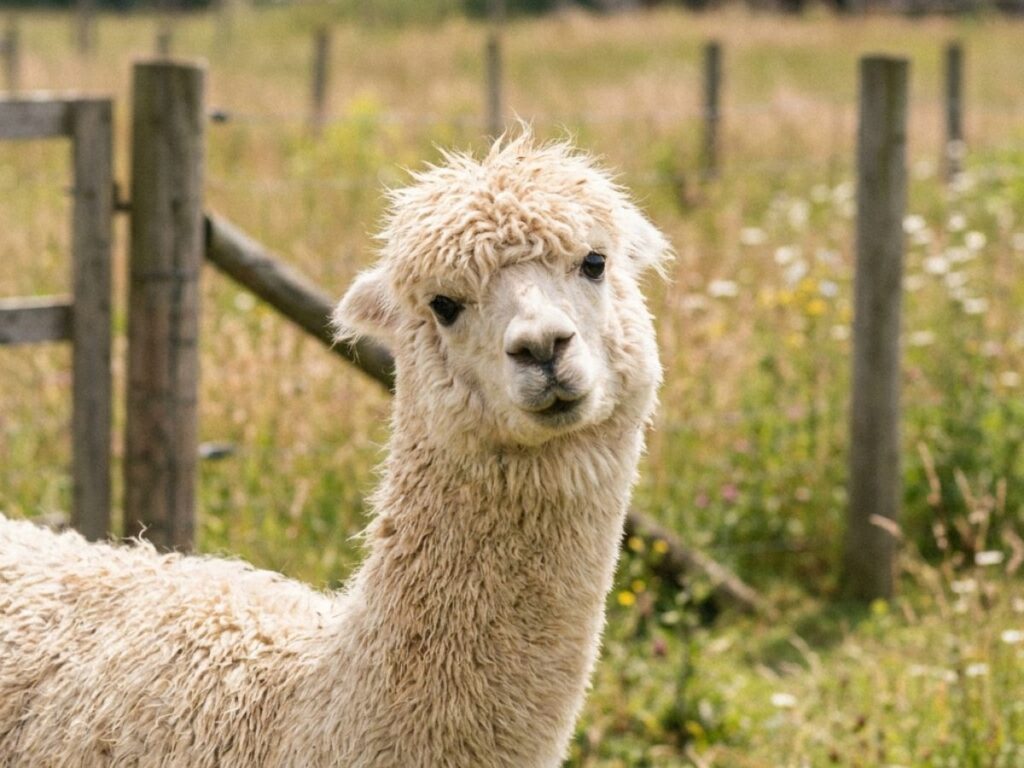
Herd Life
Some of the most surprising alpaca fun facts are about how they live together. Alpacas are deeply wired for community, and their social habits are more nuanced than most people realize. A lot of what looks random or funny from the outside actually makes complete sense once you understand the herd dynamic.
11. Can you keep a single alpaca on its own?
You really shouldn’t. Alpacas are deeply social herd animals and can become genuinely distressed when kept alone. A lone alpaca will often stop eating, become anxious, and call out constantly for company. They need at least one companion, and ideally several.
12. Why do alpacas all use the same bathroom spot in the pasture?
Alpacas are naturally tidy and tend to pick one communal area for bathroom use and stick to it. This is actually very useful from a farm management standpoint because it keeps the rest of the grazing area clean. Ours chose their spot within the first week and have never deviated from it.
13. Do alpacas form real friendships with each other?
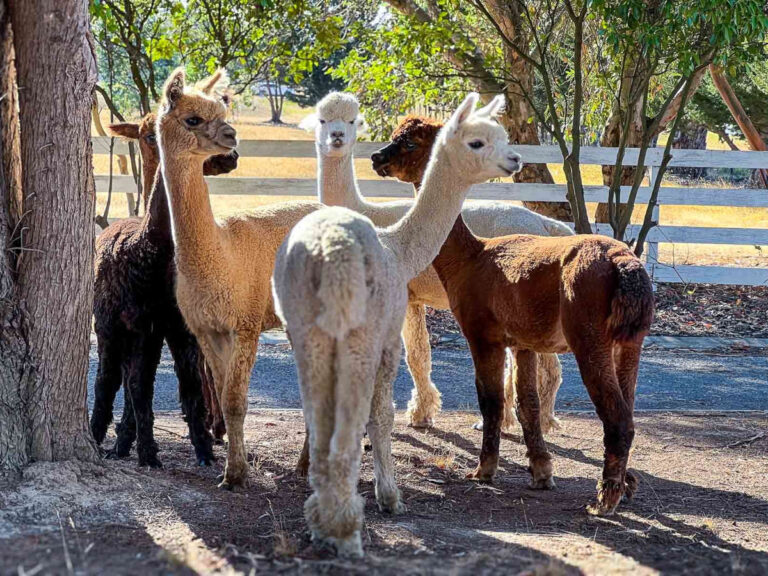
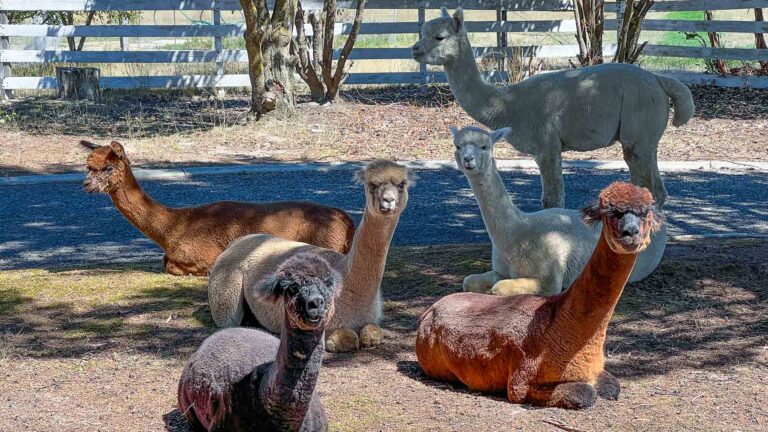
Very much so. They often have preferred companions they’ll graze next to, sleep near, and stay close to during stressful moments. Custard and Mocha have been almost inseparable since day one.
14. What happens when alpacas feel threatened?
They cluster together, raise their heads, and go into full alert mode. They can also make a high-pitched alarm call that carries much further than you’d expect from such a gentle animal. Once one starts, the whole herd pays attention immediately.
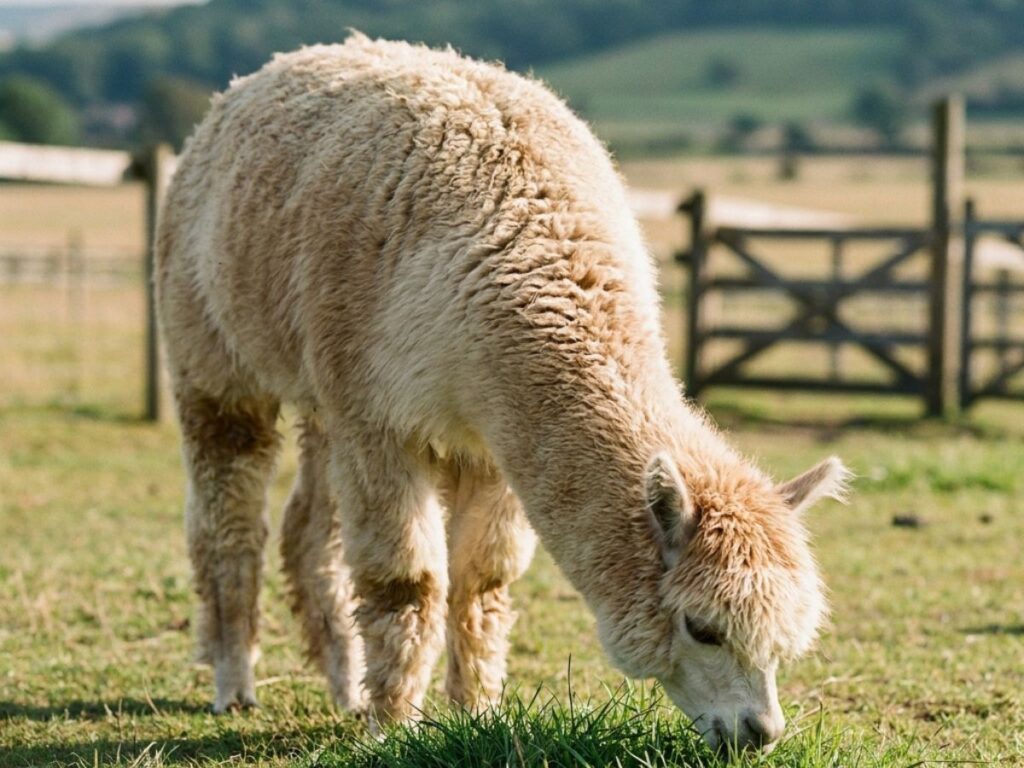
What They Eat
For alpaca facts for adults who are thinking about owning them, this section is especially useful. Alpacas are simpler to feed than most people expect, but there are a few things worth knowing before you get started. A couple of these answers genuinely surprised us when we first brought the boys home.
15. Do alpacas eat a lot?
Surprisingly little for their size. They have a three-compartment stomach and are very efficient at extracting nutrients. Most alpacas eat around 1.5% of their body weight in hay or grass per day, which is far less than horses or cattle of a comparable size.
16. Why do alpacas need hay if they have access to pasture?
Fresh grass alone does not cover all their nutritional needs year-round, especially when the pasture dries and loses its nutritional value. Good quality hay keeps their digestive system running the way it should and fills in what the grass cannot provide.
17. Can alpacas have treats?
Some owners offer small amounts of carrots, apple slices, or leafy greens as occasional treats. The key is to keep it occasional. Alpacas have sensitive digestive systems, and too much sugar, or the wrong plants entirely, can cause real problems.
18. Are there plants that are toxic to alpacas?
Yes, and this is important to know before setting up a pasture. Azaleas, foxglove, nightshade, and several other common garden and wild plants can be seriously toxic. A proper pasture check before bringing alpacas home is not optional.
Their Fiber
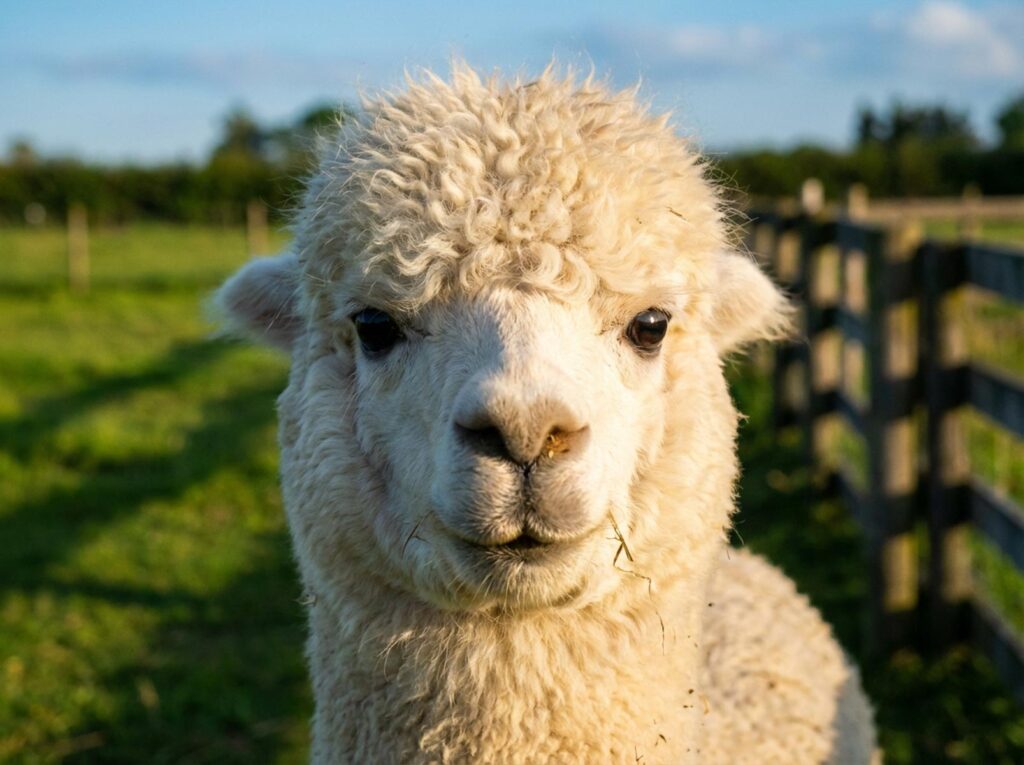
Alpaca fiber facts deserve their own conversation, honestly. The fiber these animals produce is remarkable, and most people have no idea just how special it is until they learn the science behind it. If you’ve ever worn an alpaca knit and wondered why it felt so different from regular wool, here’s your answer.
19. Why is alpaca fiber warmer than wool if it is so lightweight?
Alpaca fiber has a hollow core, which means it traps air and insulates exceptionally well. It is genuinely warmer than sheep’s wool while still being lighter, which is part of why it has been so valued for thousands of years.
20. Why can some people who react to wool wear alpaca just fine?
Sheep’s wool contains lanolin, which is a common irritant for sensitive skin. Alpaca fiber is naturally lanolin-free, so many people who find wool scratchy or uncomfortable find alpaca much easier to wear, even directly against the skin.
21. How much fiber does one alpaca produce per year?
A single alpaca typically produces between 5 and 10 pounds of fleece per shearing, depending on the animal. That is enough for several garments, which explains the fiber’s historical value.
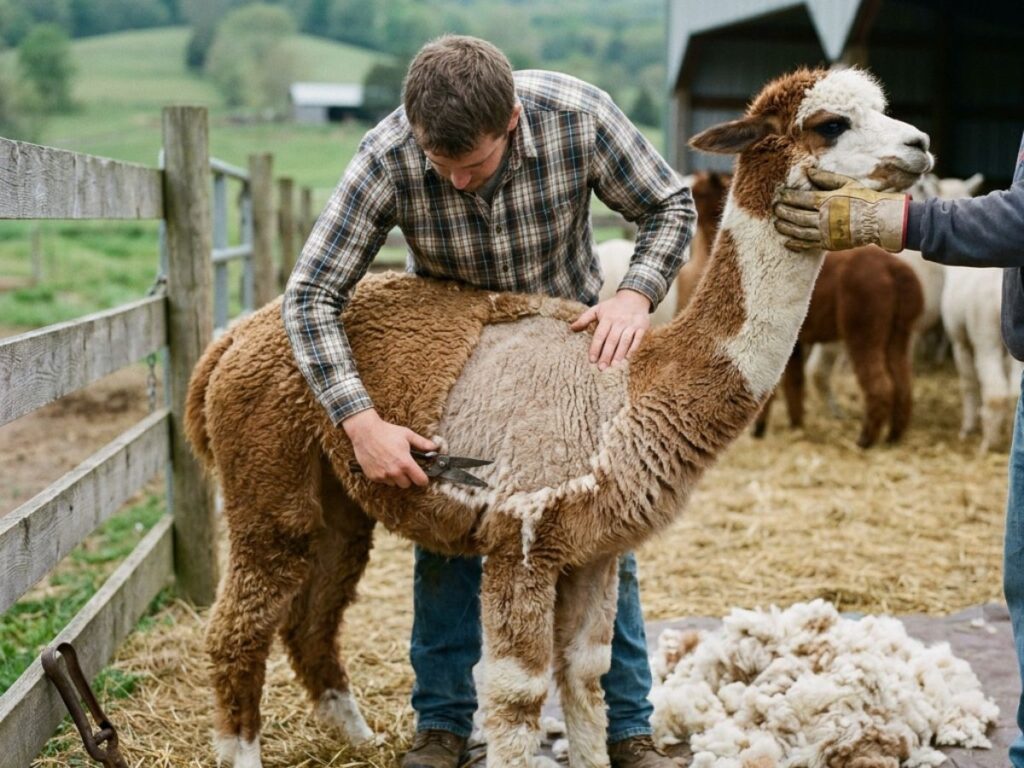
22. Why are alpacas always sheared in spring?
Shearing in late spring removes the heavy winter fleece before the heat arrives and keeps the animals comfortable through summer. It also gives the new fleece a full growing season before the next winter. Shearing day on the farm is always a whole event.
Fun and Surprising
To finish up, here are some fun facts about alpacas that did not fit neatly into any other category but are absolutely worth knowing. These are the ones that tend to come up when people visit the farm and start asking questions.
23. What are baby alpacas called?
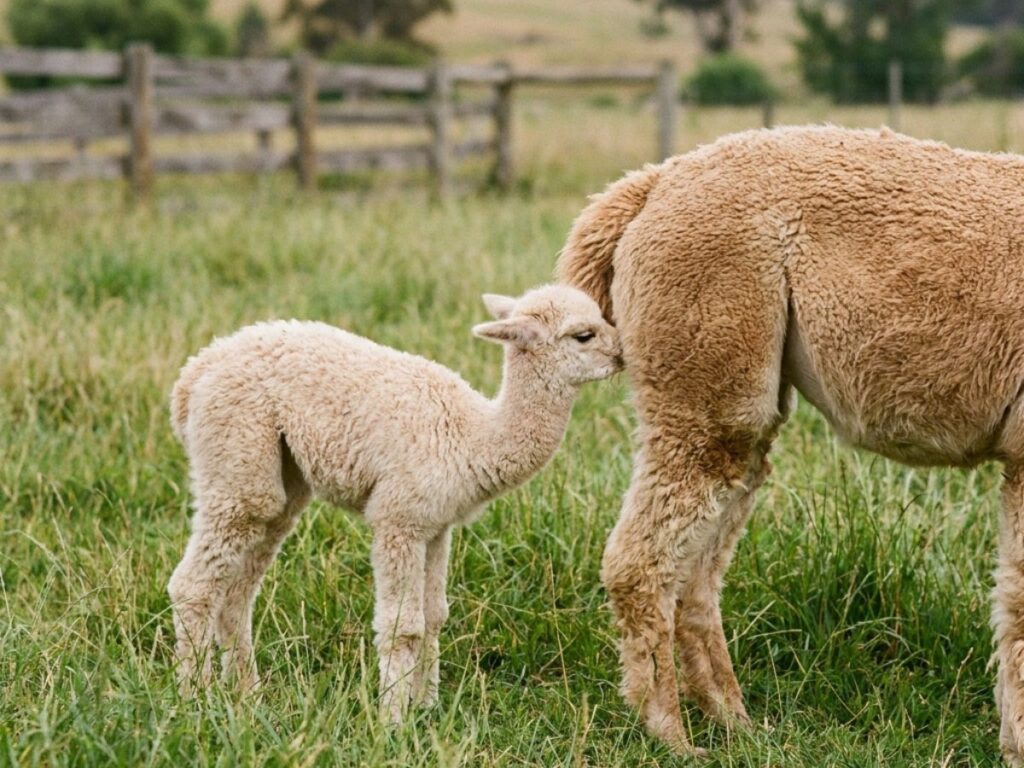
Baby alpacas are called crias (pronounced kree-ah). They are born able to stand and walk within the first hour of life, which is just as endearing as it sounds.
24. How long do alpacas live?
With good care, alpacas typically live between 15 and 20 years. That is a long relationship. When you bring alpacas home, you are really committing to them for the long haul, and most alpaca owners will tell you it is absolutely worth it.
25. Do all alpacas have their own personality?
Completely. Some are bold and curious (Pickles), some are gentle and laid-back, some are quietly bossy about the hay. The more time you spend with a herd, the more obvious it becomes that each one is a genuine individual. That is a big part of why they are so easy to love.
Why People Fall in Love with Alpacas
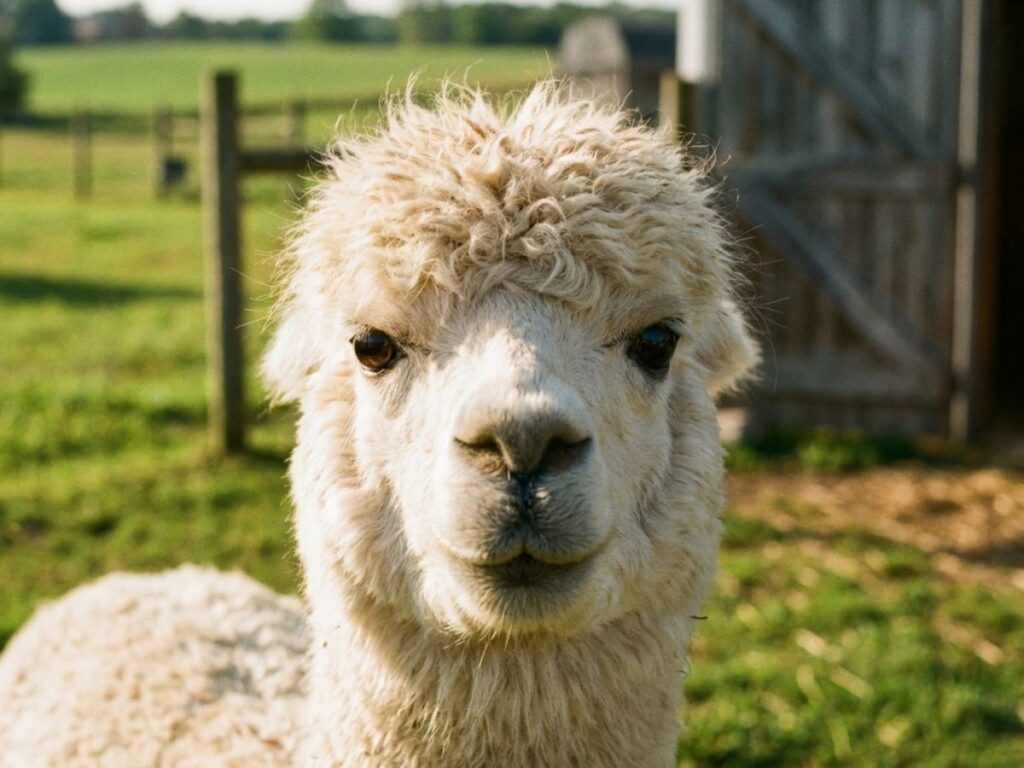
There is something about alpacas that gets under your skin in the best way. They are calm, curious, quietly intelligent, and endlessly entertaining. Once you have had one hum softly at you from across the pasture on a still morning, it is hard to imagine the farm without them.
More You May Like
- I see them every morning, standing by the paddock gate, each in his own way. My 6 alpacas may look like a group at first, but spend a little time with them and the differences start to show. These small, everyday moments ended up teaching me more than I expected.
- Alpacas seem calm and quiet at first, but there’s a lot more going on than you expect. These 42 interesting facts about alpacas cover their behavior, habits, and surprising details that only stand out once you really start paying attention.
- Do alpacas respond to their names, or are they just following the herd? It’s not as straightforward as calling a dog and getting an instant response. Some will look up, some will walk over, and others will take their time, but there’s always a pattern behind it. This breaks down what alpacas actually recognize, what influences their response, and what you can expect as a new owner.
- Why alpacas spit becomes much clearer once you watch how they move around food and space. What looks like sudden drama is usually a quick, structured reaction tied to herd dynamics and social rank. These small moments happen fast, but they follow patterns you can learn to read.
- Alpaca vs llama — what’s actually the difference? From face shape and ear size to fleece, personality, and how they’re used, this guide breaks down 20+ differences in a way that finally makes it click. Plus a look at the two types of alpaca most people don’t know exist.