20 Outfit Rules Explained in Simple Q&A Format
Style advice can sometimes sound overly strict. Match this, avoid that, never wear those together. Most outfit rules, though, were never meant to be hard rules at all. They usually began as helpful shortcuts based on proportion, balance, color, and how clothes visually work together. Once you understand the reason behind them, the style feels much less intimidating. You can keep what works, ignore what doesn’t, and dress in a way that feels like you. Here are 20 outfit rules explained in simple Q&A format, so the next time someone tells you to tuck in your shirt or avoid mixing metals, you’ll actually know why.
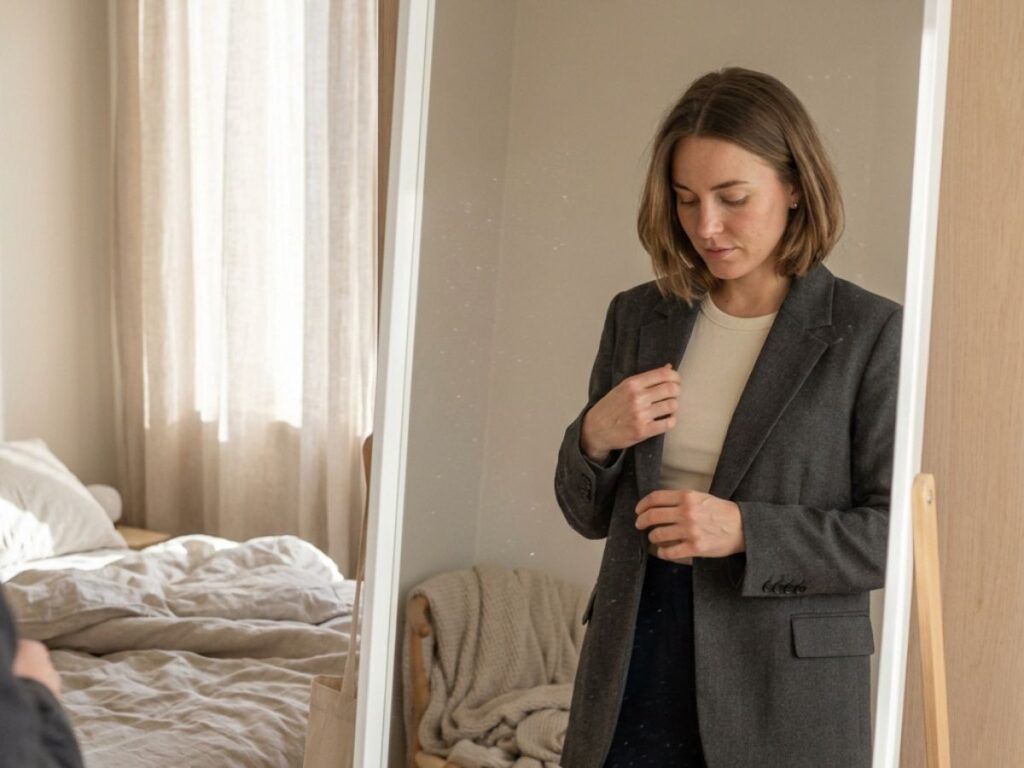

Fit and Proportion Rules
Many classic outfit rules are really about balance rather than restriction. When you understand the logic behind them, they stop feeling like rules you have to follow and start feeling like tools you actually want to use.
1. Why does fit matter more than size?
Because the number on a label has nothing to do with how a garment actually sits on your body. Clothing that skims your shape comfortably, without pulling or swimming, will always look more polished than something technically “your size” that doesn’t suit your proportions. A good tailor or even a simple hem can transform a piece that felt ordinary into one that feels made for you. Fit is the one style upgrade that works at any budget.
2. Why does tucking in a top often improve an outfit?
Because it creates a visual waistline, even a loose or relaxed one. A full tuck, a half tuck, or just a front tuck tells the eye where your torso ends and your legs begin, which instantly adds shape to a look. It also adds intention, making it clear the outfit was put together rather than thrown on. This works especially well with high-waisted pants or skirts where you want the waist to read clearly.
3. Why do fitted tops often pair well with wide-leg pants?
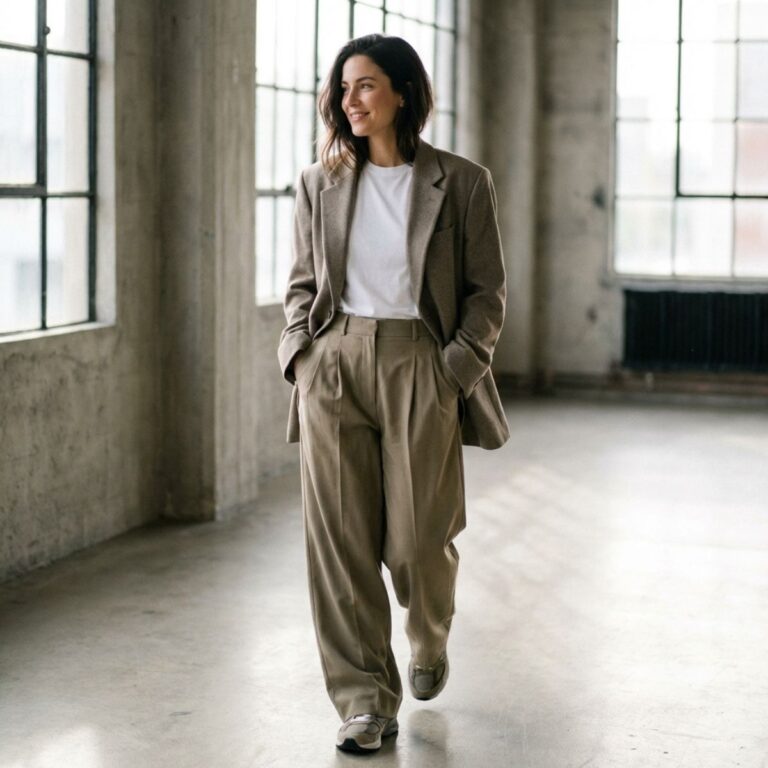
Because contrast is what creates balance in an outfit. When one piece has volume, keeping the other close to the body helps the look feel less overwhelming. Wide-leg pants are flattering on almost every body type, and a fitted top is the easiest way to let them shine without losing your shape in the process. This combination works especially well for women over 40 who want both comfort and shape.
4. Why do cropped jackets flatter so many people?
Because they end at or just above the natural waist, which visually lengthens the legs and creates proportion. A cropped blazer draws the eye upward and gives the silhouette a defined, polished finish. This works especially well with straight-leg pants or midi skirts, where a longer jacket might cut the leg line at an unflattering point. It tends to look more expensive than it is, which is always a bonus.
5. Why does hemming pants make such a difference?
Because the wrong length changes the entire shape of an outfit. Pants that drag or bunch at the ankle can make legs look shorter, and the overall look less intentional. The right hem, whether full-length, ankle-grazing, or cropped, immediately sharpens the silhouette. Hemming is one of the lowest-cost alterations available and one of the highest-impact style changes you can make.
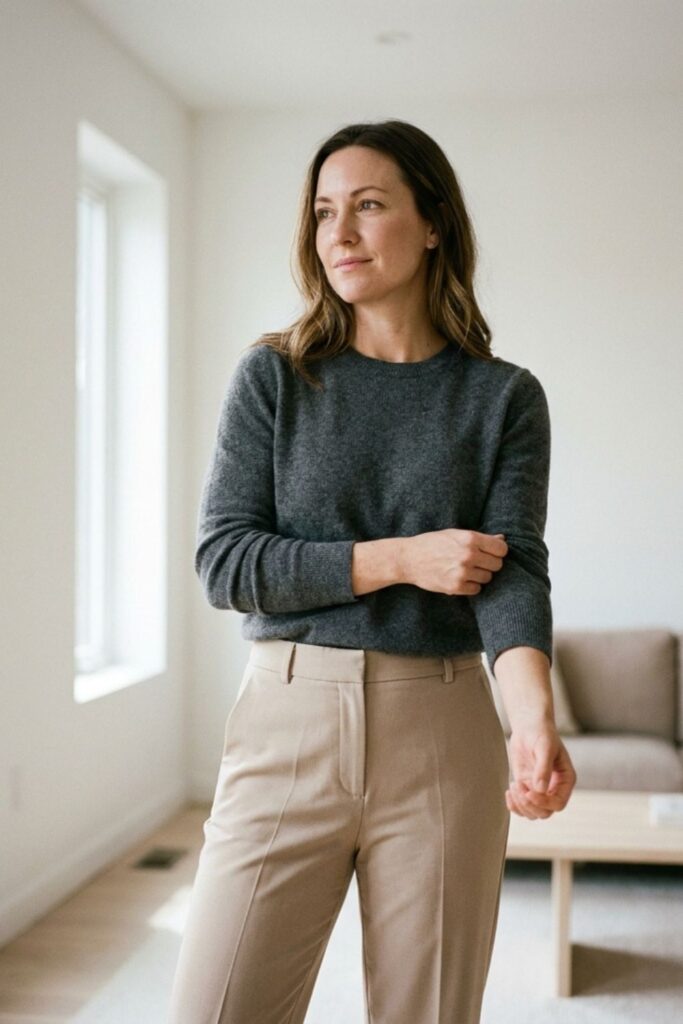
Color and Metal Rules
Color choices in an outfit are less about following strict rules and more about understanding how the eye reads a look as a whole. Once you see why these guidelines exist, applying them feels natural rather than forced.
6. Why does color near your face make such a difference?
Because the eye moves naturally toward the face first, and the colors closest to it affect how your skin tone, eyes, and features read. A shade that complements your complexion near your face can make you look more rested, vibrant, and like yourself, without any extra effort. This is why the same outfit can feel completely different in a warm ivory versus a cool white, or a dusty rose versus a bright red. If you find a color that consistently gets you compliments, wearing it near your neckline is almost always why.
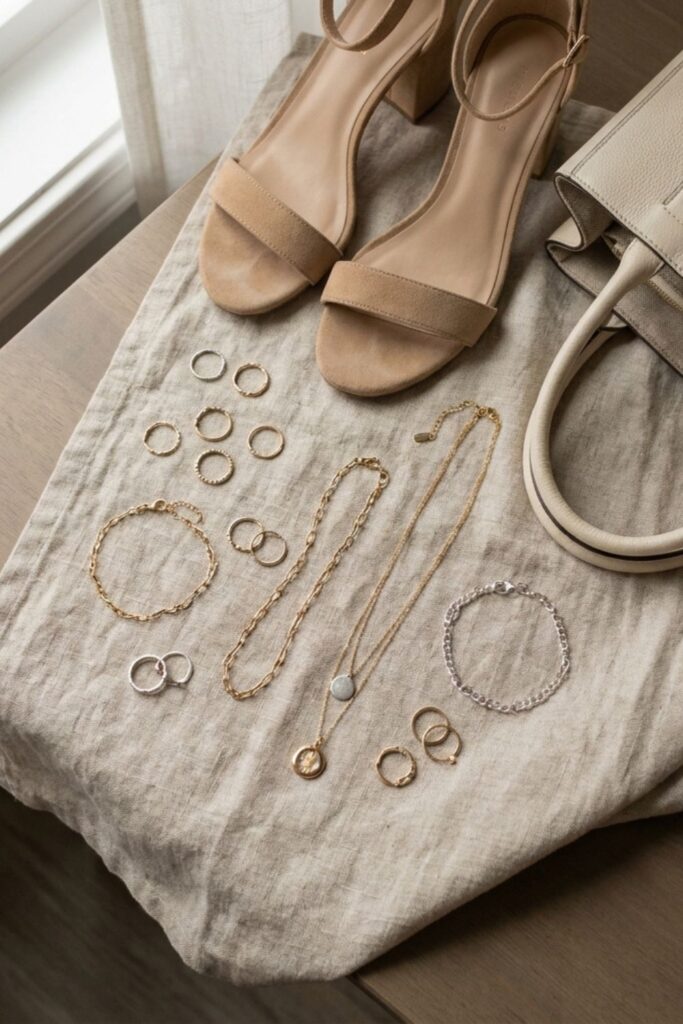
7. Why can mixed metals still work beautifully?
Because when worn with intention, layered metals look modern and considered rather than mismatched. The key is repetition: if you are wearing gold and silver together, let both appear more than once across your jewelry or accessories so it reads as a deliberate choice. Mixed metals also tend to work well for women who wear a lot of neutrals, since the variation adds visual interest without competing with the outfit. There are no strict rules here, just awareness.
8. Why does monochrome dressing look elegant?
Because one color family creates a long, uninterrupted line from shoulder to hem, reading as calm and refined. It also removes one of the most common sources of getting-dressed stress: figuring out what goes with what. Monochrome does not mean boring. Texture, cut, and fabric weight do a lot of work within a single palette. A chunky knit paired with tailored trousers in the same tone can feel very interesting.
9. Why do neutral shoes go with so much?
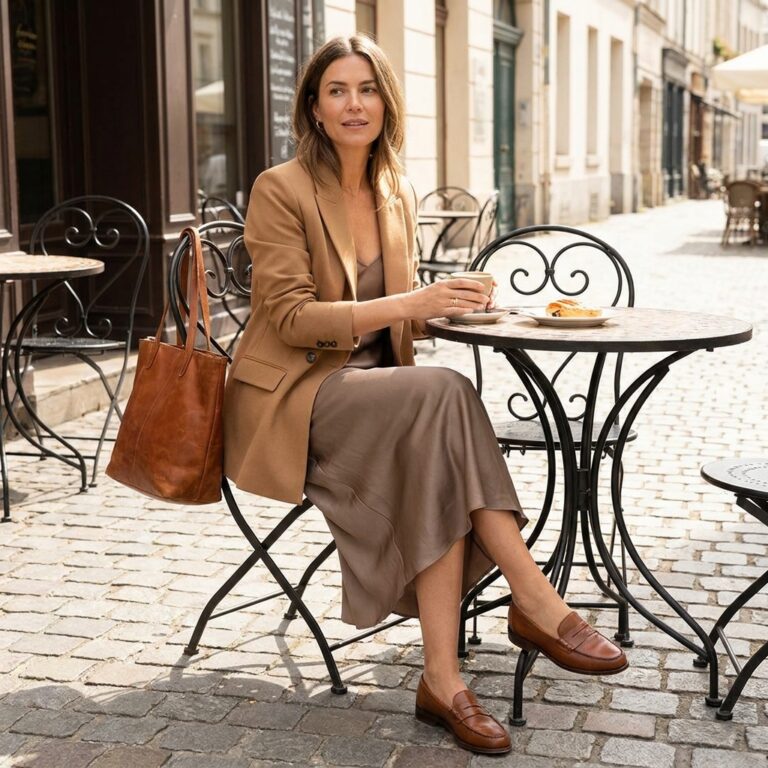
Because they support the outfit without competing for attention. A nude, tan, cream, or white shoe tends to blend with the leg line, making legs appear longer and keeping the eye moving upward toward the rest of the look. Neutral shoes are also the easiest thing to reach for on days when you want your outfit or accessories to do the talking. They are genuinely among the most versatile investments for a wardrobe.
10. Why do repeated colors make outfits feel pulled together?
Because the eye reads repetition as intentional. When a color appears in two places, such as a scarf that picks up the tone of your shoes or earrings that echo a print in your top, the outfit feels considered rather than assembled from whatever was clean. This is one of the simplest styling techniques there is, and it works whether you are putting together a casual weekend look or something more dressed up.
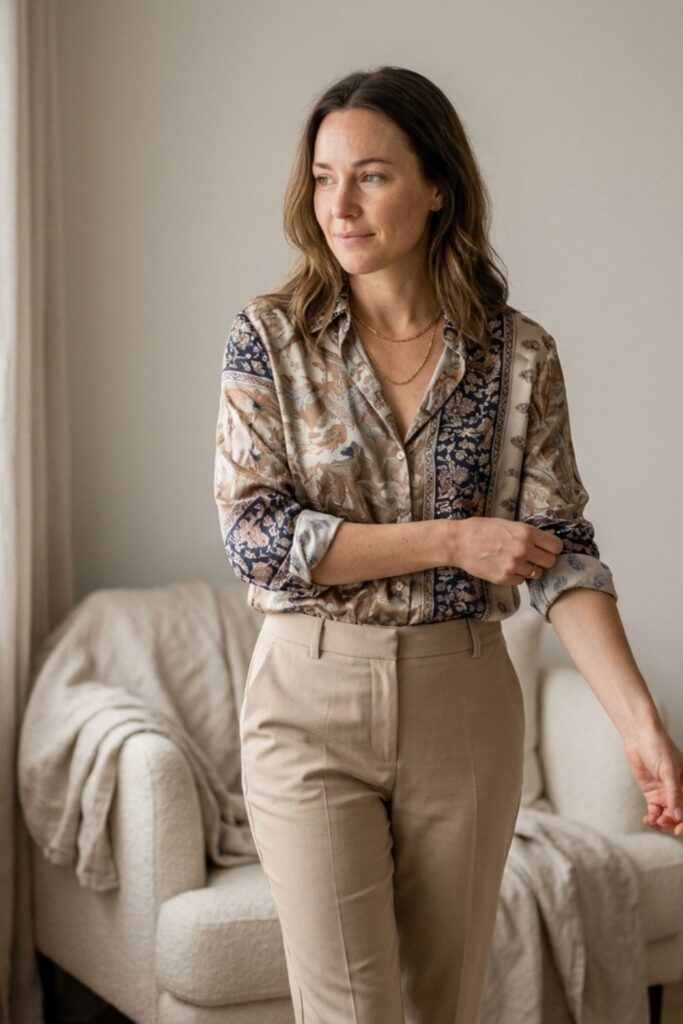
Prints and Pattern Rules
Prints are not difficult. They just need a little context to work well. Understanding why a print can feel like too much is usually all it takes to start wearing them with confidence.
11. Why can prints sometimes feel overwhelming?
Because bold patterns draw the eye immediately and, when combined with other strong elements, create visual competition that feels busy rather than intentional. This does not mean prints should be avoided. It means they tend to do best when they are the focal point of the outfit rather than one element among many. Keeping everything else simple, in solids, neutral shoes, and minimal accessories, lets the print breathe and feel like a choice.
12. Why does pairing prints with solids help?
Because a solid piece gives the eye a place to rest. When one element in an outfit is patterned, and everything else is calm, the print reads as a feature rather than noise. This is also one of the easiest ways to wear a bold print if you love it but feel uncertain about it. A printed blouse with solid trousers, or a patterned skirt with a simple tee, is almost always going to work.
13. Why do smaller prints often feel easier to wear?
Because they read more softly from a distance and tend to blend into the overall silhouette rather than demanding immediate attention. Smaller-scale prints also mix more naturally with other pieces and tend to carry across more occasions. That said, larger prints can be stunning. The difference usually comes down to how much of the print is visible and whether the rest of the outfit supports or competes with it.
14. Why can stripes feel flattering?
Because line direction influences how the eye travels across the body. Vertical stripes draw the eye up and down, creating a lengthening effect. Horizontal stripes draw the eye side to side, adding width. Neither is inherently flattering nor unflattering. It depends entirely on stripe width, placement, and the proportions of the rest of the outfit. A bold horizontal stripe on the top paired with wide-leg pants, for example, can look very chic.
15. Why do animal prints often work like neutrals?
Because classic animal print tones, the tans, browns, blacks, and creams found in leopard or snake print, mix naturally with a wide range of wardrobe colors. Animal print tends to function the way a camel coat or a chocolate brown shoe does: it pairs with almost everything without clashing. This is why a leopard print flat or a snakeskin belt can feel like an easy addition to almost any outfit. The trick is treating it as a base rather than a statement.
Comfort and Confidence Rules
The best outfit rules are really about how you feel when you wear them. Style is not just visual. It shows up in how you move through a room, how you carry yourself, and how at ease you feel in your own skin.
16. Why does comfortable clothing often look better?
Because when you are comfortable, your posture and energy shift. You stand differently, move differently, and carry yourself with more ease. Discomfort shows up in body language before it shows up anywhere else. Clothing that fits well and feels good to wear tends to look better simply because the person wearing it looks relaxed and present rather than distracted.
17. Why do good shoes matter so much?
Because shoes affect how you stand, walk, and carry yourself through an entire day. A shoe that hurts changes your gait, your posture, and your mood in ways that are very visible. It is also worth noting that shoes are often one of the first things people notice when they look at an outfit as a whole. A simple, well-fitting shoe in a great neutral or a quietly interesting texture can significantly lift an otherwise basic look.
18. Why does investing in fewer, better pieces often make more sense?
Because a wardrobe full of pieces you genuinely love and actually reach for is far more useful than a closet full of things that felt like a deal at the time. Quality basics, a well-fitting pair of trousers, a blazer that suits your shape, a coat you feel great in, tend to work harder and last longer than trend-driven pieces bought quickly. This is particularly true for women over 50 who are in a season of dressing with more intention and less noise.
19. Why do simple outfits often feel expensive?
Because clean lines and restraint read as intentional, and intention is what polish actually communicates. A well-fitted pair of trousers, a quality knit, and a simple shoe in a great neutral tend to look more considered than an outfit with many competing elements. Simplicity also tends to age better in photos and in real life. The fewer things asking for attention, the more each individual piece gets to shine.
20. Why are outfit rules meant to be flexible?
Because personal style should support your life, not restrict it. Every rule in this post has exceptions, and the most stylish women are usually the ones who understand why a rule exists and then decide for themselves whether it applies to them. The point of learning outfit rules is not to follow them obediently. It is to feel informed enough to break them with confidence. Wear what makes you feel like yourself.

Why Outfit Rules Matter
Style gets so much quieter once you understand the logic behind it, especially in your 40s and 50s. You stop second-guessing your choices and start trusting your instincts more. These 20 outfit rules explained simply are here whenever you need them, not as a checklist to memorize, but as a way of seeing your wardrobe a little differently, so getting dressed feels less like solving a puzzle and more like an easy, enjoyable part of your day.
If there is a rule here that changed how you think about your outfits, I would love to hear which one. Drop it in the comments below.
More To Explore
If you’ve ever wondered why everyday home habits like keeping shoes by the door or fluffing pillows actually exist, this warm Q&A breaks down 25 of the small household routines we all follow without ever questioning. It’s one of those reads that makes everything suddenly make sense.