Reading Nook Ideas for Small Spaces, Awkward Corners, and Under the Stairs

A reading nook is a single dedicated seat, set apart from the rest of a room, built around good light and just enough space to settle in without getting back up. Most cozy reading nook ideas circulating online lean on styling rather than function, which is part of why so many end up unused within a month.
A reading nook only needs four things to actually work.
- A chair with 28 to 32 inches of seat depth, deep enough to tuck your feet up
- Light positioned over the shoulder, not overhead, so the page is lit without glare
- A small surface within arm’s reach for a mug, glasses, or a stack of library books
- A physical boundary, even a bookshelf or a curtain, separating the spot from foot traffic
Skip any one of the four and the space tends to become a place where laundry gets piled instead of a place where anyone actually sits.

What Actually Makes a Reading Nook Work?
Disclosure: This post may contain affiliate links. This means I get a small commission if you decide to make a purchase through my links at no extra cost to you.
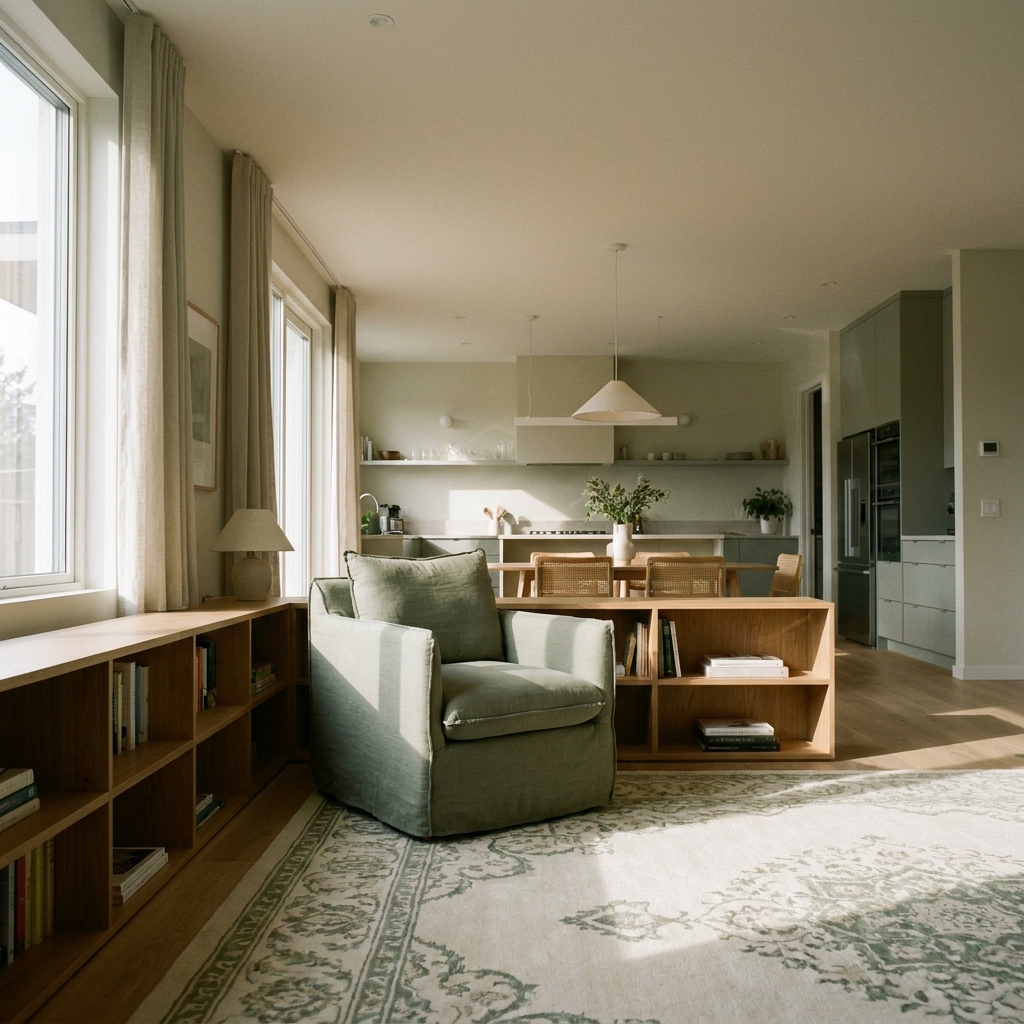
The square footage matters less than the boundary.
- Define the edge. A reading nook with even a small visual edge, a bookshelf turned sideways, a floor lamp, a rug that stops where the rest of the flooring continues, reads as a separate place and gets used as one.
- Skip the open corner. A reading nook tucked into an open corner of the living room, with nothing marking where it starts and ends, gets treated like an extension of the room rather than its own spot, so it fills up with mail and remote controls within a week. living room organization ideas that actually cut clutter
- Let the light lead. A north-facing window gives soft, even light through most of the day, gentler on the eyes for long stretches than direct afternoon sun.
- Add a dedicated lamp if there is no window. A shade that directs light down and forward does more to make the spot feel purposeful than a ceiling fixture that lights the whole room evenly.
A working reading nook can fit into as little as 9 to 12 square feet, about the footprint of a twin mattress standing on its side, which means a stair landing, a deep closet, or a quiet corner of a bedroom can all become one.
What to Look For in the Chair
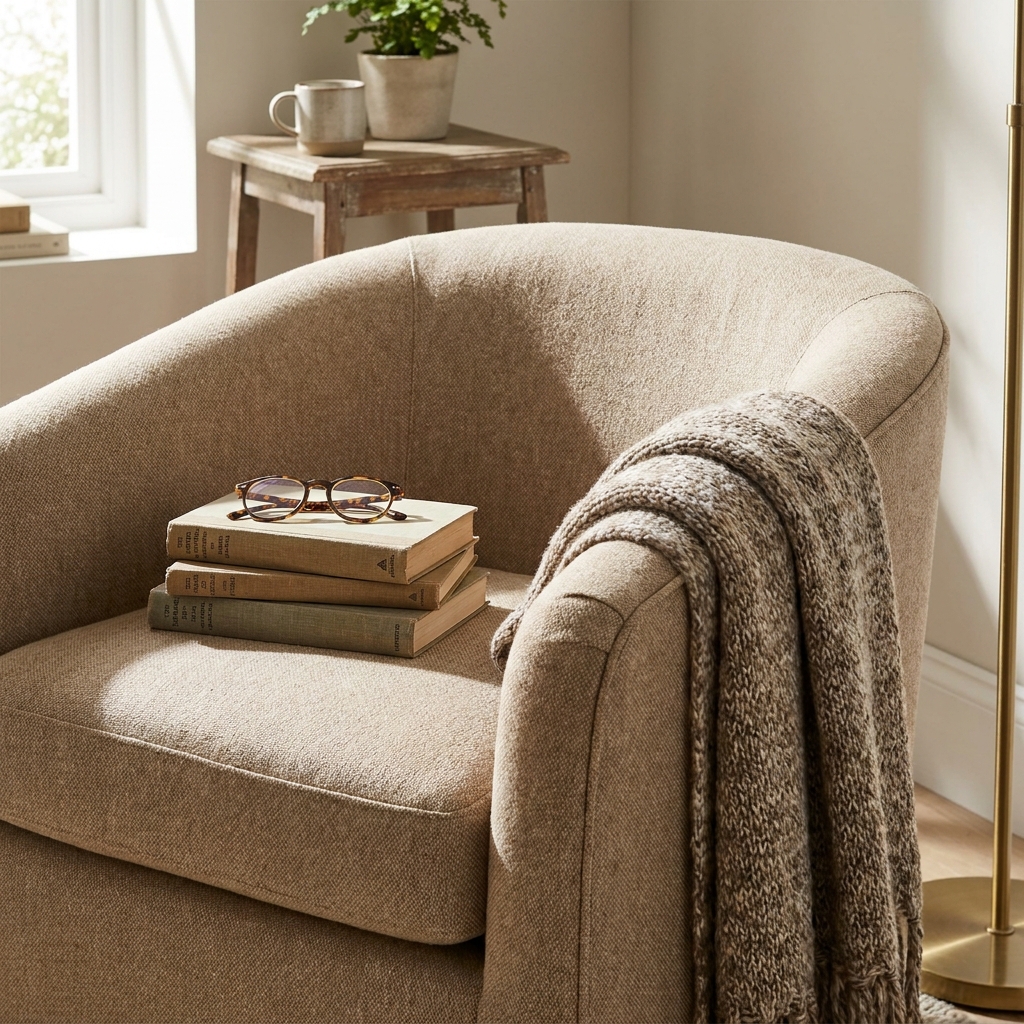
The chair carries more of the experience than anything else in a reading nook.
- Seat depth: 28 to 32 inches. Deep enough for the knees to bend comfortably with the feet drawn up, which is how most people actually sit when they read for more than ten minutes.
- A high back. A wingback or barrel chair supports the head during long reading sessions, which a low-backed accent chair does not.
- Firm cushions. They hold their shape through daily use better than soft down-filled ones, which flatten within a season.
- A swivel base, if the budget allows. Worth the extra cost on most reading nook chairs, since it lets the seat turn toward the light in the morning and away from glare in the afternoon.
Among reading nook chair options, depth matters more than style.
How to Fit One Into a Small Space

A small space reading nook works best when it borrows function from furniture already doing another job.
- Use a window seat. Built over existing radiator covers or a bay window ledge, it adds seating without adding footprint.
- Angle a single armchair into a bedroom corner. Paired with a slim side table no wider than 14 inches, it uses a spot that would otherwise sit empty, the same logic behind turning a narrow hallway into real storage. entryway organization ideas for small homes
- Go vertical with storage. A narrow bookshelf, 8 to 12 inches deep, holds a rotating stack of books without eating into the walking space around the chair.
- Mount the light on the wall. A sconce instead of a floor lamp frees up the square footage a lamp base would otherwise claim, which matters most in a nook under 15 square feet.
Can You Build One Under the Stairs?
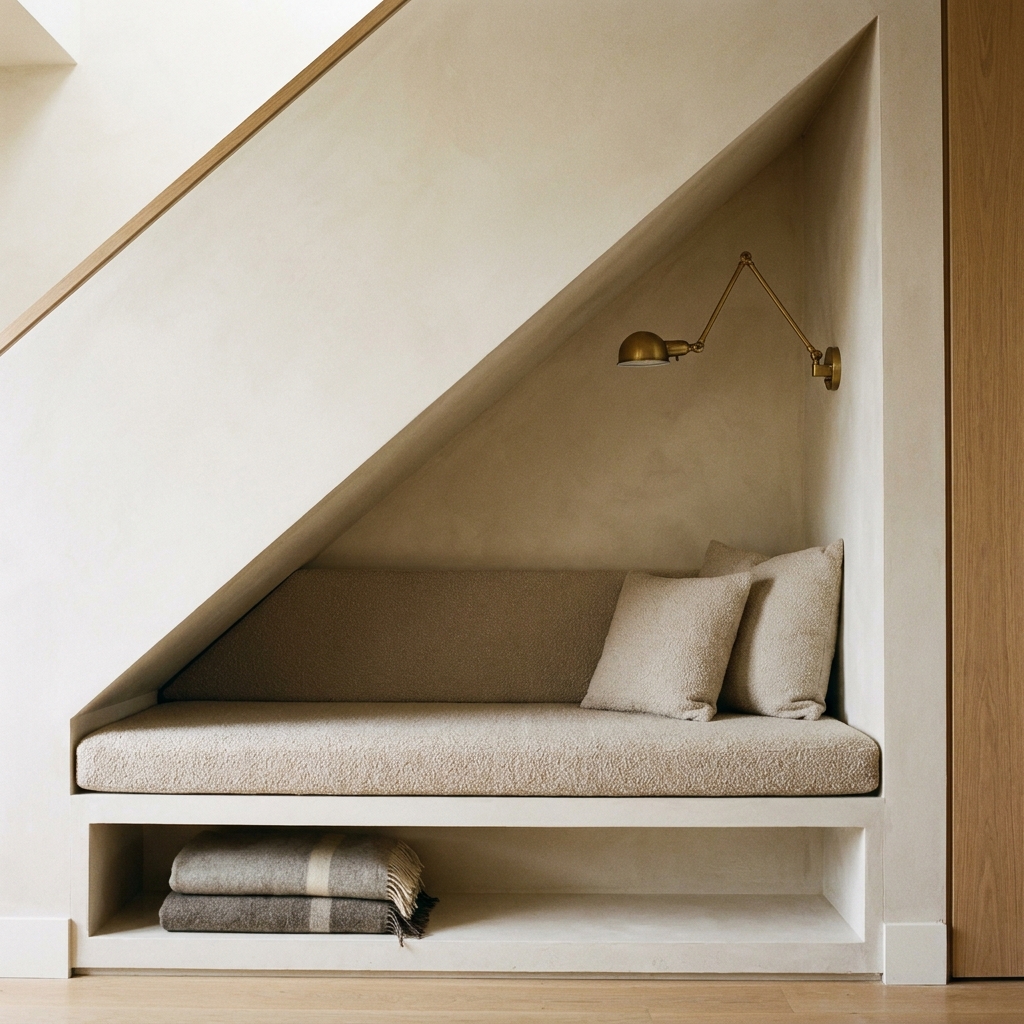
The space under a staircase is one of the more overlooked spots for a reading nook, largely because it already has a defined boundary on three sides.
Use the base for storage. Adding a reading nook under the stairs also solves a second problem at the same time, since the space below the bench seat becomes enclosed storage, otherwise dead space in most homes.
Check the headroom first. A reading nook under the stairs needs at least 4 feet of clearance at its tallest point to fit a seated adult comfortably, usually the section closest to where the stairs begin rather than the shallow end near the top.
Build a bench, not a chair. Built-in bench seating with a cushion on top makes better use of an awkward triangular footprint than a freestanding chair, since the bench can be shaped to match the slope of the stairs above it.
Lighting and Small Details That Make It Feel Finished
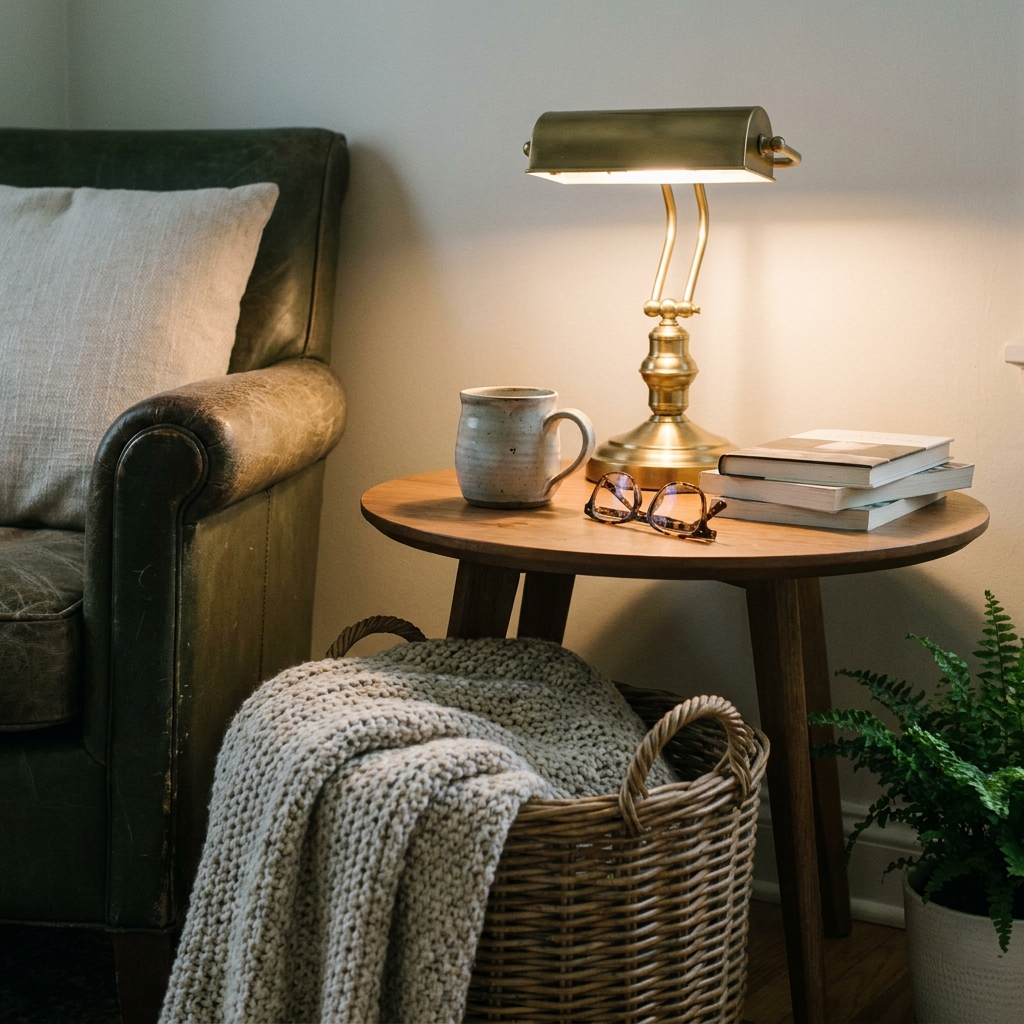
Add a dimmer. A dimmer switch on a nearby lamp does more for a cozy reading nook than most people expect, since evening reading calls for less light than daytime reading.
Keep a table within reach. A small side table, even a stack of two vintage suitcases or a plant stand repurposed as a table, means never reaching across the chair for a mug.
Add one low-maintenance plant. A single plant nearby does more for the feel of the corner than most decor choices twice its price. houseplants for lazy waterers
Store the throw, don’t drape it. A blanket kept on a hook or in a small basket rather than draped loosely keeps the spot from looking cluttered while still being functional.
The goal is not to look staged. It is to have every element close enough that once someone sits down, there is no reason to get back up, which matters most on the kind of slow weekend built for staying in one spot.
Quick Setup Checklist
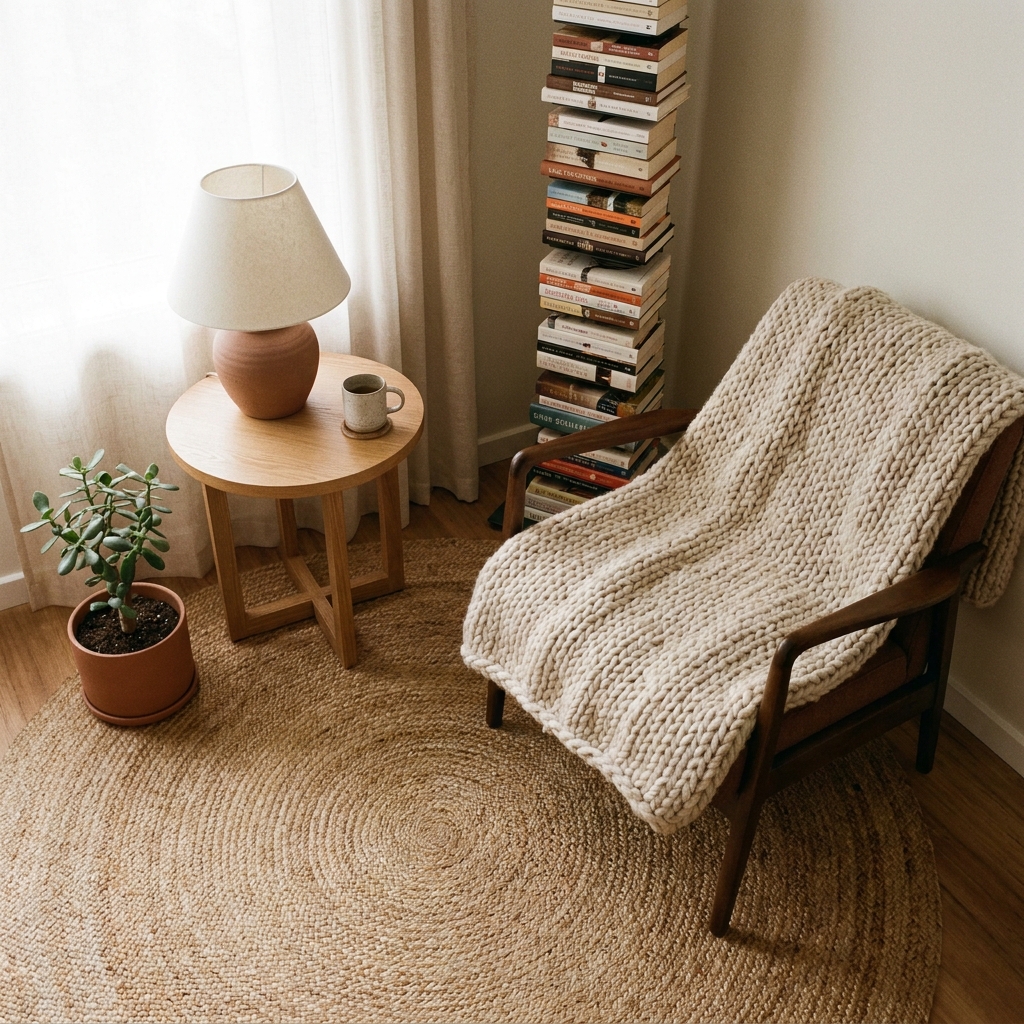
- Chair with 28 to 32 inches of seat depth
- Light source over the shoulder, dimmable if possible
- Small side table or surface within arm’s reach
- A visual boundary: bookshelf, curtain, or rug edge
- One low-maintenance plant
- A throw blanket stored on a hook or in a basket, not draped loosely
- At least 4 feet of headroom if the spot is under a staircase
Frequently Asked Questions
Natural light helps, but it is not required. A reading nook built into an interior corner works well with a dedicated reading lamp positioned over the shoulder, since that placement matters more for eye comfort than the light source itself.
A functional reading nook can work in 9 to 12 square feet, enough for a single chair, a small side table, and a narrow bookshelf. Anything smaller usually means dropping either the table or the shelf.
For most small reading nook ideas, a wingback or barrel chair with a seat depth of 28 to 32 inches works well, since the higher back supports the head and the seat depth allows the feet to tuck up without needing a separate ottoman.
Yes, and a bedroom corner is one of the more common spots for a reading nook, since it already has a quieter, lower-traffic feel than a living room. A single armchair with a slim side table is usually enough, without needing to section off a full corner.
It is, mainly because the space under a staircase already has a defined boundary and would otherwise sit unused. The main constraint is headroom, so measuring the clearance at the seating point before committing to a bench design saves a redo later.