Alpaca vs Llama: 20+ Differences That Are Easy to Mix Up (Until You Know What to Look For)
If you’ve ever driven past a field and genuinely wondered whether you were looking at an alpaca or a llama, you’re not alone. Most people use the names interchangeably, and honestly, until you spend real time around either animal, the confusion makes sense. They’re both fluffy, both South American, and both have that same slightly judgmental stare.
But once you know what to look for, they’re surprisingly easy to tell apart. And the differences go a lot deeper than just size.
I have six alpacas of my own — Biscuit, Noodle, Pickles, Custard, Muffin, and Mocha — and even a few months in, I catch myself noticing these differences every time I see a llama photo online. They really are quite different animals living quite different lives. Here’s everything you need to know.

The Quickest Way to Tell Them Apart
Before we get into the details, here are the three things to check first:
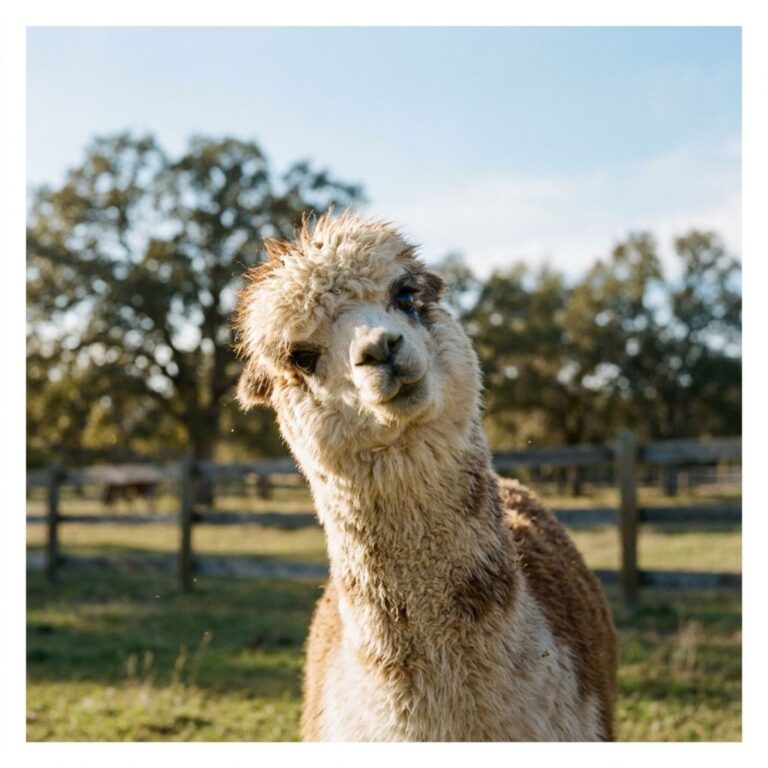
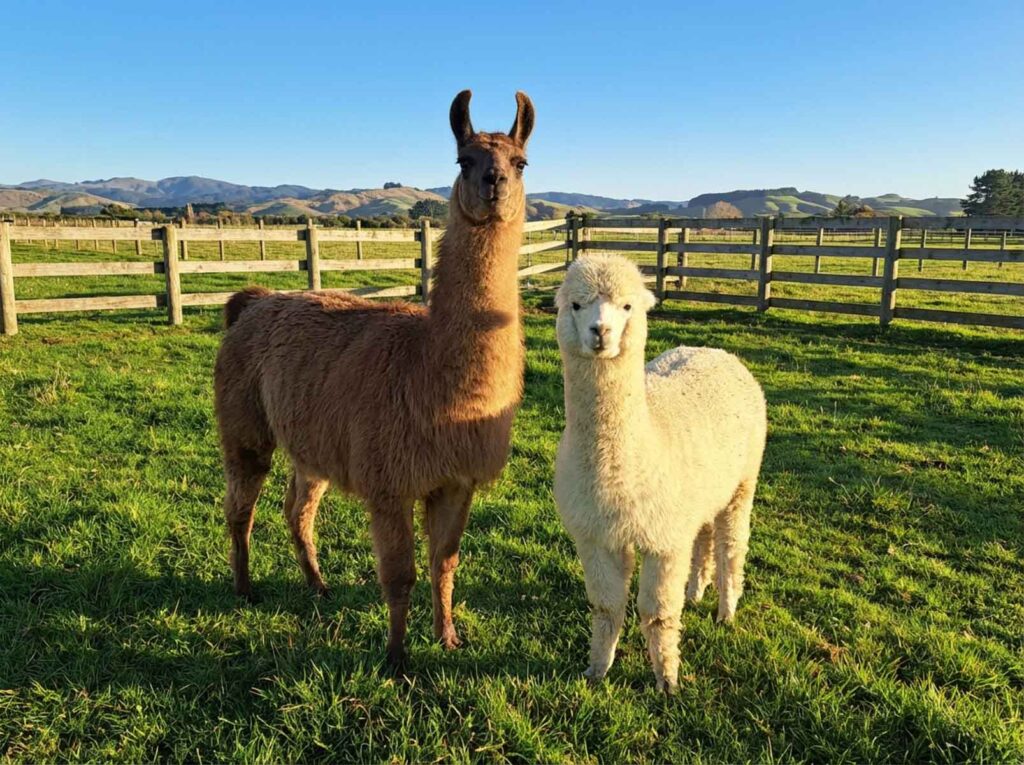
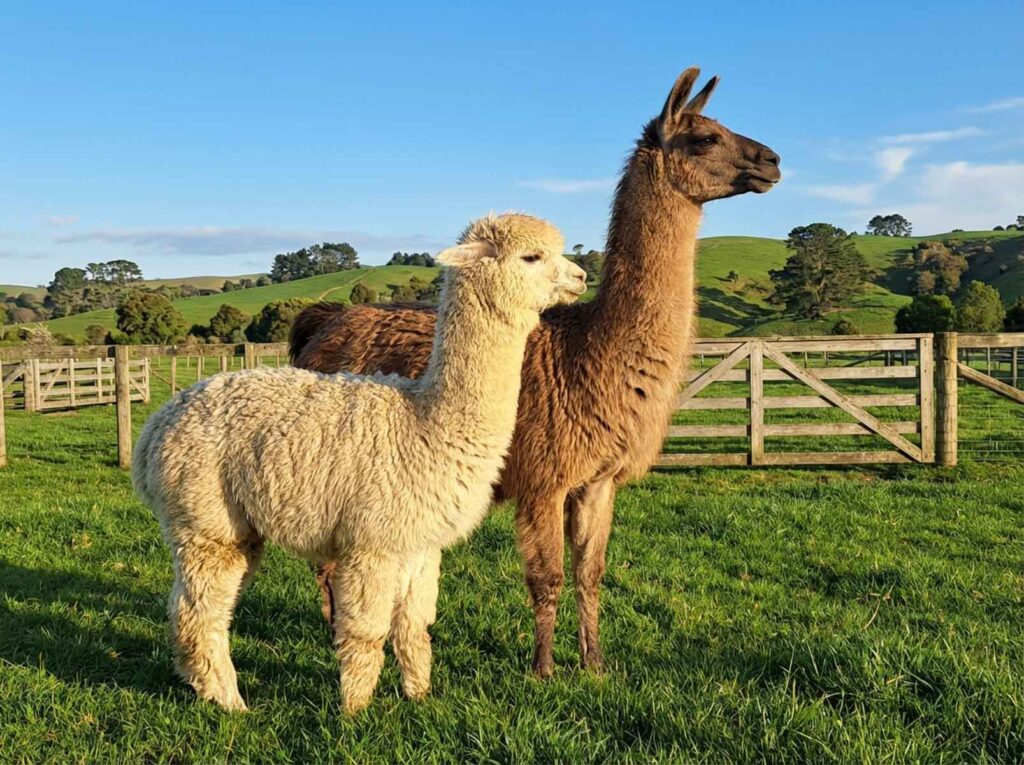
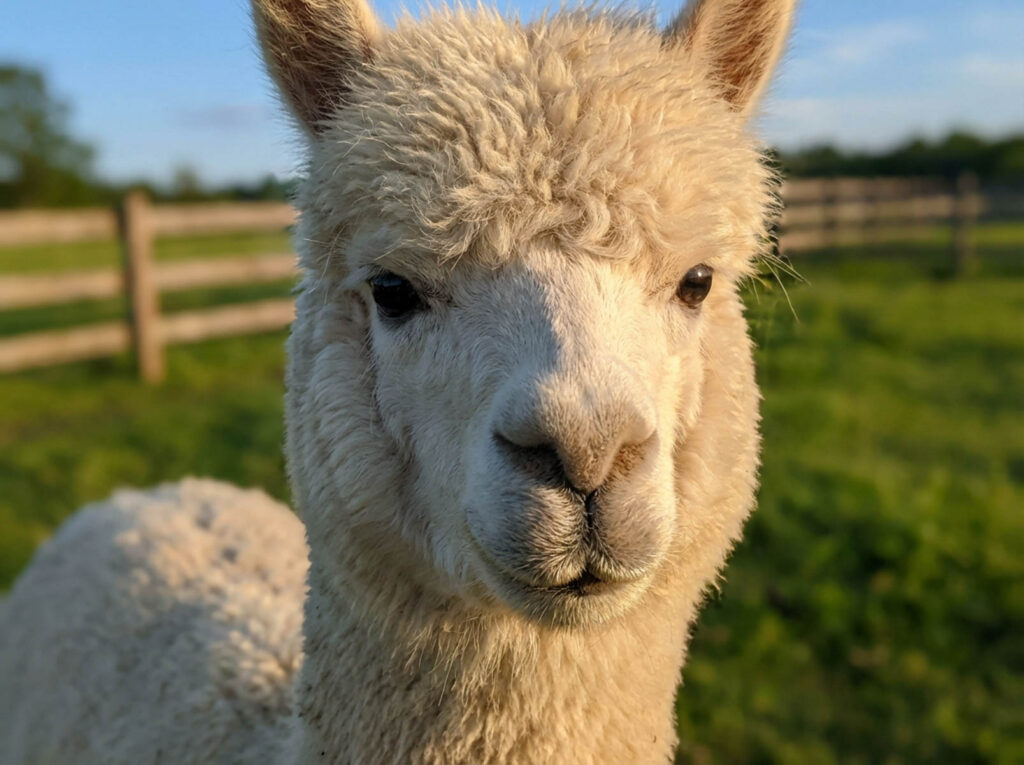
- The faces of alpacas are short, blunt, almost teddy-bear-like, with a small, flat nose. Llamas have longer, more elongated faces — more like a camel. If it looks like it could be a soft toy, it’s probably an alpaca.
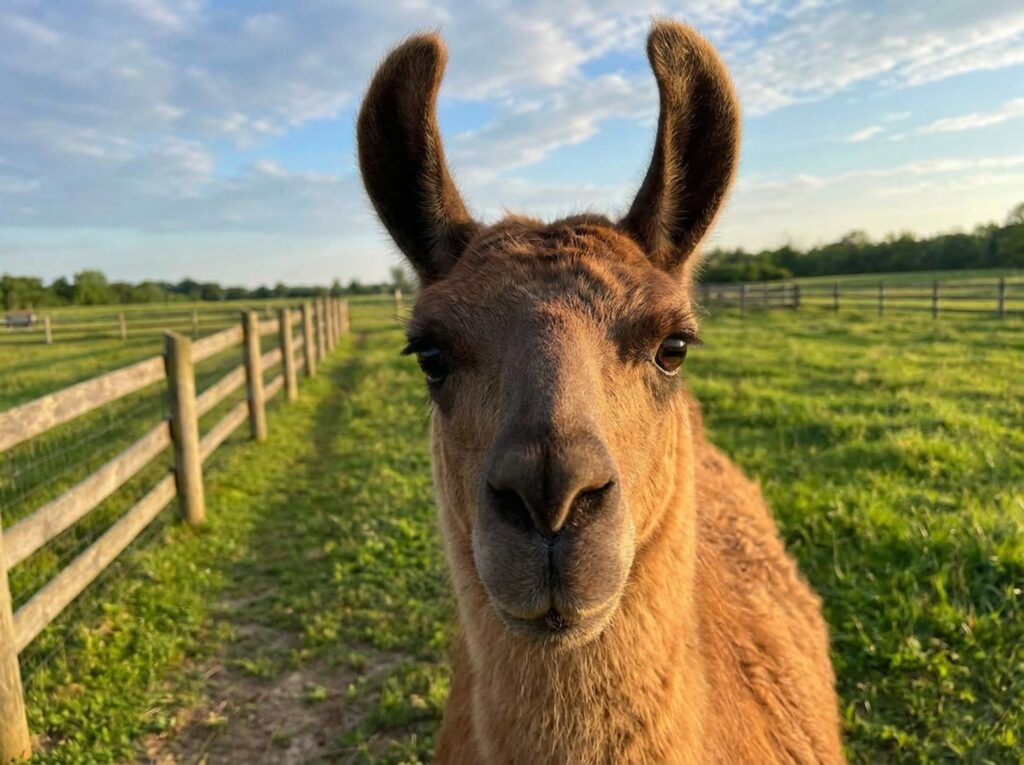
- The ears of the alpaca are short and straight, almost like little spears. Llama ears are longer and curved, often described as banana-shaped. This is honestly the fastest visual cue once you know it.
- The size of Llamas is significantly larger, roughly twice the weight of an alpaca. If it looks like it could carry a backpack, it’s a llama. Alpacas are smaller, rounder, and considerably fluffier relative to their frame.
Size and Weight
- Adult llamas typically weigh between 290–440 lbs.
- Adult alpacas typically weigh between 120–200 lbs.
- Llamas stand around 43–47 inches at the shoulder.
- Alpacas stand around 32–39 inches at the shoulder.
- Llamas have a longer, more upright neck; alpacas carry theirs in a softer, more rounded posture.
- Side by side, the size difference is immediately obvious — but in a photo without context, it’s easy to misjudge.
Face and Ears
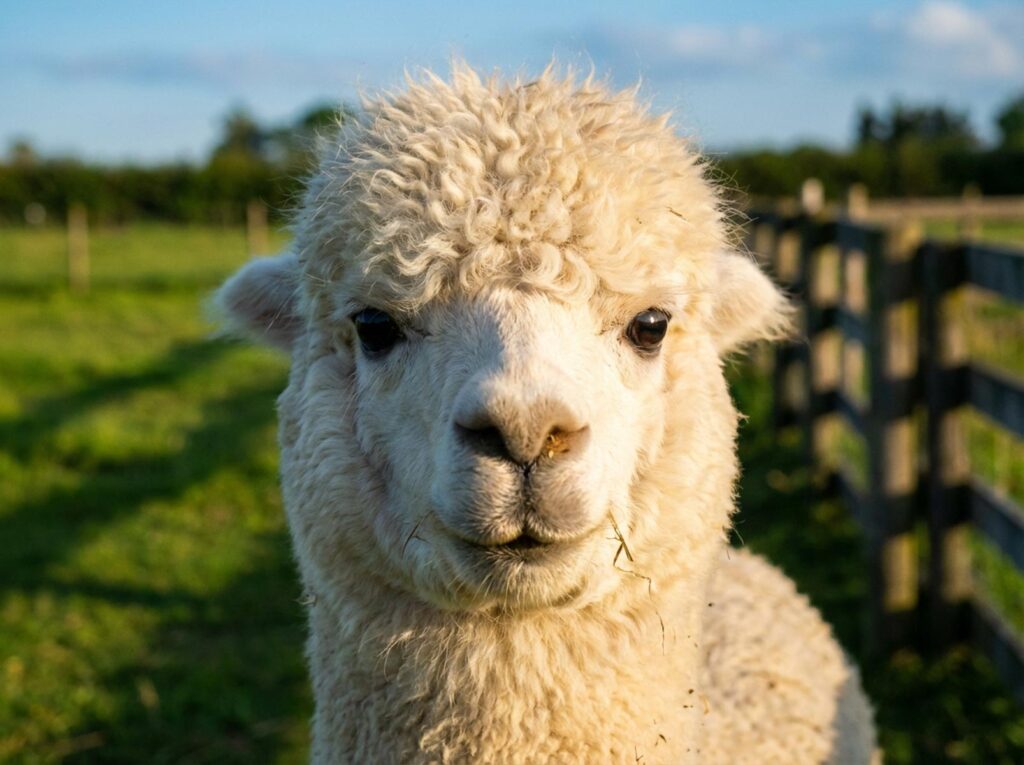
- Alpacas have short, blunt snouts and a softer, rounder face overall
- Llamas have a longer, more angular face — more defined and less plush-looking
- Alpaca ears are short and pointed, sitting straight up
- Llama ears are longer and curved, giving them a slightly more alert or dramatic expression
- Alpacas often look perpetually surprised or curious — Pickles, in particular, has perfected this expression
- Llamas tend to have a more composed, almost haughty look about them
Fleece and Fiber
This is where alpacas really stand out, and it’s one of the main reasons they’re farmed.
- Alpaca fleece is finer, softer, and lighter than llama fiber
- It is naturally lanolin-free, making it hypoallergenic — a significant advantage over sheep’s wool
- Alpaca fiber is also temperature regulating, warmer than wool by weight, and doesn’t pill the way synthetic blends do
- Llama fiber is coarser, with a double coat — a soft undercoat and a rougher outer coat
- Llama fiber requires more processing to separate the two layers before it can be used
- Alpacas produce roughly 2–5 lbs of fleece per shearing; llamas produce more but at lower quality
- Alpacas are shorn once a year, typically in spring
There are also two breeds of alpaca that produce quite different fleece, which brings me to my boys.
Huacaya vs Suri: The Two Types of Alpaca
Most people don’t realize there are two distinct alpaca breeds, and they look remarkably different from each other.
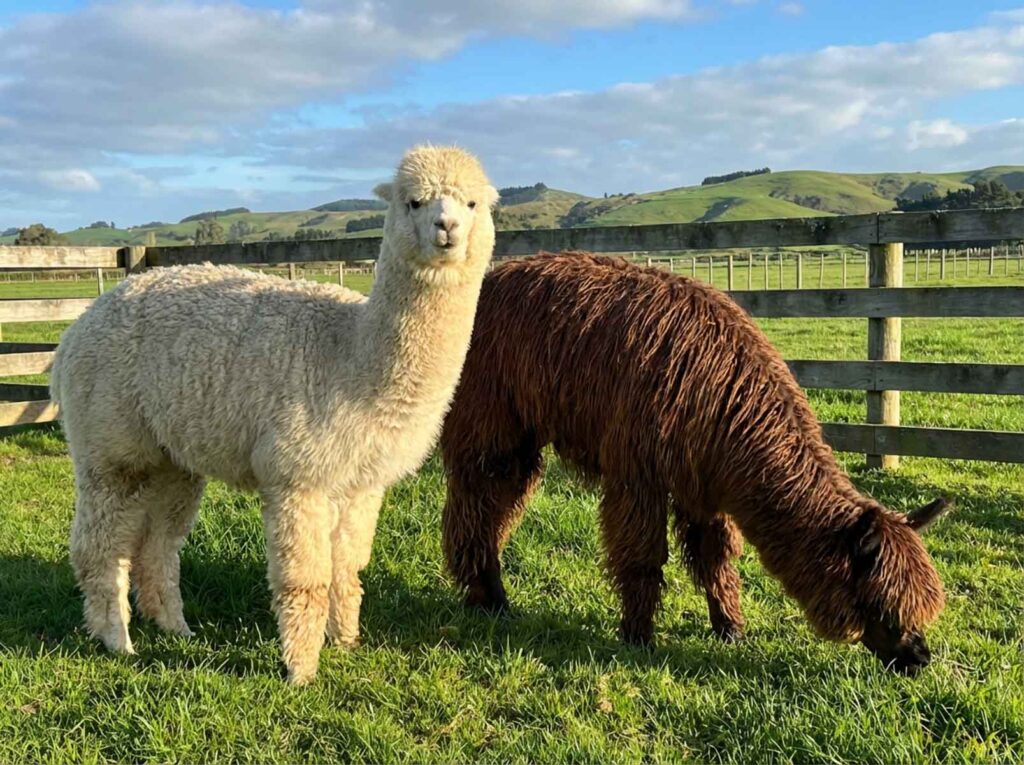
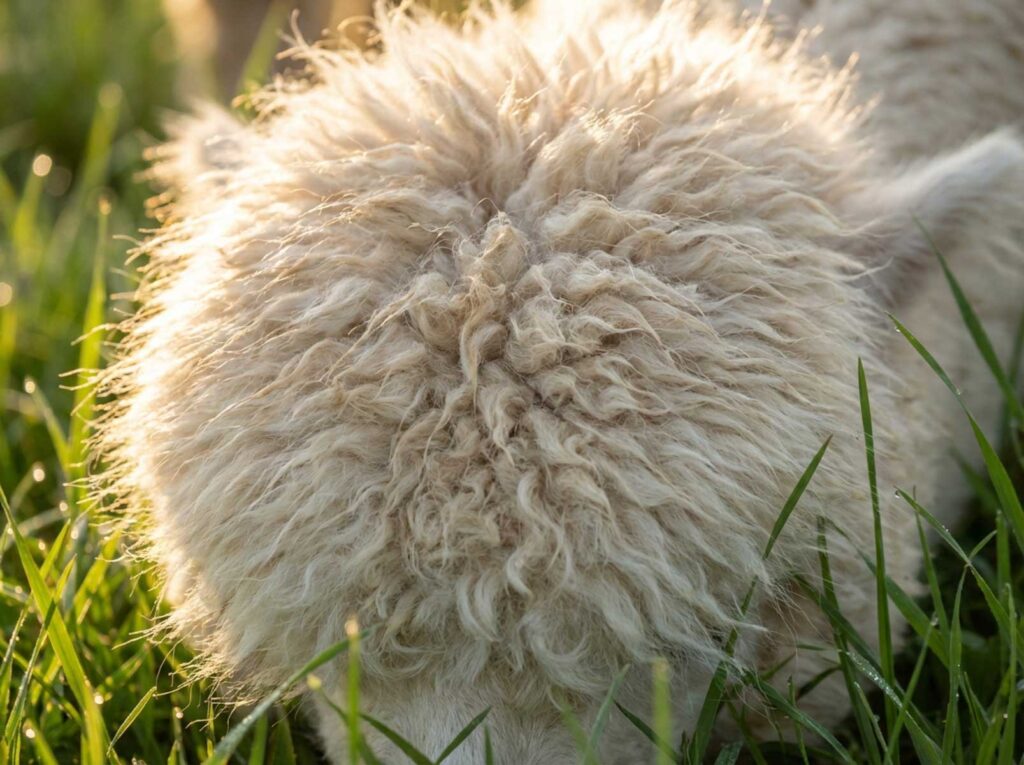
Huacaya alpacas (pronounced wuh-KY-ah) have dense, crimped, fluffy fleece that grows perpendicular to the body — the classic look most people picture when they think of an alpaca. It gives them that round, cloud-like appearance.
Suri alpacas have long, silky fleece that hangs in loose, separated locks — more like dreadlocks than fluff. They’re rarer and their fiber is considered particularly fine and lustrous.
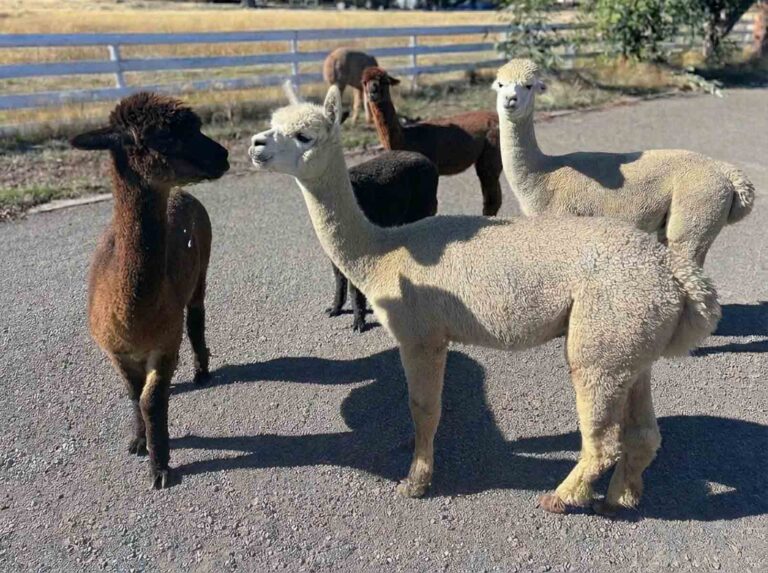
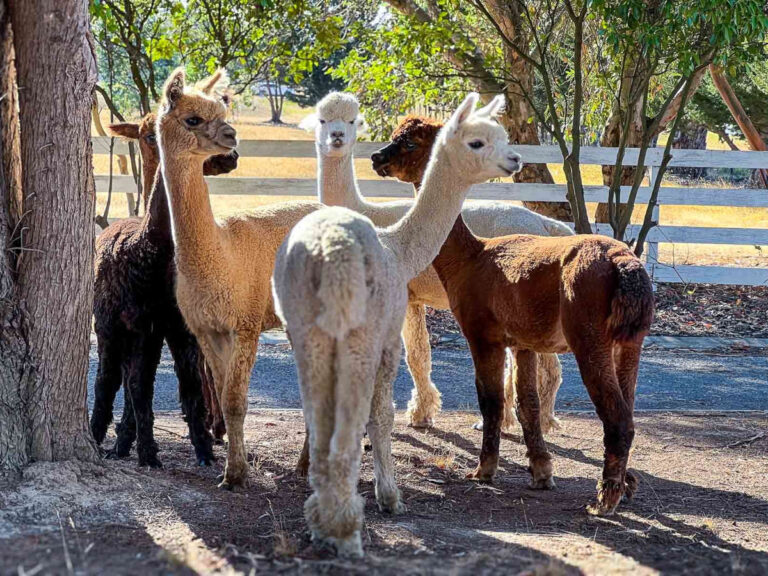
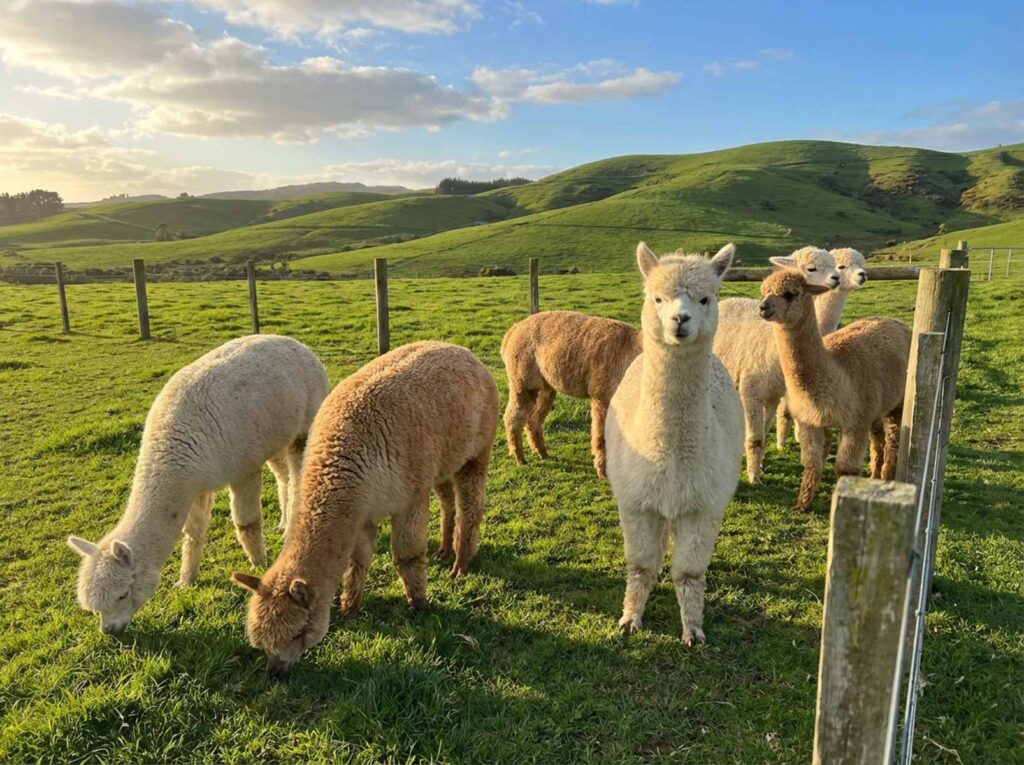
Biscuit, Noodle, Pickles, Custard, Muffin, and Mocha are all huacaya boys — that fluffy, crimped fleece you see in their photos is exactly what huacaya looks like in person. When the light hits them in the morning, they look almost impossibly soft.
Llamas do not have this same breed distinction in terms of fleece type.
Personality and Temperament
- Alpacas are herd animals and become genuinely stressed without companions — they should never be kept alone
- Llamas are also social but are more independent and less reliant on the herd for emotional security
- Alpacas tend to be gentler and more timid — they’re cautious with new people and new situations
- Llamas are more confident and assertive, which is partly why they’re used as guard animals for other livestock
- Alpacas communicate mostly through body language and soft humming — the hum changes depending on what they’re feeling
- Llamas are more vocal and can make a loud alarm call when they sense danger
- Noodle is a perfect example of the classic alpaca temperament — cautious, observant, slow to warm up, but quietly loyal once trust is built
What They’re Used For
Alpacas are farmed primarily for their fleece. Their fiber is used in high-end textiles — sweaters, throws, scarves, socks, and bedding. Alpaca products are considered a premium alternative to cashmere and merino wool.
Llamas are farmed primarily as pack animals and guard animals. They have been used for centuries in South America to carry goods across mountain terrain. Today, they’re also commonly used on farms to protect sheep and alpacas from predators like coyotes and foxes.
- Llamas can carry up to 25–30% of their body weight over long distances.
- Alpacas are not used as pack animals — they’re too small, and their temperament doesn’t suit it.
- Both are used in alpaca trekking and farm experience days, which have grown in popularity across the US, UK, and beyond.
- Llamas are occasionally used in therapy animal programs due to their calm, confident manner around people.
Where They Come From
- Both alpacas and llamas are South American camelids, originating in the Andes mountains of Peru, Bolivia, and Chile.
- They are closely related — along with vicuñas and guanacos, they form the camelid family.
- Alpacas are believed to have been domesticated from the vicuña around 6,000 years ago.
- Llamas are believed to have been domesticated from the guanaco.
- The Inca civilization depended heavily on both animals — alpacas for fiber and llamas for transport and meat.
- Today, alpacas are farmed across the United States, Canada, the UK, Australia, and New Zealand in large numbers.
- The US has a thriving alpaca industry with tens of thousands of registered animals, supported by organizations like the Alpaca Owners Association.
Can They Live Together?
This comes up a lot, and the answer is nuanced.
- Alpacas and llamas can live together and often do on mixed farms.
- Llamas are sometimes deliberately kept with alpaca herds as guard animals.
- However, intact male llamas can be aggressive toward alpacas, particularly smaller ones.
- If keeping them together, most breeders recommend castrated male llamas as the safest option.
- The size difference also means feeding and shelter needs to be managed carefully.
- Alpacas may become intimidated at feeding time if llamas are present and more dominant.
A Few Things That Surprise Most People
- Alpacas and llamas can interbreed — the offspring is called a huarizo.
- Huarizo tend to be larger than alpacas but smaller than llamas, with mixed fleece quality.
- Both animals spit when stressed or establishing hierarchy, but llamas are considered more likely to spit at humans; alpacas mostly reserve it for each other.
- Neither alpaca nor llama is truly a domesticated pet in the way a dog or cat is — they are livestock animals with specific needs.
- Both animals have three stomach compartments (not four like cattle) and are known as modified ruminants.
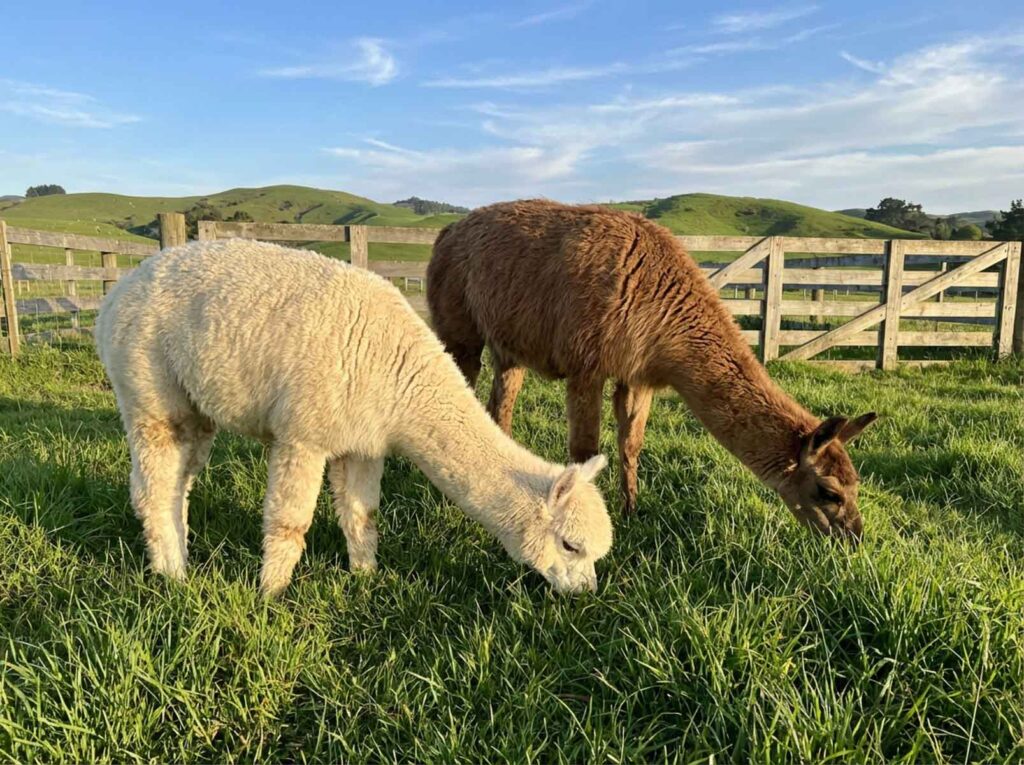
- Alpacas have padded feet, not hooves, making them surprisingly gentle on pasture.
So Which Is Which? A Quick Recap
When you’re not sure what you’re looking at:
- Small, round, fluffy face, short ears → alpaca
- Tall, long face, banana ears, carries itself with confidence → llama
- Looks like it could be a very large soft toy → almost certainly an alpaca
- Looks like it could survive a hiking trip → llama
Have you ever mixed them up before knowing the difference? Most people have. If you want to meet the alpaca side of this comparison up close, Biscuit and the boys are usually very willing to stare at you from across the pasture.
More You May Like
- I see them every morning, standing by the paddock gate, each in his own way. My 6 alpacas may look like a group at first, but spend a little time with them and the differences start to show. These small, everyday moments ended up teaching me more than I expected.
- Alpacas seem calm and quiet at first, but there’s a lot more going on than you expect. These 42 interesting facts about alpacas cover their behavior, habits, and surprising details that only stand out once you really start paying attention.
- Do alpacas respond to their names, or are they just following the herd? It’s not as straightforward as calling a dog and getting an instant response. Some will look up, some will walk over, and others will take their time, but there’s always a pattern behind it. This breaks down what alpacas actually recognize, what influences their response, and what you can expect as a new owner.
- Why alpacas spit becomes much clearer once you watch how they move around food and space. What looks like sudden drama is usually a quick, structured reaction tied to herd dynamics and social rank. These small moments happen fast, but they follow patterns you can learn to read.
- Curious about what makes alpacas so fascinating? These 25 alpaca fun facts in trivia Q&A format cover everything from why they hum and spit to the science behind their incredible fiber. Some of the answers will genuinely surprise you.